
Sea slug: overview, groups, adaptations, and ecological role
Sea slug is an informal name for several marine gastropods with similar body plans (often shell‑reduced) that evolved independently. Includes nudibranchs, sacoglossans, sea hares and pelagic forms.
Overview
"Sea slug" is a non‑scientific, catch‑all label applied to a variety of marine gastropod molluscs that share a slug‑like appearance: soft bodies, reduced or absent external shells, and often striking colors. Because the slug form has evolved multiple times, sea slugs are not a single evolutionary group but a polyphyletic assemblage. Their repeated emergence illustrates the broader pattern of convergent evolution in marine invertebrates.
Image gallery
8 Images

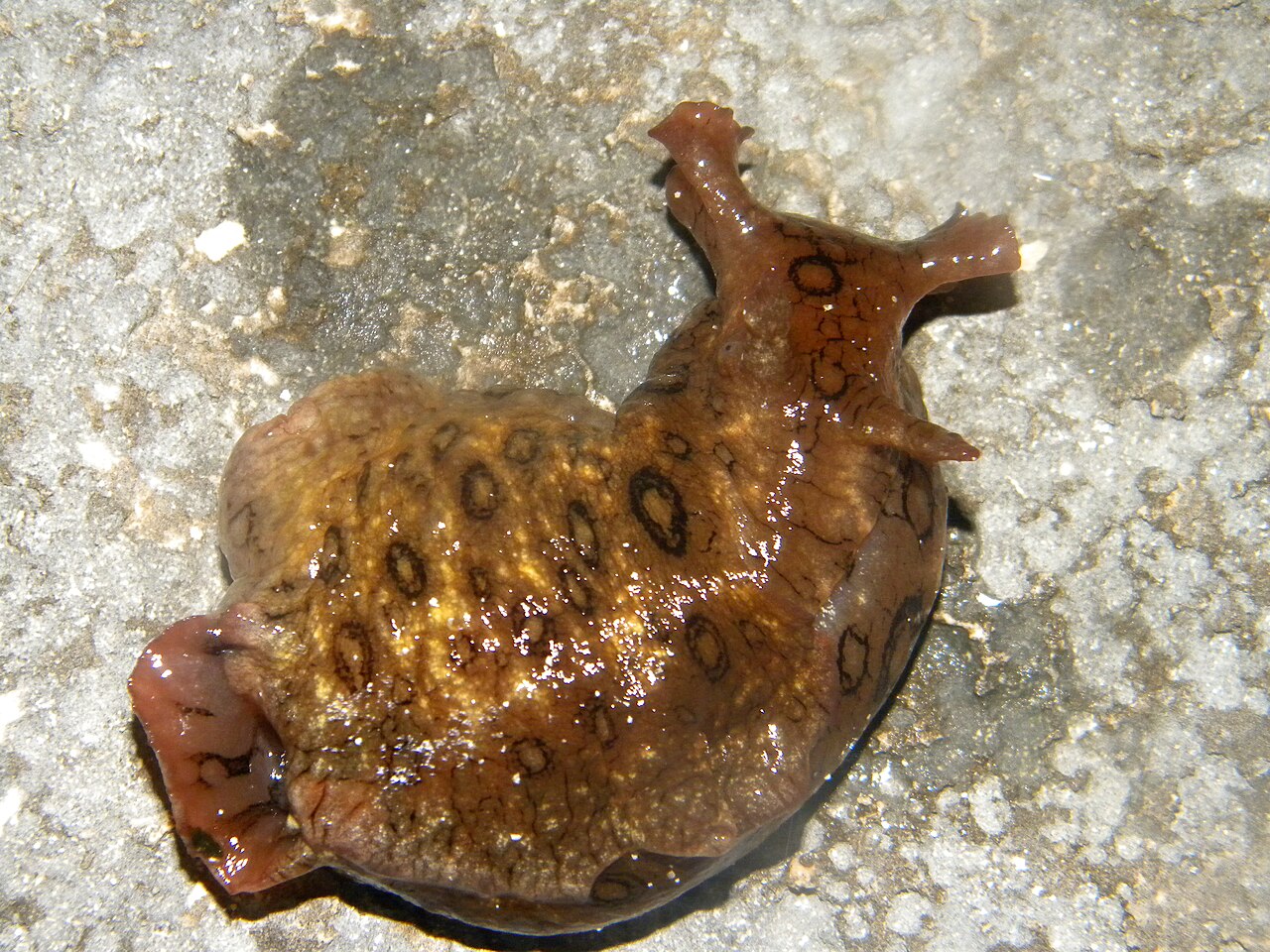


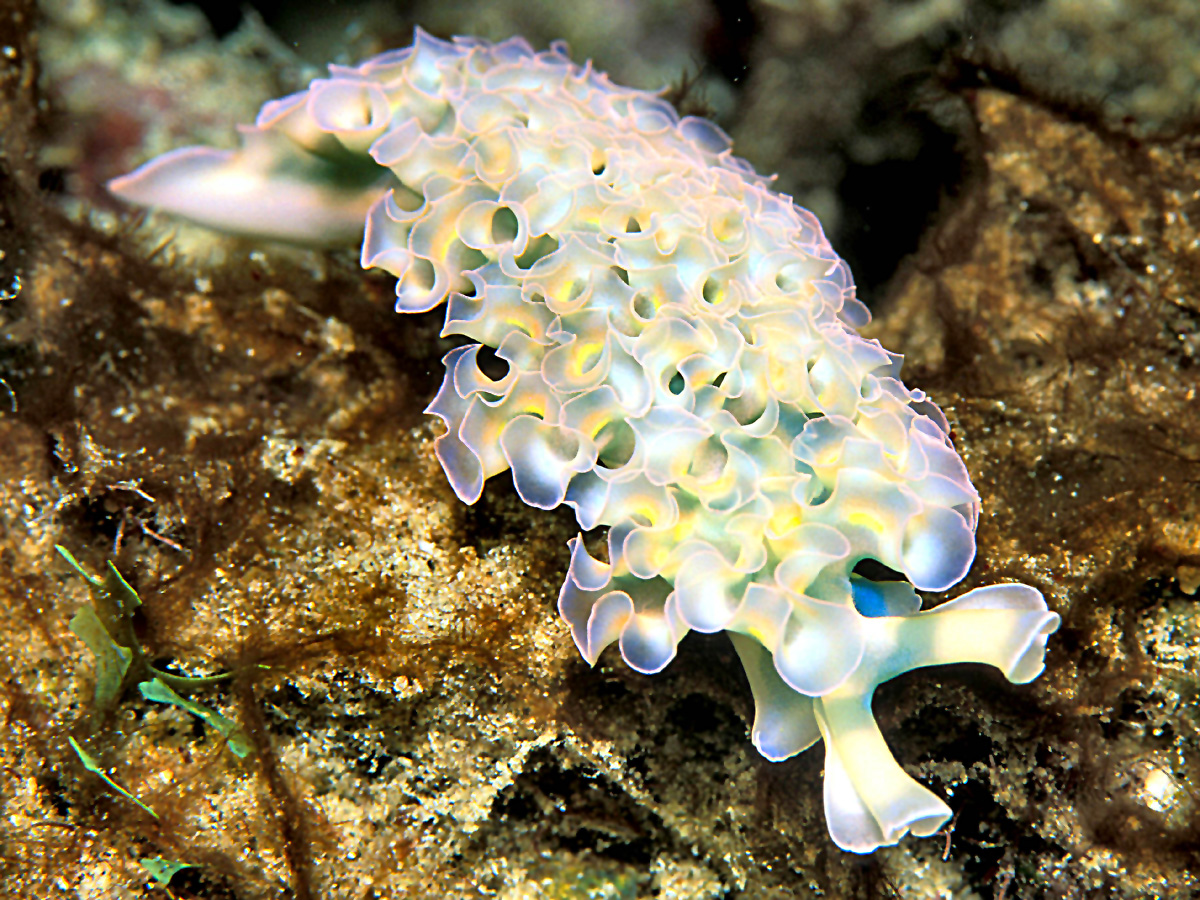
Major groups commonly called sea slugs
Many distinct clades and families are included under the informal term. Representative groups are:
- Heterobranchia — a large clade that contains many of the soft-bodied marine forms and several terrestrial and freshwater relatives.
- Nudibranchs — often brightly colored benthic predators with external gills and bilateral symmetry as adults.
- Sacoglossa — algal grazers notable for kleptoplasty, the retention of algal plastids (chloroplasts) within their own tissues.
- Sea hares (family Aplysiidae) — relatively large, herbivorous slugs that can produce defensive ink.
- Cephalaspidea (bubble snails and head‑shield slugs) — typically with a reduced internal shell and a broad head shield for burrowing.
- Onchidiidae — air‑breathing intertidal slugs that lack shells and use a pulmonary sac for gas exchange.
- Pelagic forms such as sea butterflies and sea angels — swimming gastropods (pteropods) with wing‑like parapodia; the thecosomes are shelled, while gymnosomes are shell‑less predators of other pteropods.
Anatomy and notable adaptations
Sea slugs vary in size from tiny species to medium‑large animals, but they share some recurrent features: diminished external shell, a dorsoventrally flattened or elongate body, and adaptations for particular diets. Many nudibranchs and sacoglossans sequester chemicals or structures from their prey — for example, some nudibranchs store defensive compounds or stolen stinging cells from cnidarian prey, and some sacoglossans keep functional algal plastids (chloroplasts) to gain photosynthetic benefit.
Ecology, behaviour and human interest
Sea slugs occupy diverse ecological roles: predators of sponges, hydroids and other invertebrates; grazers of algae; and pelagic consumers or prey in open water. Their conspicuous colors often advertise chemical defenses (aposematism), provide camouflage, or mimic other organisms. They attract interest from recreational divers and naturalists, have a place in public aquaria, and are useful in scientific research. Notably, the sea hare Aplysia has been widely used in neurobiological studies of learning and memory because of its large, accessible nerve cells.
Evolutionary and taxonomic considerations
The pathways leading to the slug‑like body plan have occurred repeatedly. In many cases a process of detorsion or reduction of the typical gastropod torsion has taken place, producing a more bilaterally symmetrical adult form; see discussion of torsion here. Because traditional groups such as "Opisthobranchia" have been reshaped by molecular studies, modern taxonomy places many sea slugs within broader clades like Heterobranchia and redefines older categories.
Distinguishing facts and conservation notes
Important distinctions: "sea slug" is informal — not all sea slugs are closely related, and some sea snails with small shells are not called slugs. Certain pelagic forms (pteropods) have delicate aragonite shells and are sensitive to ocean acidification, making them indicators of environmental change. Observations by divers and citizen scientists contribute valuable distribution and phenology records for many colorful and ecologically informative species.
Further reading: For taxonomic details and species lists consult specialized keys and regional field guides; for cellular and behavioral studies examine literature on Aplysia neurobiology and on kleptoplasty in sacoglossans. General evolutionary concepts are covered under convergent evolution resources and clade treatments such as Heterobranchia summaries.
Questions and answers
Q: What is a sea slug?
A: A sea slug is an informal name for a group of gastropods which look similar, but are not monophyletic. They are polyphyletic and their similar shape and life styles is an example of convergent evolution.
Q: What clades does the group include?
A: The group includes Heterobranchia Nudibranchs, Sacoglossa, Opisthobranchs, Sea Angels or Cliones, Sea Hares, Cephalaspidea, Onchidiidae and Sea Butterflies.
Q: What do Sacoglossa go in for?
A: Sacoglossa go in for kleptoplasty ('stealing' plastids). They eat algae and keep the chloroplasts for their own use.
Q: What family do Sea Hares belong to?
A: Sea Hares belong to two families of the Opisthobranchia.
Q: What sub-order do Cephalaspidea belong to?
A: Cephalaspidea belong to a sub-order of Opisthobranch gastropod molluscs.
Q: To what clade do Sea Butterflies belong?
A: Sea Butterflies belong to the clade Thecosomata.
Q: How did their similar growth pattern evolve?
A: It would seem that their similar growth pattern with the loss of torsion, bilateral symmetry, reduction of the Gastropod shell, and somewhat similar life styles evolved a number of times in the Gastropods.
Related articles
Author
AlegsaOnline.com Sea slug: overview, groups, adaptations, and ecological role Leandro Alegsa
URL: https://en.alegsaonline.com/art/88276