
Sea Cucumber: biology, ecology, uses and conservation
Comprehensive overview of sea cucumbers (Holothuroidea): anatomy, feeding, reproduction, ecological roles, human uses, fisheries, aquaculture and conservation challenges.
Overview
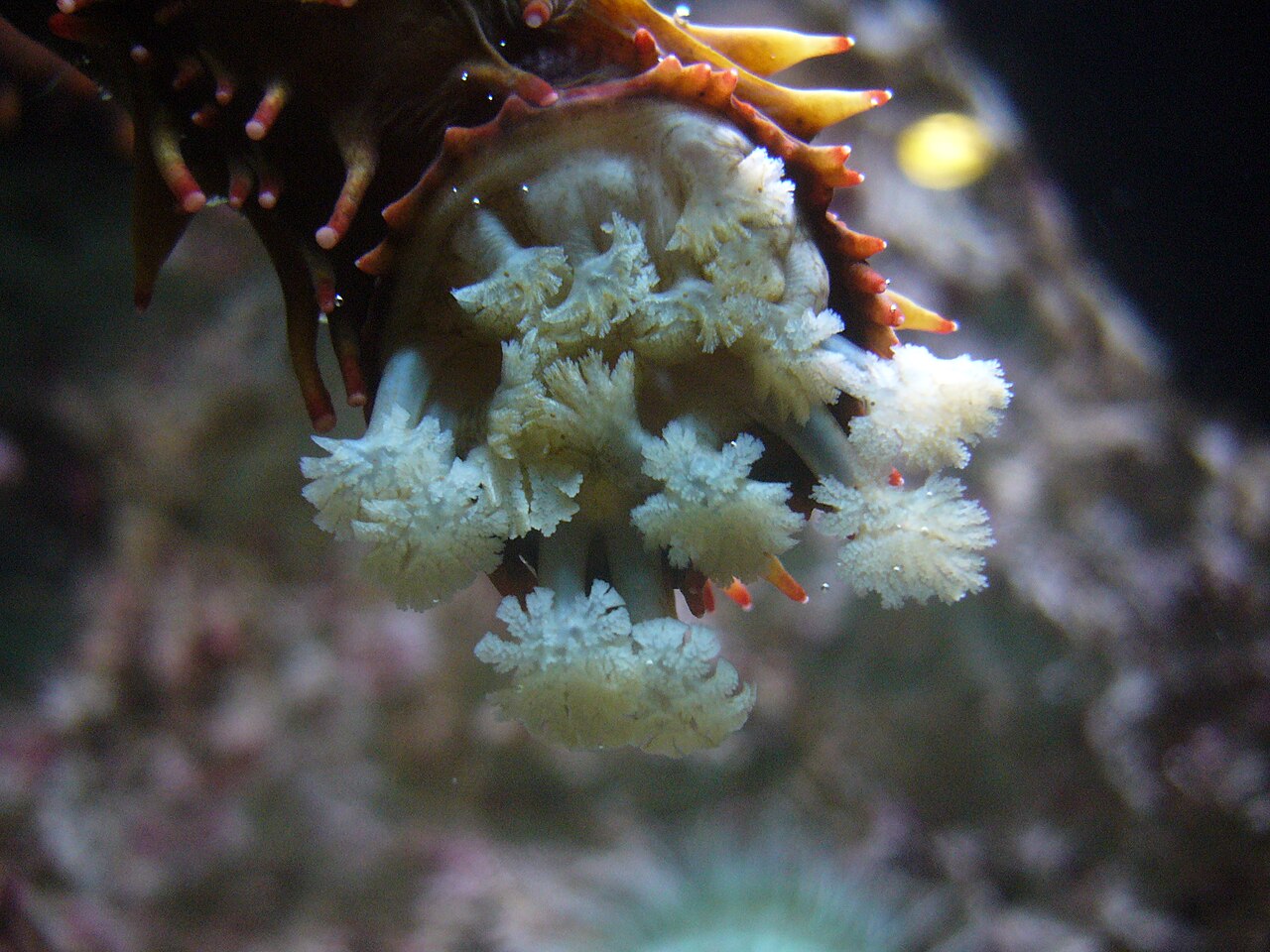
Sea cucumbers are marine invertebrates of the class Holothuroidea, within the phylum Echinodermata. They are characterised by elongated, soft bodies with leathery skin and a reduced calcareous skeleton. Sea cucumbers occur worldwide from shallow coastal waters to the deep sea and range from a few centimetres to more than a metre in length in some species. There are about 1,500 described species, with new taxa still being described from poorly sampled habitats.
Image gallery
10 Images






Anatomy and distinguishing features
Externally they appear wormlike, but their body plan retains the fivefold symmetry typical of echinoderms modified for a bilaterally elongated form. Beneath the skin is an internal skeleton composed of small calcareous elements; the reduced endoskeleton is often present as minute plates or ossicles that help support the body and can vary in shape between species. In some benthic species ossicles are sparse; in pelagic forms ossicles may be absent. The mouth is surrounded by tentacles derived from tube feet and adapted for feeding.
Respiration and internal systems
A distinctive internal feature of many sea cucumbers is the respiratory tree, a branched, water-filled set of tubules connected to the cloaca used for gas exchange and excretion. Water is pumped into and out of this structure through muscular activity of the cloaca. Many physiological and anatomical studies focus on the respiratory tree because it is an unusual adaptation among echinoderms.
Feeding, behaviour and defence
Most sea cucumbers are deposit feeders or detritivores: they collect organic particles from sediment using their mucous-coated tentacles and ingest the material to digest the nutritive fraction. Some species are suspension feeders that capture plankton from the water column. Defences include tough, leathery skin, production of deterrent chemicals such as holothurins in some taxa, and active behaviours: a few species can expel sticky or toxic threads (Cuvierian tubules) or perform evisceration—expelling internal organs that later regenerate—to distract or deter predators.
Reproduction and life cycle
Reproductive modes vary. Many sea cucumbers reproduce sexually by broadcast spawning of eggs and sperm into the water column, producing planktonic larval stages that metamorphose into juveniles. Larvae may pass through several developmental stages before settling. Some species brood eggs or exhibit direct development, and a small number reproduce asexually by fission. Regenerative ability is pronounced: lost organs can often regrow over weeks to months.
Habitat, distribution and ecological role
Sea cucumbers inhabit a wide range of marine environments, from coral reefs and seagrass beds to continental slopes and abyssal plains. As benthic consumers they play important roles in nutrient cycling and sediment turnover: by ingesting and reworking sediment they aid decomposition, redistribute organic matter and increase oxygenation of the substrate, supporting benthic ecosystem health and productivity.
Human uses, culture and economy
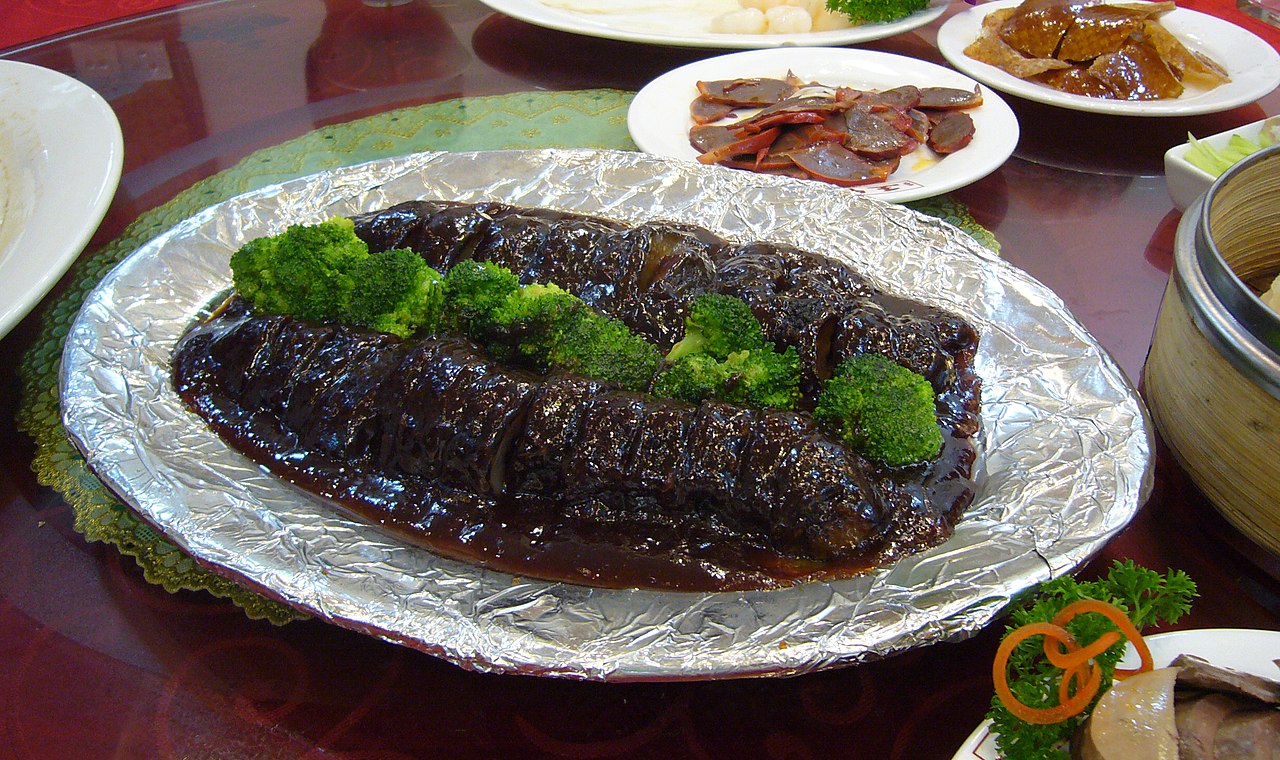
Humans have harvested sea cucumbers for centuries. In parts of Asia they are processed as bêche-de-mer or trepang and are used as a food delicacy and in traditional medicines; trade and consumption are particularly associated with Chinese markets. Growing demand has led to commercial fisheries, and in some regions aquaculture and ranching programmes aim to supply markets and reduce pressure on wild stocks.
Fisheries, aquaculture and sustainability
Commercial harvesting can rapidly deplete local populations because many species have slow growth and late maturity. Management measures used in different jurisdictions include catch limits, size restrictions, seasonal closures and protected areas. Aquaculture techniques—hatchery production of larvae and grow-out of juveniles—are being developed and implemented to support sustainable supply and restoration efforts.
Conservation and research priorities
Key conservation concerns are overfishing, habitat degradation and limited data on population status for many species. Research priorities include improving stock assessments, refining aquaculture methods, understanding ecological roles in different habitats, and evaluating the effects of environmental change. Practical measures combine fisheries management, protected areas and community-based stewardship.
Further information
For taxonomic keys and identification resources consult specialist guides and faunal databases (for example an overview of Holothuroidea or broader echinoderm resources). Species checklists and regional catalogues provide distributional data (species catalogues). For physiological studies see work on the respiratory tree and on skeletal elements such as the endoskeleton and ossicle morphology. Cultural and market perspectives are covered in fisheries and trade reports, including those addressing the role of Asian markets in global demand.
Questions and answers
Q: What are sea cucumbers?
A: Sea cucumbers are a type of echinoderm called the Holothuroidea.
Q: What is the body of a sea cucumber like?
A: Sea cucumbers have a longish body with leathery skin.
Q: Where do sea cucumbers live?
A: Sea cucumbers live on the floor of the ocean.
Q: What do most sea cucumbers eat?
A: Most sea cucumbers are scavengers.
Q: How many species of sea cucumbers are there?
A: There are about 1500 species of sea cucumbers.
Q: Do sea cucumbers have any unique traits?
A: Sea cucumbers have a unique respiratory system and effective defences against predators.
Q: What do Chinese people use sea cucumbers for?
A: Chinese people eat sea cucumbers as a food source.
Related articles
Author
AlegsaOnline.com Sea Cucumber: biology, ecology, uses and conservation Leandro Alegsa
URL: https://en.alegsaonline.com/art/88258
Sources
- answers.com : Pelagic sea cucumber: Information from Answers.com
- geobiologie.uni-goettingen.de : "Cambrian holothurians ? – The early fossil record and evolution of Holothuroidea"
- icb.oxfordjournals.org : "Biomechanics of adhesion in sea cucumber cuvierian tubules (echinodermata, holothuroidea)"
- doi.org : 10.1093/icb/42.6.1107