
Scrabble: the letter-tile word game
Scrabble is a tile-based word game for 2–4 players played on a 15×15 grid. Players form interlocking words, score by letter values and board bonuses, and compete in casual and tournament formats worldwide.
Overview
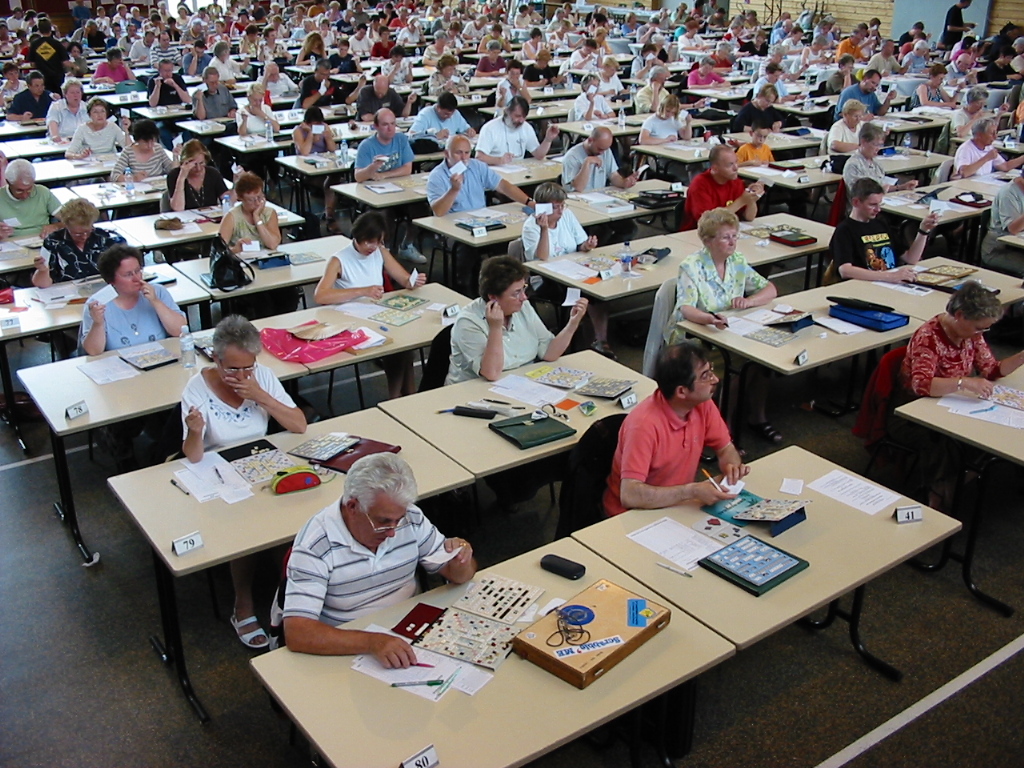
Scrabble is a turn-based word game played on a 15×15 square board. Each player holds a rack of seven letter tiles and uses those letters to build words that connect to words already placed on the board. Words may be formed left-to-right or top-to-bottom and must appear in an accepted dictionary or word list for the chosen language and tournament rules.
Image gallery
7 Images


Components and basic rules
The typical English set contains 100 tiles, including two blank tiles that carry no point value and can represent any letter. The board contains premium squares—double-letter, triple-letter, double-word and triple-word scores—and a center star that counts as a double-word score on the first play. On a turn a player may place tiles to form one or more valid words, score the resulting value, then draw new tiles to return to seven. Players may also exchange tiles or pass if they prefer not to play.
Scoring and strategy
Each letter tile has a point value; the score for a play is the sum of letter values modified by any premium squares covered and then modified by word bonuses. A common rule awards a 50-point bonus, often called a "bingo," when a player uses all seven tiles in a single turn. Strategic play balances maximizing immediate points with control of premium squares, managing the rack for future plays, and tracking remaining tiles in the bag.
History and development
The game was conceived in the 1930s and later refined and marketed under the name Scrabble. It grew from a parlor invention into a household staple and licensed product distributed internationally. Commercial ownership and distribution have changed hands over time; today the game is produced by major manufacturers in different regions. Language editions adjust tile counts and point values to reflect letter frequencies in each language.
Competitive play, variants and resources
Scrabble has an organized competitive scene with national and international tournaments and official word lists such as the Collins and regional tournament word lists. Players study anagrams, two-letter words, hooks and parallel plays to gain advantage. Electronic and online versions coexist with the physical game, and house rules or themed variants are common in casual play. For formal rules and tournament standards consult the official rules and for details on specific letter distributions by language see published reference charts.
Notable facts and distinctions
- Tile distributions and scoring values vary by language to reflect different letter frequencies.
- Blank tiles add strategic value because they substitute for any letter but score zero points.
- Game length and complexity scale with player skill; casual games often emphasize vocabulary and fun, while tournaments emphasize precision and strategy.
Questions and answers
Q: How many people can play Scrabble?
A: Scrabble can be played by 2, 3 or 4 people.
Q: What size is the Scrabble board?
A: The Scrabble board is 15×15.
Q: What is on the Scrabble board?
A: The Scrabble board has squares on it.
Q: How many tiles are in the English version of Scrabble?
A: In the English version of Scrabble, there are 100 tiles.
Q: How many letters can players use at a time in Scrabble?
A: Players in Scrabble can use any of the seven letters they have in front of them.
Q: What is the goal for players in Scrabble when creating words?
A: Players in Scrabble must create words that connect to another word that is already on the board.
Q: What is used to create words in Scrabble?
A: Small tiles with letters on them are used to create words in Scrabble.
Related articles
Author
AlegsaOnline.com Scrabble: the letter-tile word game Leandro Alegsa
URL: https://en.alegsaonline.com/art/88171