
Baobab (Adansonia): the iconic water‑storing tree
Baobabs are large, long-lived trees of the genus Adansonia, native to Madagascar, mainland Africa and Australia, valued for water-storing trunks, edible fruit and cultural significance.
Baobab is the common name for trees of the genus Adansonia. These trees are immediately recognizable by their massive, often swollen trunks and sparse crowns of branches. Baobabs occupy a distinctive place in the landscapes and cultures where they grow: they are important ecologically, provide food and materials for people and animals, and feature prominently in local myth and tradition. The number of species recognized varies by source, but most treatments emphasize that the majority occur in Madagascar, with additional species native to parts of Africa and Australia, and cultivated or naturalized trees present in other regions such as India.
Image gallery
10 Images


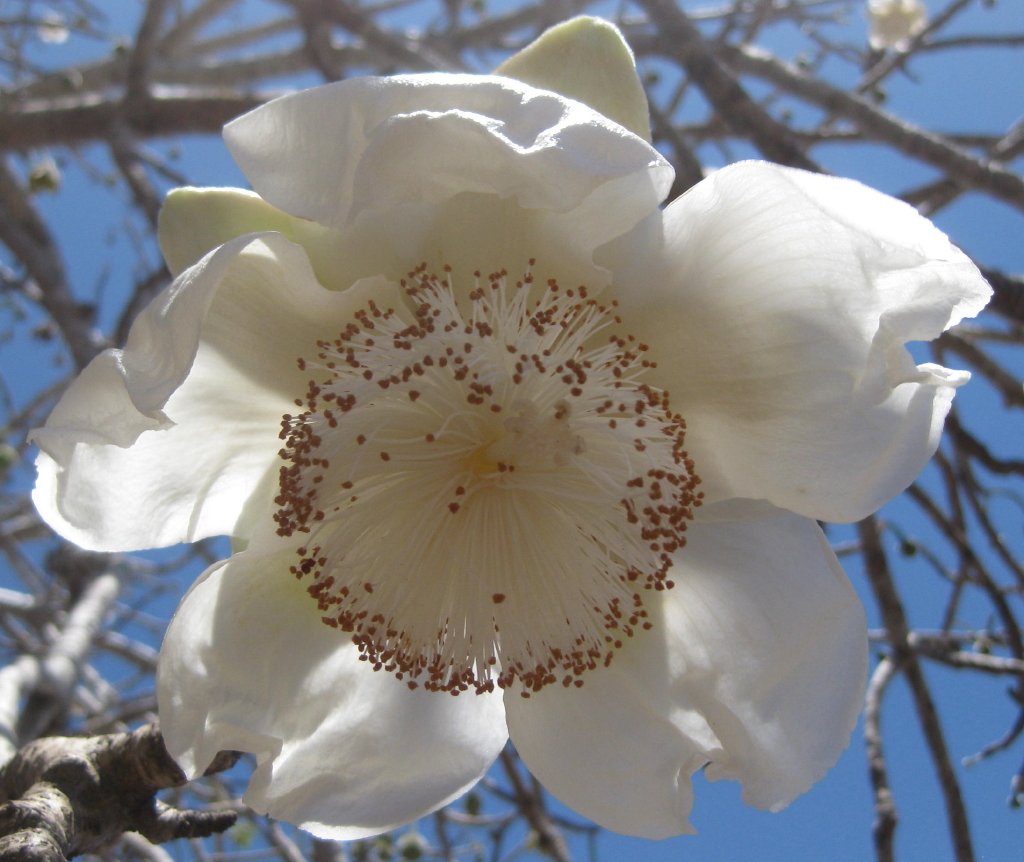


Characteristics
Baobabs are deciduous trees notable for a set of adaptations to seasonally dry environments. Common characteristics include:
- Very large, often bottle-shaped or cylindrical trunks that can store water in fibrous tissues during the wet season.
- Smooth, relatively thin bark that may be used to extract fiber.
- Large, showy flowers—frequently nocturnal—that attract pollinators such as bats and large insects.
- Hard-shelled, dry fruits containing a powdery, nutrient-rich pulp and numerous seeds.
These traits allow baobabs to survive long dry periods; their trunks act as living reservoirs and their leaves are often reduced or shed to limit water loss.
Distribution and species
Most species of Adansonia are endemic to the island of Madagascar, where varied forms have evolved in different habitats. Mainland African baobabs, notably the widely known African baobab, and related species occur across dry regions of Africa and the Arabian Peninsula. A distinct species is native to parts of Australia. Beyond these native ranges, baobabs have been planted and naturalized in tropical and subtropical areas worldwide, including parts of India, where they are associated with historic plantings and local uses.
Uses and cultural importance
People have long used baobabs for a variety of practical and cultural purposes. The pulp of the fruit is edible and rich in vitamin C and other nutrients; seeds yield oil and can be ground for food; leaves are used as vegetables or medicine; and bark fibers are woven into rope or cloth in some traditions. Baobabs also serve as water sources, emergency shelter when hollow, and meeting places. Their longevity and unusual shapes give them a strong presence in folklore and as landmarks.
Ecology, longevity and conservation
Baobabs support wildlife by providing food and hollows for birds, bats and other animals. Some individual trees are known to be many centuries old, and claims of extremely ancient specimens attract scientific interest; precise ages often require careful dating. Baobab populations face threats from habitat change, altered fire regimes and climate pressures in parts of their range, prompting conservation attention. Their combination of ecological role, cultural value and practical uses makes baobabs a focus for both local stewardship and broader scientific study.
Notable facts: Baobabs are sometimes called "upside-down trees" because their bare branches in the dry season resemble roots. They are frequently protected as cultural monuments and are emblematic of regions such as Madagascar, where they are a national symbol and an important part of natural heritage.
Questions and answers
Q: What is the common name of a genus of trees?
A: The common name of a genus of trees is Baobab.
Q: How many types of baobab trees are there in total?
A: There are a total of eight types of baobab trees.
Q: Where do the six species of baobab trees live?
A: The six species of baobab trees live in the drier parts of Madagascar.
Q: How many species of baobab trees are there in mainland Africa?
A: There are two species of baobab trees in mainland Africa.
Q: Which country has one species of baobab tree?
A: Australia has one species of baobab tree.
Q: How many types of baobab trees are there in India?
A: There are three types of baobab trees in India.
Q: What is the national tree of Madagascar?
A: The national tree of Madagascar is Baobab.
Related articles
Author
AlegsaOnline.com Baobab (Adansonia): the iconic water‑storing tree Leandro Alegsa
URL: https://en.alegsaonline.com/art/8815
Sources
- dailymail.co.uk : Fancy a pint in the world's only bar that's INSIDE a tree?, Daily Mail, December 2007
- news.bioversityinternational.org : "Scientists predict African fruit trees could help solve major public health problem"
- foodnavigator-usa.com : "Baobab goes for GRAS ahead of 2010 World Cup"
- blogs.ngm.com : "Vitamin Tree"
- senegal-online.com : "The Baobab tree in Senegal"
- nla.gov.au : "Dance of the Boab"