
Banyan (Ficus): the strangler fig and its ecology
A banyan is a type of fig tree that often begins life as an epiphyte, sending aerial roots that form new trunks. This article covers its characteristics, life cycle, cultural roles and ecological importance.
The term "banyan" commonly refers to the Indian banyan, Ficus benghalensis, but can apply to several related fig trees that share a similar life strategy. Banyans belong to the genus Ficus and more specifically are grouped in the subgenus Urostigma in many sources. These trees are best known for beginning life as an epiphyte, sprouting from seeds deposited by birds or mammals in crevices on a host, and then developing roots that extend to the ground.
Image gallery
10 Images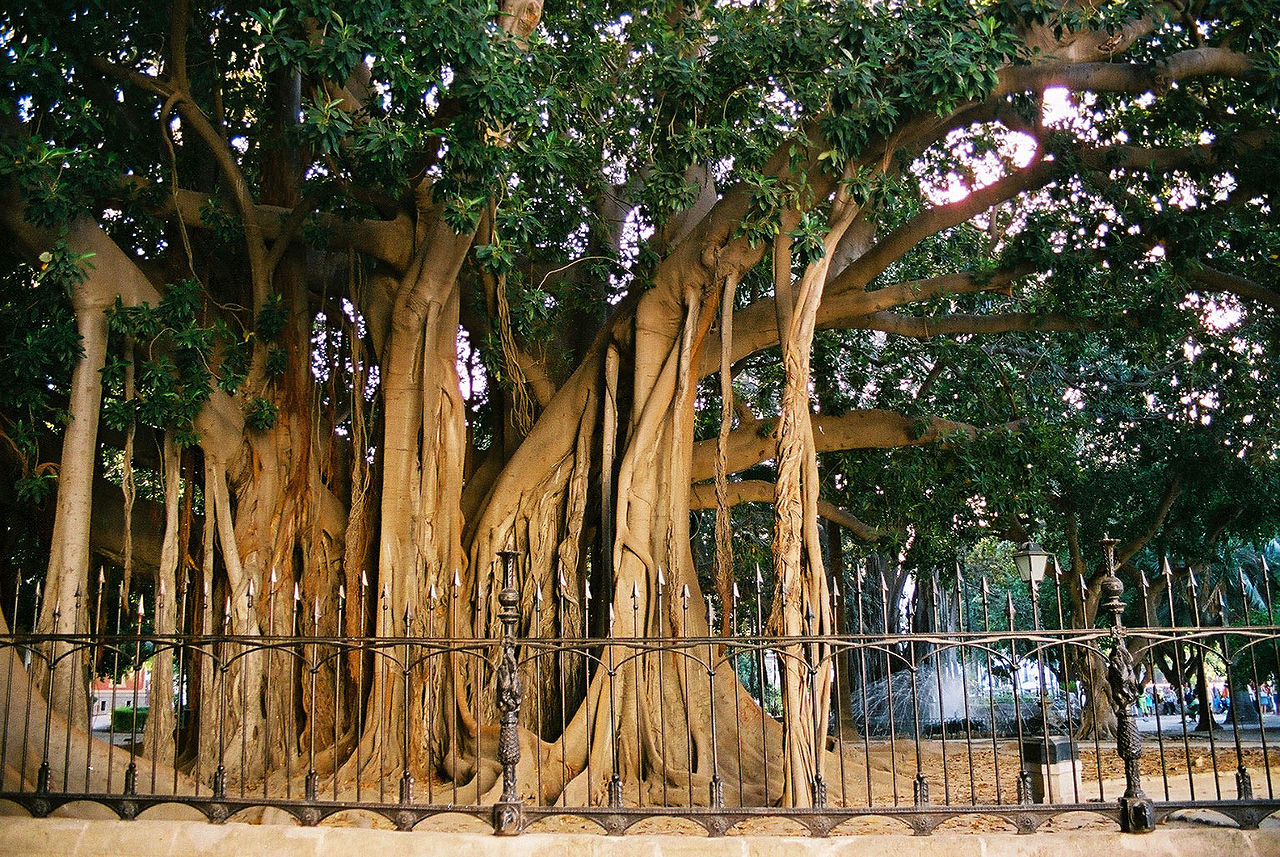


Physical characteristics
Banyans typically have large, leathery, glossy leaves with an elliptical shape and often a reddish cast when young. The trees produce an unusual enclosed inflorescence called a syconium — commonly called a fig — which contains many tiny flowers inside. The trunk architecture of mature banyans is distinctive: aerial roots descend from branches and thicken into woody prop roots that can form secondary trunks. Over decades a single banyan can spread laterally to cover a wide area and may appear as a grove of interconnected trunks.
Life cycle and ecology
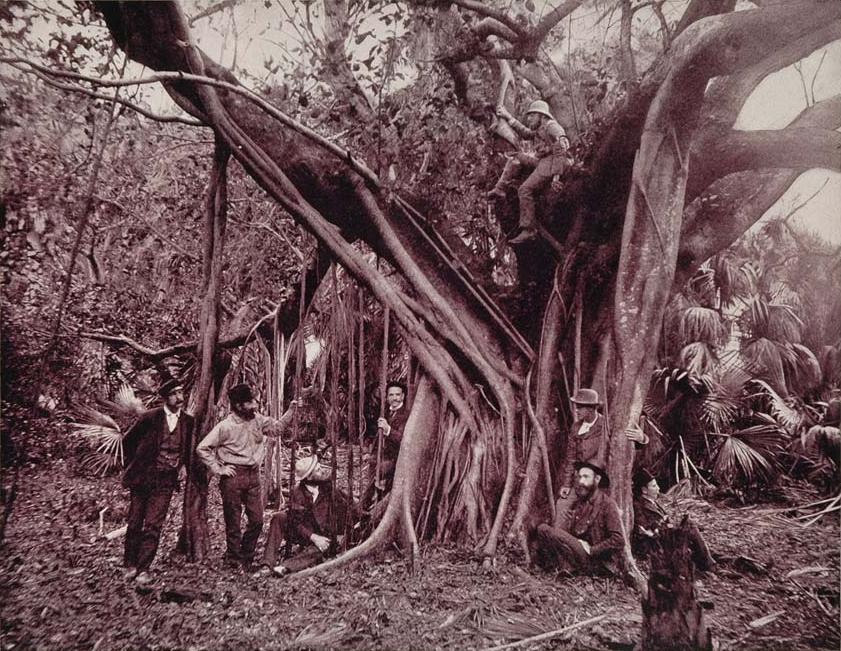
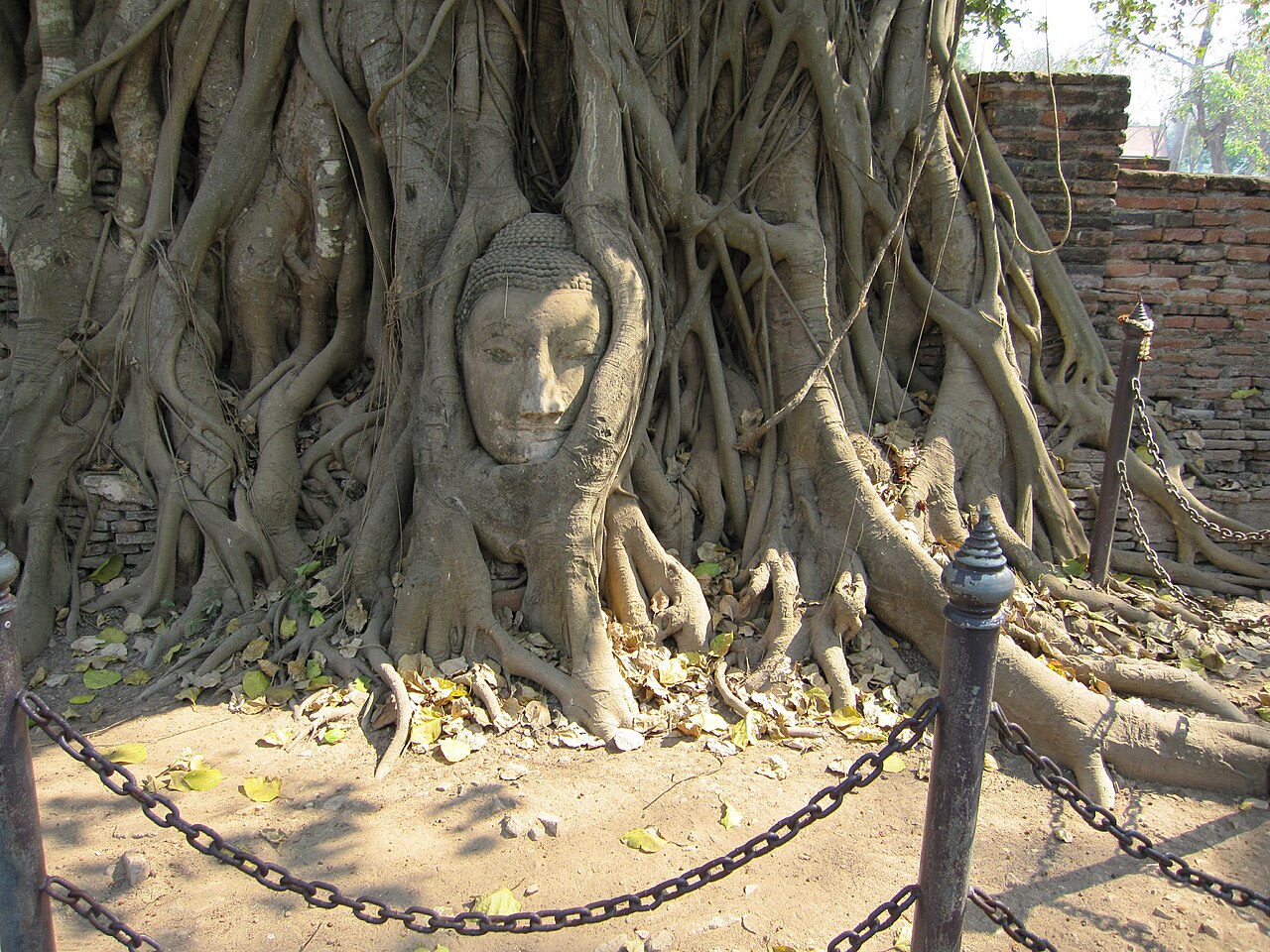
Banyan seeds are dispersed chiefly by fruit-eating animals; birds, bats and other mammals consume the figs and deposit seeds in bark fissures or soil ledges. Once a seed germinates on a host tree or structure, the seedling grows downward-supporting aerial roots. These roots often enwrap the host, a habit that has earned some species the name "strangler fig." The process provides the fig with access to light above the forest floor while eventually creating a self-supporting network of trunks.
Reproduction and mutualism
Banyans are intimately linked to tiny pollinating fig wasps in an obligate mutualism: each species of fig is typically pollinated by one or a few specialized wasp species that enter the syconium to lay eggs while transferring pollen. This tight relationship means fig reproduction cannot occur without its wasp partner. At the same time, the fruits feed a wide range of animals, so banyans are keystone species in many tropical and subtropical ecosystems, sustaining birds, mammals and insects year-round.
Cultural importance and uses
Across South and Southeast Asia banyans have long cultural and religious significance. The Indian banyan is the national tree of India and is also recognized in Bangladesh, where large specimens serve as temple trees, community meeting places and landmarks. People value banyans for shade and as living landmarks; some historic specimens, such as the well-known Great Banyan, are celebrated for their vast spread. Traditional uses include sheltering livestock, supporting agroforestry systems and providing fodder, while parts of the tree figure in folk medicine and crafts in many regions.
Distinctions, conservation and notable facts
- Not all figs are banyans, but any Ficus species that begins epiphytically and later forms ground-rooted trunks may be called a strangler fig.
- Banyans play a major role in forest succession by creating new canopy openings and stabilizing soils; they also host complex epiphytic communities.
- Because they require intact pollinator populations and seed dispersers, banyans can be vulnerable to habitat loss and fragmentation.
For further reading on the genus and its ecology, consult authoritative botanical treatments and regional conservation resources: general genus information is available via overview sources, life-history studies through ecology links, distribution records at flora databases, and cultural histories via ethnobotany references. For practical guidance on planting or protecting banyans in urban and rural landscapes see resources such as horticultural guides.
Questions and answers
Q: What is a banyan?
A: A banyan is a kind of fig tree, usually referring to the Indian banyan or Ficus benghalensis.
Q: How does a banyan start life?
A: Banyans typically start life by growing on another plant as an epiphyte, with its seeds germinating in the cracks and crevices of host trees, buildings, or bridges.
Q: What is the national tree of India and Bangladesh?
A: The Indian banyan (Ficus benghalensis) is the National Tree of both India and Bangladesh.
Q: How are banyans dispersed?
A: Banyans are dispersed by fruit-eating birds who eat their seeds and spread them elsewhere.
Q: What type of growth habit do some species of Ficus have?
A: Some species of Ficus have a growth habit known as "strangler figs," where their roots may envelop part of the host tree or building structure from which they get their name.
Q: What shape are the leaves on a banyan tree?
A: The leaves on a banyan tree are large, leathery, glossy green, and elliptical in shape.
Q: How do figs reproduce?
A: Fig trees rely on fig wasps for reproduction; they have unique fruit structures that require this type of pollination to produce new plants.
Tags
Related articles
Author
AlegsaOnline.com Banyan (Ficus): the strangler fig and its ecology Leandro Alegsa
URL: https://en.alegsaonline.com/art/8813
Sources
- india.gov.in : "National Tree"
- ias.ac.in : "Trees with a difference: the strangler figs"
- depts.washington.edu : "Aerial-rooting banyan trees"
- hua.huh.harvard.edu : Harvard.edu
- epa.qld.gov.au : QLD.gov.au
- thelovelyplants.com : The Lovely Plants.