
Scopes Trial (State of Tennessee v. John Thomas Scopes)
A landmark 1925 American court case about teaching evolution in public schools; centered on teacher John Scopes, lawyers Clarence Darrow and William Jennings Bryan, and the wider Fundamentalist–Modernist debate.
Overview
The Scopes trial, formally State of Tennessee v. John Thomas Scopes and often called the "Scopes monkey trial," was a highly publicized 1925 criminal prosecution that examined whether public school teachers could lawfully present human origins through modern science. The prosecution relied on the Tennessee law commonly known as the Butler Act, which prohibited the teaching of human evolution in any state-funded school. The case was held in Dayton, Tennessee, and quickly became a national spectacle.
Image gallery
10 Images




Circumstances and defendant
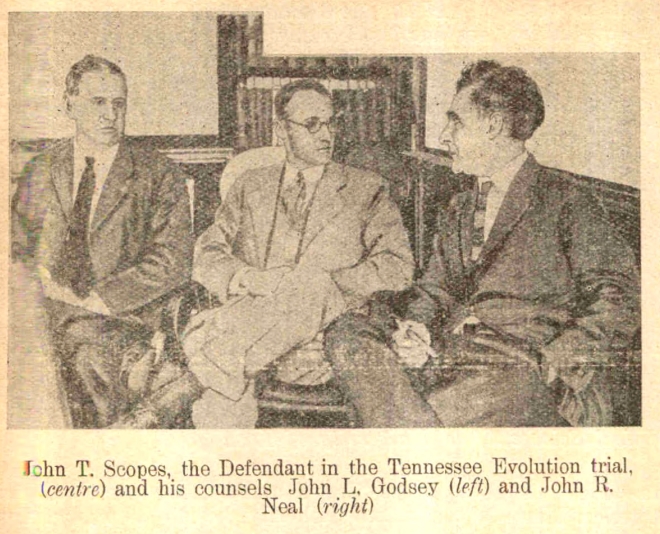
John Scopes was a young substitute teacher who was charged after local officials and civic boosters decided to stage a test case to draw publicity and to challenge the constitutionality of the law. Scopes later said he was not certain whether he had explicitly taught evolution in his class, but he allowed himself to be named as the defendant so the law could be tested in court. The arrangement turned a local controversy into a deliberate legal and cultural confrontation; reporters and observers interpreted the case as both a legal fight and a symbolic contest about education and modern knowledge.
Trial, lawyers, and verdict
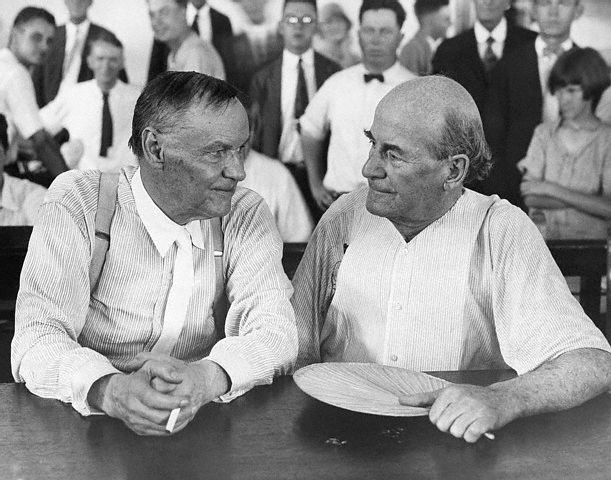
The trial featured two of the most prominent public figures of the time. The prosecution team called on William Jennings Bryan, a three-time presidential candidate and leading public advocate for a literal reading of scripture, while the defense was represented by the famed attorney Clarence Darrow. The hearings combined courtroom testimony, dramatic speeches, and intense media attention. Scopes was convicted and fined $100 under the statute, but the conviction was later set aside on a technicality by a state appellate court. Regardless of the legal outcome, the trial produced widespread public debate and enduring cultural images.
Context: science, religion, and education
Observers framed the case around the larger Fundamentalist–Modernist controversy. Supporters of the law and its enforcement — often described as Fundamentalists — argued that the word of God as revealed in the Bible should take interpretive precedence over ideas they saw as conflicting with scripture. Opponents and many scientists argued that modern science and religious belief could coexist and that teaching contemporary evolutionary biology in public schools did not require abandoning faith traditions. The debate raised questions that were legal, educational, and theological in nature, and it helped crystallize divisions that had been growing in American Protestantism and in public schools.
Legacy and notable facts
The Scopes trial had several lasting consequences beyond the courtroom. It demonstrated how a single local law could draw national attention, it shaped public perceptions of the relationship between science and religion, and it influenced later legal and educational battles over curriculum. The Tennessee statute remained on the books for decades before being repealed, and the trial continued to be referenced in cultural works and public debates about academic freedom and curricular authority.
- Staged character: the case was promoted locally to attract attention and test the law.
- High-profile advocates: Clarence Darrow and William Jennings Bryan became symbols of the opposing sides.
- Verdict and appeal: Scopes was convicted but the decision was later overturned on procedural grounds.
- Long-term import: the trial intensified national conversation over public education, science curricula, and religious belief.
For readers wishing to explore primary sources, contemporary reportage, or scholarly analysis, there are many collections of trial transcripts, newspaper coverage, and later historical studies that document both the courtroom events and the social atmosphere that surrounded them. These materials illustrate why the encounter in Dayton remains a frequently cited touchstone in American cultural and educational history.
Additional context and interpretations can be found through archival and educational resources that discuss the teaching controversy, the specific provisions of the Butler Act, and the broader movement debates, including modern retellings and critiques of how the trial has been represented in drama and film. Scholars continue to examine how the episode shaped legal precedent, public schooling, and the public image of both science and religion.
Questions and answers
Q: What is the Scopes trial formally known as?
A: The Scopes trial is formally known as The State of Tennessee v. John Thomas Scopes.
Q: What was the purpose of the trial?
A: The purpose of the trial was to attract publicity to the small town of Dayton, Tennessee, where it was held.
Q: Who were William Jennings Bryan and Clarence Darrow?
A: William Jennings Bryan was a three-time presidential candidate who argued for the prosecution in the Scopes trial, while Clarence Darrow was a famed defense attorney who spoke for Scopes.
Q: What did Tennessee's Butler Act make unlawful?
A: Tennessee's Butler Act made it unlawful to teach human evolution in any state-funded school.
Q: How did John Scopes incriminate himself?
A: John Scopes purposely incriminated himself so that he could be found guilty and serve as a defendant in order for the case to have more attention from national reporters.
Q: What controversy did this case bring up?
A: This case brought up the Fundamentalist–Modernist Controversy which set "Modernists", who said evolution was not inconsistent with religion, against Fundamentalists, who said the word of God as revealed in the Bible took priority over all human knowledge.
Q: When was Tennessee's Butler Act repealed?
A: Tennessee's Butler Act was not repealed until 1967.
Related articles
Author
AlegsaOnline.com Scopes Trial (State of Tennessee v. John Thomas Scopes) Leandro Alegsa
URL: https://en.alegsaonline.com/art/88071
Sources
- law.umkc.edu : Full text of the Butler Act and the bill that repealed it
- books.google.com : Reluctant modernism: American thought and culture, 1880–1900