
Scientific model: definition, types, construction, uses and limitations
Concise guide to scientific models: what they are, main types, how models are built and tested, common applications (weather, epidemiology, engineering), and typical limitations and best practices.
A scientific model is a simplified, intentionally abstract representation of a real-world system used to explain behavior, generate predictions, and support investigation and decision making. Models reduce complexity by selecting key variables and relationships and by stating assumptions that make analysis tractable. They can appear as diagrams, verbal descriptions, mathematical equations, statistical formulations, or computer programs. For an introductory overview, see overview materials.
Image gallery
2 Images
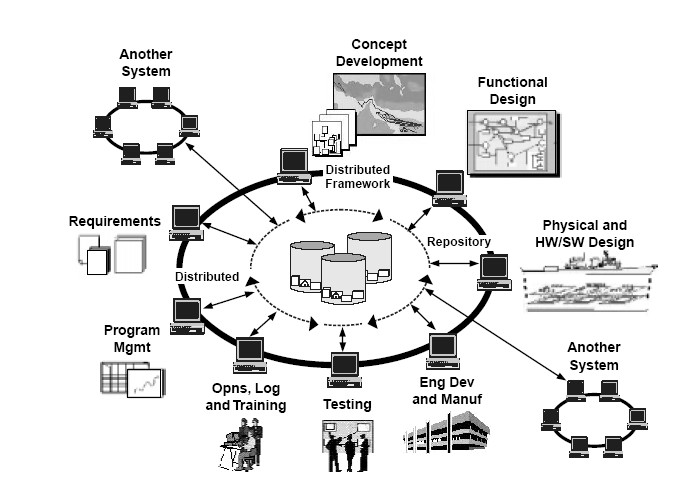
Characteristics and common types
Models differ in form, purpose, and fidelity. Common types include:
- Conceptual models: diagrams, flowcharts, or metaphors that outline components and causal links.
- Mathematical models: deterministic equations that express physical laws or balances.
- Statistical models: probabilistic descriptions that infer relationships and quantify uncertainty from data.
- Computational/simulation models: implementations that evolve system state over time under rules or numerical methods.
- Physical or scaled models: tangible replicas used for experiments and demonstrations.
Many practical studies use hybrid approaches combining statistical calibration with mechanistic equations. For classifications and examples, consult classification guides.
How models are constructed
Model construction typically follows steps: define purpose and scope, identify variables and processes, select a formalism, formulate governing relations or rules, estimate parameters from data, and implement the model in analytic or computational form. Data sources and measurement methods determine the quality of parameter estimates. Practical projects often use data assimilation to merge observations with model state; see technical resources at meteorological resources and variable definitions at variable definitions.
Validation, uncertainty, and testing
Validation assesses whether a model sufficiently represents the system for its intended use. Common methods include calibration to historical data, out-of-sample prediction, cross-validation, sensitivity analysis, and comparison with independent observations. Uncertainty arises from parameter error, structural simplifications, and input data limits. Ensemble modeling and probabilistic forecasts help quantify and communicate uncertainty. Practical verification and validation procedures are discussed in historical overviews.
Applications and examples
Models underpin many applied domains. Numerical weather prediction combines equations for fluid dynamics and thermodynamics with large observation networks to forecast the atmosphere; see case material at application examples. In epidemiology, compartmental and statistical models support policy decisions by projecting outbreak trajectories and intervention effects. Engineering models predict stresses and failure modes; economic models explore systemic responses to policy. Data outputs are often visualized to aid interpretation; see visualization resources at data visualization resources.
Limitations and good practice
No model is a complete replica of reality. Limitations include incomplete knowledge of mechanisms, scale mismatches, sensitivity to initial conditions, and computational constraints. Good practice emphasizes stating assumptions clearly, testing against independent data, quantifying uncertainty, using multiple models where appropriate, and documenting methods to support reproducibility. Ethical considerations and transparent communication are critical when models inform policy or public decisions; further discussion on representation is available at representation topics.
Well-designed scientific models are powerful tools for explanation, prediction, and decision support when their scope and uncertainty are understood. Ongoing refinement—driven by new data, improved theory, and computational advances—keeps models scientifically useful and trustworthy.
Questions and answers
Q: What is a scientific model?
A: A scientific model is a simplified abstract view of a complex reality that is used as a basis for scientific work.
Q: What are scientific models used for?
A: Scientific models are used to explain, predict, and test, or to develop computer programs or mathematical equations.
Q: Can you give an example of a complex model?
A: Yes, an example of a complex model is the software used for weather forecasts, which is based on equations for the variables that affect weather.
Q: How does a program for weather forecasts work?
A: Meteorological data is fed into the program which produces predictions (graphs and data) of future weather patterns.
Q: What does a scientific model represent?
A: A scientific model represents complex objects, events, and physical processes in a logical way.
Q: Why do scientists use scientific models?
A: Scientists use scientific models because they provide a simplified view of complex realities, which can help to explain, predict and test scientific phenomena.
Q: What are some other applications of scientific models?
A: Some other applications of scientific models include developing computer programs and mathematical equations.
Related articles
Author
AlegsaOnline.com Scientific model: definition, types, construction, uses and limitations Leandro Alegsa
URL: https://en.alegsaonline.com/art/88039