
Schefflera actinophylla — the umbrella tree
Schefflera actinophylla, called umbrella or octopus tree, is a tropical Araliaceae tree grown as a large houseplant and ornamental; native to Australia, New Guinea and Java and often naturalized elsewhere.
Overview
Schefflera actinophylla, sometimes referenced by the synonym Brassaia actinophylla, is an evergreen tree in the Araliaceae family. Common English names include umbrella tree, octopus tree and amate. Valued both as a landscape specimen in warm climates and as a bold indoor plant, it is notable for its palmately arranged compound leaves and striking upright flower clusters in landscape settings.
Image gallery
10 Images




Description and distinguishing features
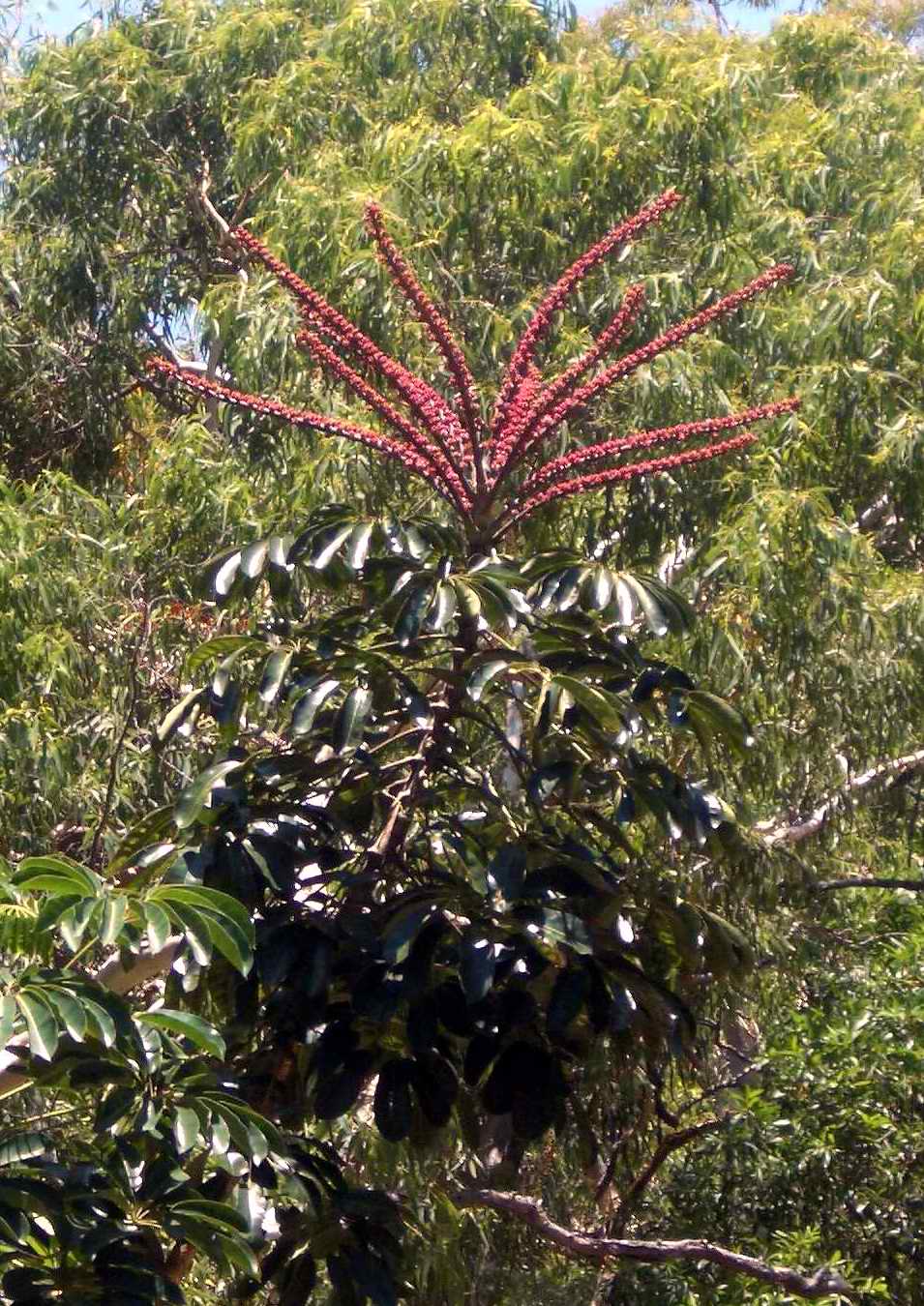
Plants are characterized by a central stem bearing pinnate or palmately arranged leaves: several glossy leaflets spread out from a single point, creating a radiating, umbrella-like appearance. Leaflets are typically elongated and glossy, and older plants often develop a distinct trunk as lower leaves drop, giving a tree-like profile. In the landscape, mature specimens can form tall canopies; as a pot-grown houseplant they normally remain much smaller but can still reach several metres or multiple feet in height over years.
Flowers, fruit and ecology
In suitable climates Schefflera actinophylla produces prominent inflorescences: dense, often reddish to orange flower clusters borne on long stalks that rise above the foliage. These floral displays attract pollinators and birds, and later set small fleshy fruits that are dispersed by wildlife. Outside its native range the species has naturalized in some tropical and subtropical regions and can behave invasively where seed dispersal and local conditions favor spread.
Native range and habitat
The species is native to tropical forest and gallery forest zones of northern Australia and nearby islands. It occurs in parts of Australia, including eastern Queensland and the Northern Territory, as well as in New Guinea and Java. In the wild it grows in warm, humid environments with filtered light and reasonably rich, well-draining soils.
Cultivation and care
Schefflera actinophylla adapts well to indoor culture when given adequate light and basic maintenance. It tolerates a range of household temperatures and is reasonably flexible about moisture levels, but performs best with consistent care and brighter light than many common houseplants.
- Light: bright indirect light; some cultivars tolerate moderate shade but will grow more slowly.
- Water: moderate watering; allow the topsoil to dry slightly between waterings to avoid root rot.
- Soil and potting: use a well-draining, fertile mix and repot when rootbound.
- Humidity: benefits from higher humidity but usually tolerates average indoor conditions; misting or grouping can help in dry air (humidity).
- Propagation: commonly by cuttings or air-layering for cultivar fidelity.
- Maintenance: prune to control size and encourage branching; wipe broad leaves to remove dust and reduce pest attraction.
Pests, problems and notable considerations
Common pests include scale insects, mealybugs and spider mites, which are more likely when plants are dusty or stressed. Leaf drop can result from sudden changes in light, overwatering, or low temperatures. In warm climates where it escapes cultivation, Schefflera actinophylla can form dense stands that compete with native vegetation, so check local guidance before planting in the landscape.
Uses and significance
Primarily grown as an ornamental, the umbrella tree is popular for its dramatic foliage and architectural shape. It is used as a specimen tree in subtropical gardens and as a statement indoor plant in offices and homes (houseplant). Because of its adaptability to varying environmental conditions and ability to tolerate different forest-like light regimes, it remains a common choice for both indoor and outdoor planting where climate permits.
For further plant-specific information, cultivation advice, or conservation notes, consult regional horticultural resources and local guidelines before introducing this species to a garden or landscape.
Related reading: the family overview (Araliaceae), native habitat descriptions (tropical rainforests), and regional plant pages for Australia, Queensland, Northern Territory, New Guinea and Java offer additional context.
Questions and answers
Q: What is the scientific name of Schefflera actinophylla?
A: The scientific name of Schefflera actinophylla is Brassaia actinophylla.
Q: Where is this tree native to?
A: Schefflera actinophylla is native to tropical rainforests and gallery forests in Australia (eastern Queensland and the Northern Territory), New Guinea, and Java.
Q: What are some common names for this tree?
A: Common names for this tree include Umbrella Tree, Octopus Tree, and Amate.
Q: How tall can it get when grown indoors?
A: When grown indoors, Schefflera actinophylla can reach up to seven or eight feet tall. In its natural environment in Australia, it can grow up to fifty feet tall.
Q: What do the leaves look like?
A: The leaves of a Schefflera actinophylla are composed of a number of leaflets set in a circle around a central stem that stretch out horizontally like the ribs of an umbrella. Each leaflet is a pointy oval shape that can be up to eight inches long with rich shiny green coloration.
Q: Does it need special care requirements when kept as a houseplant?
A: As long as it has enough sunlight and clean conditions, the schefflera will last a long time and adapts well to normal household temperatures and different humidity levels. It may require occasional dusting since its broad leaves tend to collect dust which attracts red spider mites.
Related articles
Author
AlegsaOnline.com Schefflera actinophylla — the umbrella tree Leandro Alegsa
URL: https://en.alegsaonline.com/art/87844