
Scarborough railway station
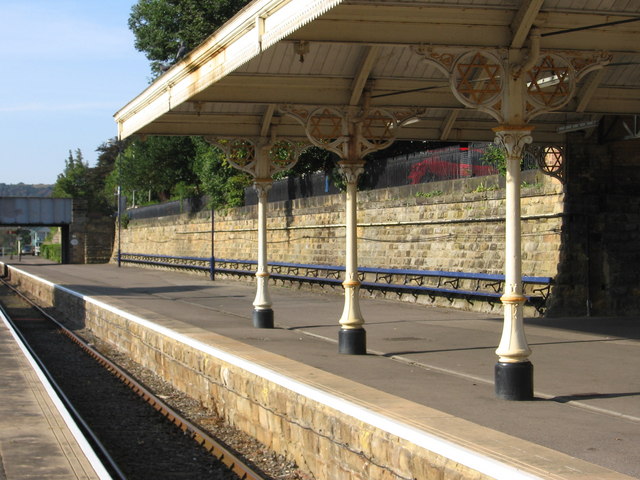
Primary railway terminus in Scarborough, North Yorkshire, England. Opened in 1845, it serves passenger services on TransPennine and the Yorkshire Coast Line and is noted for its very long station seat.
Overview
Scarborough railway station is the main rail terminus for the coastal town of Scarborough in England. It functions as the end point for regional and intercity passenger services and provides a gateway for both daily commuters and visitors to the resort town. The station retains a busy timetable during summer months when tourism increases, and it is an important transport link for the surrounding part of North Yorkshire.
Image gallery
5 Images


Characteristics and facilities
The station occupies a terminal layout with multiple platforms arranged beneath protective canopies and shelters. Passenger facilities typically include ticketing areas, waiting rooms, basic retail or vending options, and step-free access on several platforms. On-street connections such as local buses, taxis and pedestrian routes link the station to the town centre, harbour and seafront promenades.
History and development
First opened in 1845, Scarborough station dates from the early era of railway expansion in Britain. It was established to serve the growing popularity of coastal resorts and to connect the town with the wider rail network. Over the years the station has seen changes to track layout and services: historically it provided branch connections to nearby towns such as Pickering (service until 1950) and Whitby (service until 1965). Like many Victorian termini, the station has undergone alterations to improve accessibility and passenger comfort while retaining aspects of its historic character.
Services and routes
- Terminus for TransPennine services linking Scarborough with destinations across the Pennines.
- Northern end of the Yorkshire Coast Line providing coastal connections to towns and cities along the eastern seaboard.
- Local and regional services that support commuting, leisure travel and seasonal visitor flows.
Notable facts and distinctions
An often-cited curiosity at the station is an exceptionally long bench described as the world’s longest station seat, measured historically at about 152 yards (139 m). The station’s role in serving a traditional British seaside resort gives it particular seasonal importance: timetables and rolling stock can vary to meet peak holiday demand. Its combination of historic origins, terminal layout and coastal setting makes Scarborough railway station a recognizable feature of the town's transport infrastructure.
Questions and answers
Q: Where is Scarborough railway station located?
A: Scarborough railway station is located in Scarborough, North Yorkshire, England.
Q: When did Scarborough railway station open?
A: Scarborough railway station opened in 1845.
Q: What routes does Scarborough railway station serve?
A: Scarborough railway station serves the North TransPennine route operated by First TransPennine Express and the Yorkshire Coast Line.
Q: Was Scarborough railway station connected to Pickering before?
A: Yes, Scarborough railway station served a line to Pickering until 1950.
Q: Did Scarborough railway station serve a line from Whitby before?
A: Yes, Scarborough railway station served a line from Whitby until 1965.
Q: What is special about the station seat at Scarborough railway station?
A: The station seat at Scarborough railway station is the longest in the world, measuring 152 yards (139 meters) in length.
Q: Which train operator operates the North TransPennine route that serves Scarborough railway station?
A: First TransPennine Express operates the North TransPennine route that serves Scarborough railway station.
Related articles
Author
AlegsaOnline.com Scarborough railway station Leandro Alegsa
URL: https://en.alegsaonline.com/art/87781