
Banksia: Australian flowering plants of the Proteaceae family
Banksia is a genus of woody shrubs and trees endemic to Australia, known for distinctive flower spikes and cones; important ecologically for nectar-feeding animals and significant in horticulture and conservation.
Overview
Banksia is a distinctive genus of plants endemic to Australia, named in honor of the naturalist Joseph Banks. The group comprises around 170 species within the larger plant family Proteaceae. Banksias are widely admired for their unusual flower spikes and the persistent woody "cones" that follow flowering; these characters make them instantly recognizable in the landscape and popular in garden cultivation.
Image gallery
10 Images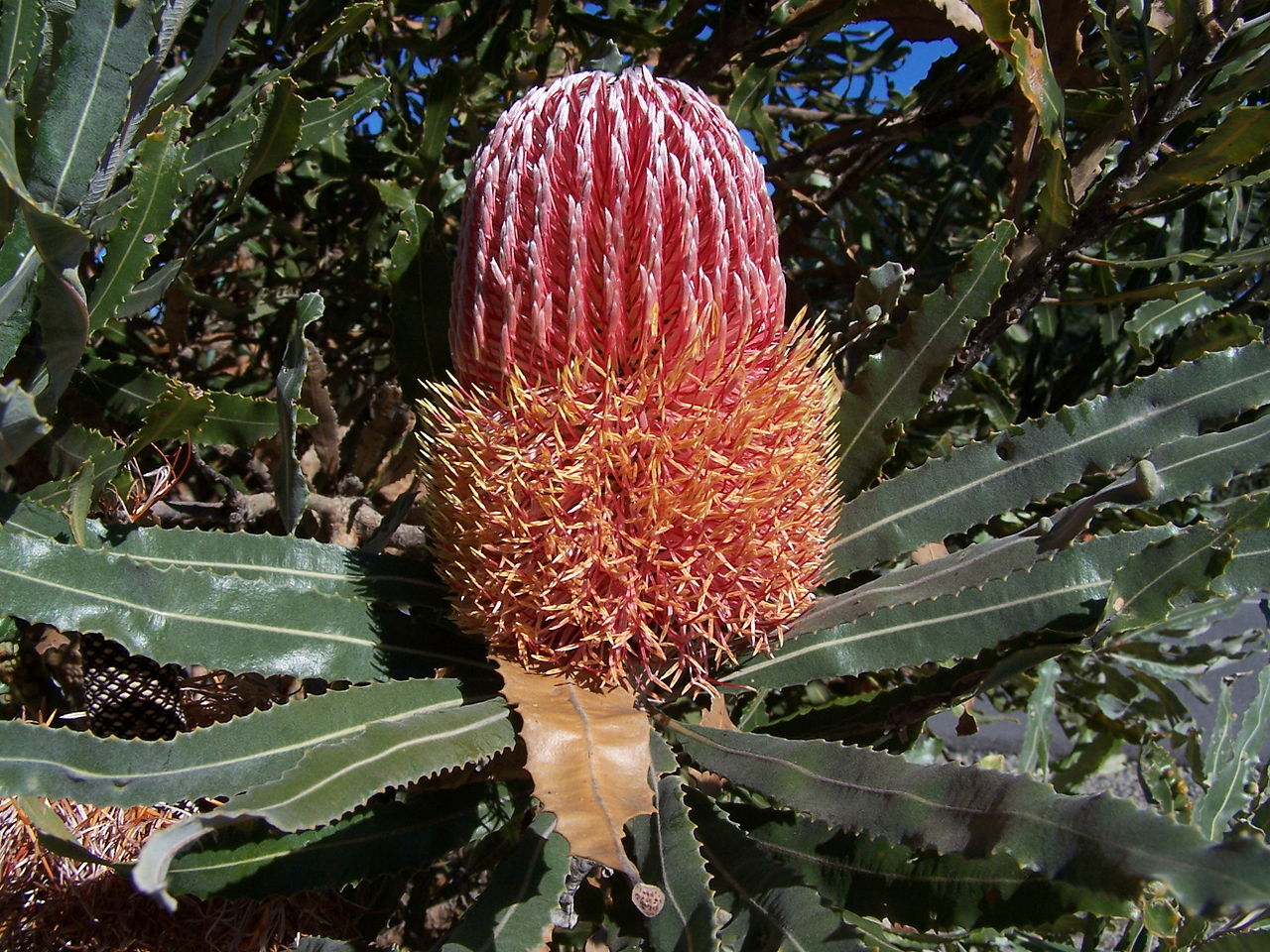


Characteristics
Banksias show a wide range of growth forms, from low, prostrate forms to erect woody shrubs and trees reaching many metres in height. Individual flowers are small but densely packed into cylindrical or dome-shaped inflorescences (commonly called flower spikes). After flowering, these spikes develop into woody infructescences that contain follicles or "seed pods" which may open after fire or as they age. Many species have proteoid (cluster) roots that help them extract nutrients from poor soils.
Distribution and habitat
Banksias occur in a variety of habitats across Australia, from coastal heath and rainforest margins to dry sclerophyll forests and some semi-arid regions, though they are generally absent from the continent's central deserts. Different species are adapted to particular soils and climates, which contributes to the genus's diversity and endemism.
Ecology and pollination
These plants produce abundant nectar and are a keystone resource in many ecosystems, forming an important part of the local food chain. Banksias attract a wide suite of pollinators; typical visitors include:
- nectar-feeding birds (such as honeyeaters),
- bats and small mammals,
- native rodents and marsupials, and
- insects including bees and beetles.
The relationship between Banksia flowering and animal visitors illustrates coevolutionary links in the Australian bush and supports biodiversity in surrounding plant and animal communities.
Uses and cultivation
Banksias are valued in horticulture for their sculptural flowers and foliage, and several species are cultivated as ornamental garden plants. They also contribute to the cut-flower industry and are grown in commercial nursery production. Gardeners prize them for drought tolerance and for attracting wildlife; however, some species require well-drained soils and protection from heavy frost to thrive.
Conservation and threats
Many Banksia species face pressures from habitat clearing, altered fire regimes, invasive species and disease—particularly dieback caused by the soil-borne pathogen Phytophthora. As a result, certain taxa are considered rare or endangered at state or national levels. Conservation measures include habitat protection, seed banking, controlled burning programs tailored to species' life cycles, and research on disease management.
Notable facts
Banksias play an outsized ecological and cultural role in Australia: they serve as nectar hubs across seasons, are iconic subjects in art and natural history, and illustrate how plant form and reproductive strategy adapt to fire-prone landscapes. Taxonomy and classification of the group have been revised several times as botanists refine species boundaries and relationships, and many species continue to be studied for their ecology, horticultural potential and conservation needs.
Further reading and resources: see botanical guides and conservation listings for region-specific information and care recommendations. For general reference and images, consult authoritative floras and botanical garden publications (genus overview, distribution maps).
Questions and answers
Q: What is Banksia?
A: Banksia is a genus of plants common to Australia, which is noted for their unique flowering.
Q: How many species does Banksia have?
A: Banksia has around 170 species.
Q: What kind of landscapes do Banksia generally grow in?
A: Banksia is generally found in a wide variety of landscapes, including (occasionally) rainforest, shrubland, and some more arid landscapes, though not in Australia's deserts.
Q: What is the importance of Banksia plants in the Australian bush?
A: Banksia produce plenty of nectar and are a vital part of the food chain in the Australian bush as they are an important food source for all sorts of nectariferous animals including birds, bats, rats, possums and a host of invertebrates.
Q: What is the economic importance of Banksia plants?
A: Banksia plants are of economic importance for Australia's nursery and cut flower industries.
Q: What are the threats faced by Banksia plants?
A: Banksia plants are threatened by land clearing, frequent burning, disease, and a number of species are rare and endangered.
Q: After whom was Banksia named?
A: Banksia was named after Joseph Banks.
Related articles
Author
AlegsaOnline.com Banksia: Australian flowering plants of the Proteaceae family Leandro Alegsa
URL: https://en.alegsaonline.com/art/8778