
Sayyid: honorific title and claimed descent from the Prophet Muhammad
Sayyid (also spelled Syed, Sayed, Seyed) is an Arabic honorific meaning 'master' and is used across the Muslim world to denote respect and, often, claimed descent from the Prophet Muhammad.
Overview
Sayyid (Arabic: سَيِّد) is a traditional honorific in Arabic meaning "lord," "master," or "sir." It is widely used in many Muslim communities as a polite form of address and, in many regions, as a marker of claimed genealogical descent from the Prophet Muhammad through his daughter Fatimah and son‑in‑law Ali. The word also functions as a personal name element and a family name in diverse cultures.
Image gallery
7 Images


Name forms and variants
Spelling and pronunciation vary with language and locality. Common English transliterations include Sayyid, Syed, Sayed, Seyed and Saeed. Other regional forms appear in South Asian, Persian, Turkish and Southeast Asian usage. Typical variants and related honorifics include:
- Sayyid/Syed/Sayed: common in South Asia and the Arab world.
- Seyed/Sayyed: Persian forms.
- Sharif: sometimes used for particular branches of descent.
Historical and social roles
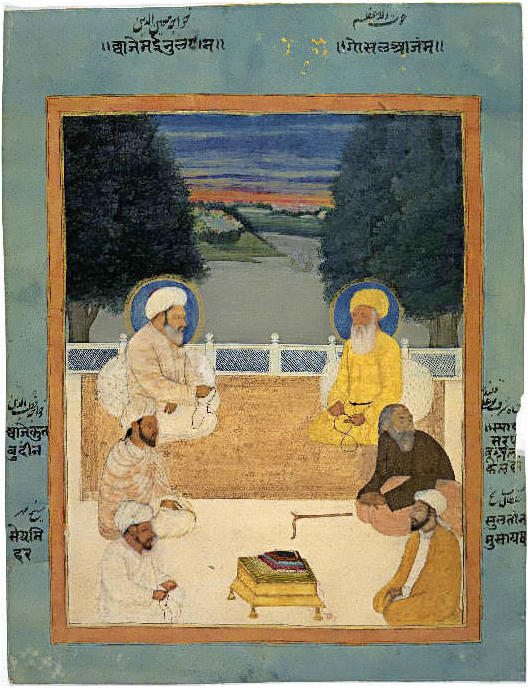
Historically, persons identified as Sayyids often held social prestige and sometimes religious authority. In many societies, Sayyids served as scholars, teachers, judges, custodians of shrines, and community leaders. The exact social role has varied by period and place: in some regions the title conferred privileges, while elsewhere it served mainly to indicate ancestry or piety.
Regional usage
Recognition and significance differ across countries. The title appears in personal names and family records in societies such as India, Pakistan, Bangladesh, Iran, Afghanistan, Indonesia and Malaysia. It is embedded in local customs and legal histories and intersects with broader Islamic concepts and honorifics (Islam, Arabic language).
Genealogy, verification and distinctions
Claimed descent from the Prophet is often traced through family trees (shajra) and local records, but standards of documentation vary. The term "Ahl al‑Bayt" denotes the Prophet's family more broadly; within that category, "Sayyid" and "Sharif" are used in different ways in different traditions. Religious significance depends on community norms rather than any uniform ecclesiastical authority.
Importance and contemporary note
Today the title continues to carry religious and cultural meaning for many Muslims worldwide: it can be a source of identity, a marker of respect, and a connection to religious heritage. As with many hereditary titles, the social weight of being a Sayyid depends on local history, verification of lineage, and contemporary social contexts. For general information about descent claims and cultural roles, see related topics on genealogy and descent and regional studies referenced by local sources (Islamic traditions, linguistic origins).

Distinction
Since an inaccurate or at least inconsistent Latin transliteration is often used for Arabic terms, the title Sayyid can be confused with the names Said (سعيد, DMG Saʿīd) or Zaid (زيد, DMG Zaid), which, however, differ significantly in pronunciation.
Afghanistan
In Afghanistan, the Sayyid are recognized as an ethnic group. On March 15, 2019, President Ashraf Ghani decided to mention the "Sadat tribe" in the electronically recorded national personal data. They occupy a place of honor in Afghanistan. The Sayyids, the majority of whom live in Balch and Kunduz in the north and Nangarhar in the east, are Sunni Muslims, but there are also some, including in Bamiyan province, who belong to Shia Islam. These are often referred to as Sadat, a word traditionally applied "in the northern Hejaz region and British India alike to the descendants of Hasan and Hussein, (the first Shia martyrs) sons of Ali and grandsons of Muhammad."
Related articles
Author
AlegsaOnline.com Sayyid: honorific title and claimed descent from the Prophet Muhammad Leandro Alegsa
URL: https://en.alegsaonline.com/art/87725