
Duchy of Saxe‑Coburg‑Saalfeld
Former Ernestine duchy in central Germany centered on Coburg and Saalfeld; created in the 18th century and reorganized in the 1820s, precursor of Saxe‑Coburg and Gotha and an ancestor of several European dynasties.
Overview
The Duchy of Saxe‑Coburg‑Saalfeld was one of the small, territorially fragmented states ruled by branches of the Ernestine line of the House of Wettin in central Germany. Centered on the towns of Coburg and Saalfeld, the entity existed in the modern sense from the early 18th century until the dynastic rearrangements of the 1820s. Its political life reflected the practices of partible inheritance common among the Ernestine princes and the legal preference for male succession that shaped many German principalities.
Image gallery
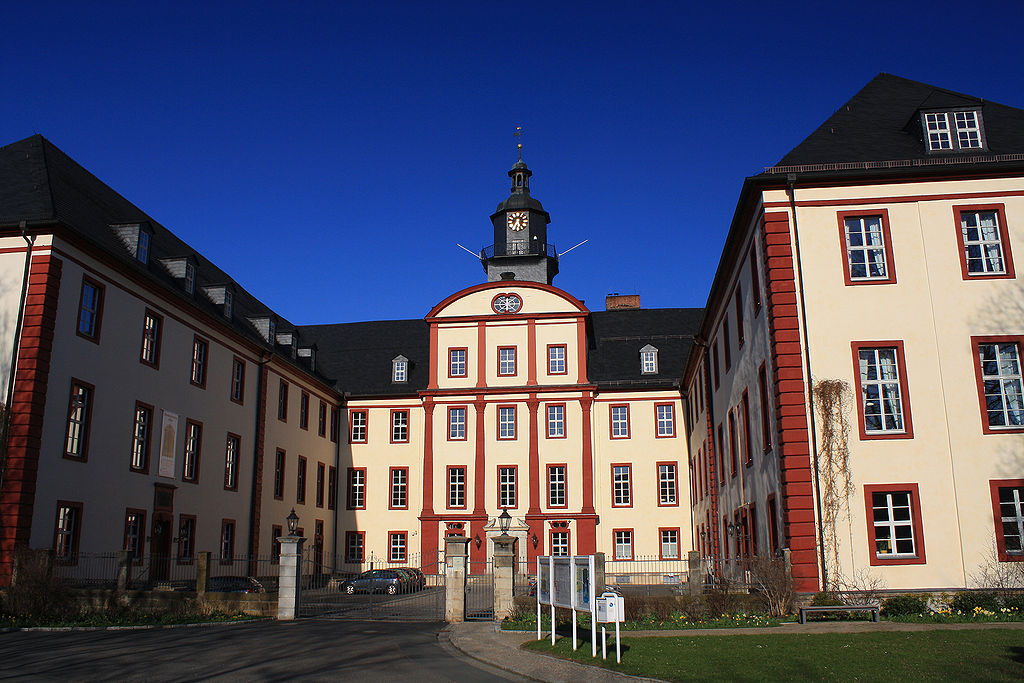
7 Images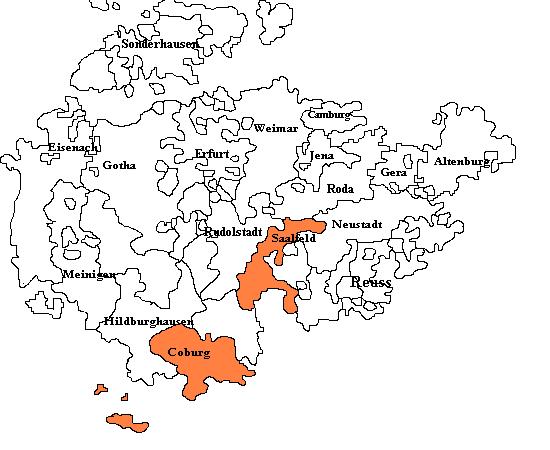



Territory and government
Saxe‑Coburg‑Saalfeld was not a single compact province but a collection of holdings around Coburg and Saalfeld (Saalfeld on the Saale River). The duke exercised the typical prerogatives of a territorial ruler within the Holy Roman Empire and, later, the German Confederation: local administration, judicature, taxation and military obligations. Government was dynastic and patrimonial; succession normally followed agnatic rules, meaning rulership passed through the male line.
History and succession
The wider series of Ernestine duchies emerged after Ernest, Elector of Saxony (d. 1486), whose descendants repeatedly partitioned their lands. Over the centuries this produced many small states. Coburg and Saalfeld were placed under the same duke from 1699, and the duchy was formally reconstituted on 29 July 1735. Like other Ernestine territories, its borders and ruling house were subject to change when a ruling male line expired.
- Creation: formal reorganization of cobbled Ernestine possessions in 1735.
- Dynastic practice: agnatic (male‑line) succession governed inheritance and succession disputes.
- Repartition: the duchy was affected by the extinction of related lines in the 1820s, prompting a larger territorial settlement among Ernestine dukes.
Dissolution and territorial redistribution
In the wake of a dynastic extinction in the mid‑1820s, the Ernestine duchies underwent a broad redivision. As part of that settlement Coburg was joined with Gotha to form the new Duchy of Saxe‑Coburg and Gotha. Other adjustments transferred Saalfeld and Altenburg between neighboring Ernestine houses: Saalfeld passed to the rulers of Saxe‑Meiningen, while Altenburg and Hildburghausen were exchanged among the related dukes, reflecting negotiated compensations between branches descended from the older Saxe‑Gotha‑Altenburg line (Saxe‑Gotha‑Altenburg).
Legacy and significance
Although territorially modest, Saxe‑Coburg‑Saalfeld mattered as a dynastic stepping stone. Its ruling house evolved into the House of Saxe‑Coburg and Gotha, which supplied consorts and monarchs to several European courts in the 19th and 20th centuries. The duchy illustrates broader patterns in German history: the fragmentation produced by partible inheritance, the centrality of dynastic law, and the way small states could exert outsized influence through marriage and diplomacy. For context on the broader family of states to which it belonged, see discussions of the Ernestine duchies.
Notable facts
- The Ernestine partitions began after the 15th century and created many short‑lived duchies governed by cadet branches of the Wettin dynasty.
- Salic or agnatic succession prevented female inheritance in many cases, which often triggered territory swaps when male lines died out.
- Though dissolved as a separate duchy in the 1820s, its dynastic legacy continued in the larger and more internationally prominent House of Saxe‑Coburg and Gotha.
Questions and answers
Q: What was the Duchy of Saxe-Coburg-Saalfeld?
A: The Duchy of Saxe-Coburg-Saalfeld was one of the Ernestine duchies, which were created when Ernest, who became elector of Saxony in 1464, divided his territory between his sons.
Q: When was Saxe-Coburg-Saalfeld reformed?
A: Saxe-Coburg-Saalfeld was reformed on 29 July 1735.
Q: Why did Saxe-Coburg-Saalfeld cease to exist in 1825?
A: As only men could be the rulers of the duchies, Saxe-Coburg-Saalfeld ceased to exist in 1825 when the last male descendant of the dukes of Saxe-Gotha Altenburg died.
Q: How did the various dukes reorganise their territories after 1825?
A: After 1825, Saalfield went to the Dukes of Saxe Meiningen, Altenburg went to the Duke of Sax Hildburghausen who gave Hildburghausen to the Duke of Sachse Meiningen and Gotha and Coburg were combined into a new duchy called Sachse Coburg and Gotha.
Q: Who divided his territory between his sons in 1464?
A: Ernest, who became elector of saxony in 1464 divided his territory between his sons.
Q: What had been happening with Coburg and Saalfield since 1699?
A: Since 1699 Coburg and Saalfield had been under same ruler.
Related articles
Author
AlegsaOnline.com Duchy of Saxe‑Coburg‑Saalfeld Leandro Alegsa
URL: https://en.alegsaonline.com/art/87681