
Saul — First King of Israel (biblical and Qur'anic figure)
Saul, known from the Hebrew Bible and the Qur'an, is portrayed as the first monarch of Israel whose reign, character and downfall are recounted in Samuel, Chronicles and Islamic tradition.
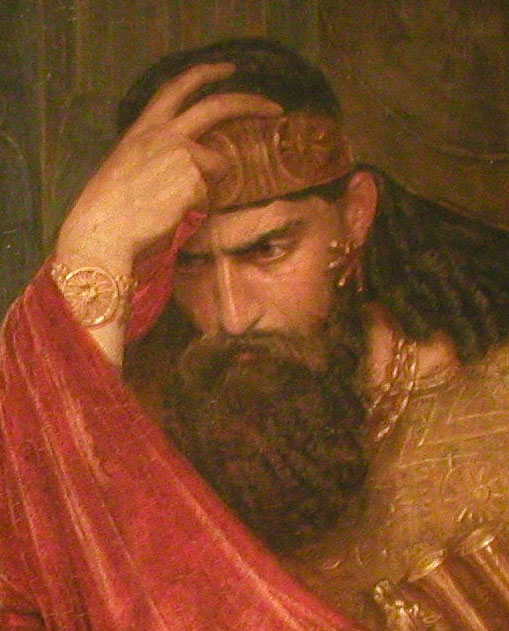
Saul is a principal figure in the Hebrew Bible and also appears in Islamic tradition. In the biblical narrative he is presented as the first king anointed to rule the Israelite tribes, chosen amid tensions between decentralised tribal leadership and the desire for a monarch. The primary accounts of his life and reign are found in the Books of Samuel, with later summaries in 1 Chronicles, and he is mentioned in the Qur'an under Arabic names such as Ṭālūt and Ša'ūl in Islamic exegesis. Ancient and modern readers have debated details of his chronology and historical status, but his story remains central to Israelite history and religious literature.
Image gallery
10 Images



Sources and historical setting
The narrative of Saul is preserved mainly in the Deuteronomistic history portion of the Hebrew Bible, especially in the books of Samuel, which mix narrative, theological reflection and poetry. Later books such as 1 Chronicles retell key episodes with doctrinal emphasis. The Qur'an and later Muslim commentators refer to a king called Ṭālūt, whose selection and military leadership are presented differently but are conventionally identified with the biblical Saul in comparative studies. Historically, Saul is commonly placed by scholars in the late Iron Age I, traditionally the late 11th century BCE, a period when small polities in the Levant were interacting with Philistine coastal cities and emerging Israelite groups.
Narrative and main episodes
According to the biblical account, Saul is anointed by the prophet Samuel to be king after the Israelite elders demand a monarch. His reign is portrayed as beginning with military successes and popular support, but later turning troubled. Key episodes include:
- The anointing by Samuel, marking Saul's elevation from relative obscurity to sovereign authority.
- Early victories against local enemies and consolidation of support among some Israelite tribes.
- A series of critical failures in obedience to prophetic commands, most famously the incomplete destruction of the Amalekites, which Samuel interprets as disobedience to divine instruction.
- The loss of Samuel's prophetic favor and the departure of the spirit that had empowered Saul, events that precede his mood changes and irrational behavior.
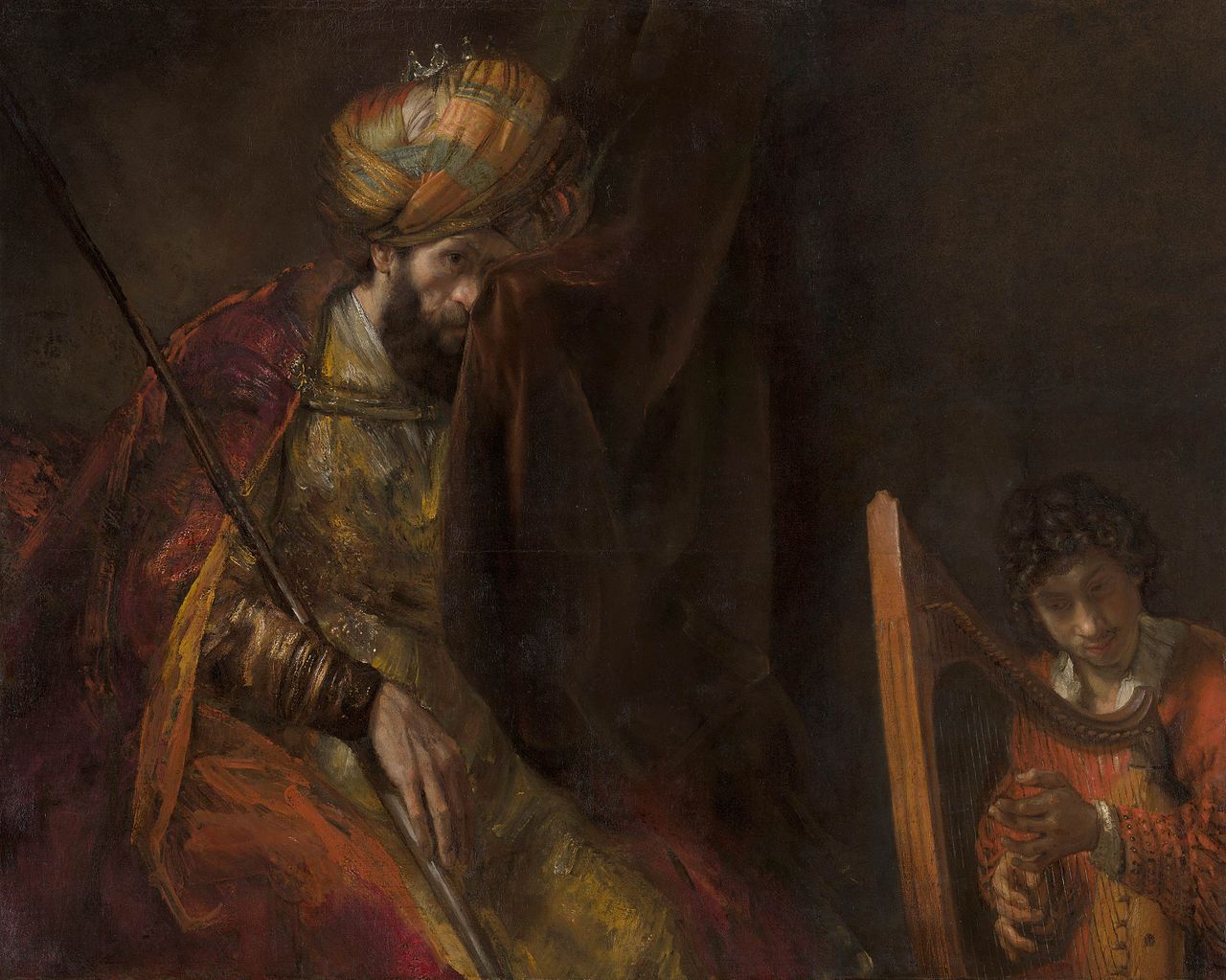
- The introduction of David, a young shepherd-musician whom Saul brings to court to soothe him; David later becomes a rival and the focus of Saul's growing jealousy and hostility.
These episodes combine motifs of divine election, prophetic authority and the personal consequences of failing to adhere to covenantal demands. They also set the stage for David's rise, which the biblical authors frame as divinely intended following Saul's decline.
Character, themes and religious interpretation
In scriptural presentation Saul is a complex, sometimes sympathetic figure. He begins as a leader who is "chosen" and who attempts to fulfill his role, yet he is repeatedly criticised for impulsive acts, incomplete obedience and reliance on human counsel rather than prophetic direction. The narrative frequently emphasises themes of legitimacy: anointing by a prophet, the role of divine guidance, and the difference between human ambition and divine purposes. Literary devices—such as the torn robe episode when Samuel announces the loss of the kingdom—underline the theological message that rule belongs to one who obeys God. Later interpreters in Jewish, Christian and Muslim traditions have variously emphasised his tragic stature, his political mistakes, or his role as a foil to David.
Death, aftermath and textual variants
The accounts of Saul's death differ within the biblical corpus. One account reports that, defeated by the Philistines on Mount Gilboa, Saul fell upon his own sword to avoid capture, while another reports an Amalekite claiming to have delivered a fatal blow and then being executed by David for killing the Lord's anointed. The Philistines displayed the bodies on the walls of a city and dedicated Saul's armor in a temple of a Canaanite deity, after which local Israelites recovered the remains for burial. Later tradition records that David arranged for proper interment of Saul and Saul's son Jonathan, an act that underscores both political reconciliation and complex moral claims about kingship and divine favour. Philistines, Ashtaroth and other regional names appear in these narratives as part of the broader historical and cultural backdrop.
Importance and legacy
Saul's story has been influential across religious, literary and historical contexts. He functions as an archetype of a ruler who begins with promise but fails to sustain divine approval, and his tale is used to explore questions of leadership, prophetic authority and the ethics of power. In Jewish and Christian readings Saul is often contrasted with David to discuss ideal kingship; in Islamic tradition the figure known as Ṭālūt is presented with particular emphasis on his role in leading a people and passing leadership tests. Saul is also a subject for art, medieval commentary and modern scholarship, where archaeological and textual studies continue to probe the historicity and composition of the Samuel narrative. For readers seeking source texts and scholarly overviews, the biblical books of Samuel and Chronicles, as well as comparative treatments that refer to the Qur'an, are starting points.
Notable distinctions and related figures
- Saul is distinct from later monarchs in that his kingship is framed as the inaugural experiment in monarchy for Israel; his successors are judged against this initial model.
- His complex relationship with Samuel the prophet illustrates the tension between prophetic and royal authority in early Israelite tradition.
- Saul's rivalry with David and his interactions with Jesse's household become central narrative strands that shift the story of national leadership.
- References to places and peoples—such as the wider setting of ancient Israel and mentions of military opponents—help situate the tale within the geopolitical realities of the Levant in the late Bronze and early Iron Ages; chronological discussions are often found under traditional dating schemes.
Questions and answers
Q: Who is Saul?
A: Saul is a King in the Books of Samuel, 1 Chronicles and the Qur'an. He was the first king of the ancient Israel and reigned from 1047 BC to 1007 BC.
Q: What does Saul do that causes God to stop listening to him?
A: Saul loves and obeys God until he stops listening to God and becomes greedy, losing God's whole interest for him.
Q: What warning does Samuel give Saul?
A: Samuel, the prophet, comes and gives him a warning that God is not with him anymore. When turning to leave, Saul grabs Samuel's robe, and it tears. Samuel says (1Samuel15:28~29), "The Lord has torn the kingdom of Israel from you today and has given it to one of your neighbors - to one better than you. He who is the Glory of Israel does not lie or change his mind; for he is not a man, that he should change his mind." Then the spirit of the Lord departs from Saul.
Q: How does David come into service for Saul?
A: Saul takes David the shepherd, and the youngest son of Jesse, into his service to play a harp for him so that he would be soothed when an evil spirit rests upon him.
Q: How does Jonathan become involved in this story?
A: Jonathan is bound to David in friendship which makes his anger fume on Jonathan as well when he gets jealous of David and begins suspecting David as 'one of your neighbors' mentioned by Samuel earlier.
Q: How did Saul die?
A: Later on at battle against Philistines,Saul dies falling on his own sword because he doesn't want himself being abused by 'uncircumcised' Philistines .1Samuel & 2Samuel give conflicting accounts about how exactly did it happen but according to 1Samuel & parallel account in 1Chronicles10 ,as defeated Israelites flee ,Saul asks armour bearer to kill him but refuses & falls upon own sword .In 2Samuel an Amalekite tells David he found Saul leaning on spear after battle & delivered coup de grâce .David puts Amalekite death accusing himself killing anointed king .
Related articles
Author
AlegsaOnline.com Saul — First King of Israel (biblical and Qur'anic figure) Leandro Alegsa
URL: https://en.alegsaonline.com/art/87546