
Saturnalia tupiniquim — Early Triassic basal sauropodomorph from Brazil
Saturnalia tupiniquim is a small, extinct basal sauropodomorph (prosauropod) from Late Triassic strata of southern Brazil, important for understanding early dinosaur evolution and the origins of sauropodomorphs.
Saturnalia tupiniquim is an extinct genus and species of small basal sauropodomorph dinosaur known from Late Triassic rocks in southern Brazil. Described from fragmentary but informative remains, it is widely interpreted as one of the earliest members of the lineage that gave rise to later large sauropods. Saturnalia helps fill a gap in the fossil record linking very early dinosaurs to the more derived sauropodomorphs of the Jurassic.
Image gallery
10 Images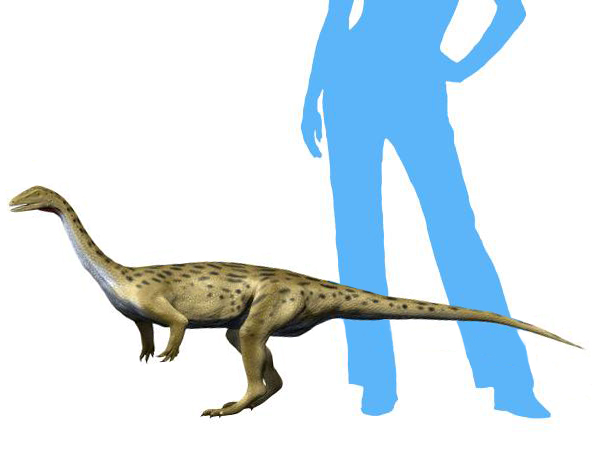


Key characteristics
- Size: small and lightly built — adult individuals are estimated at roughly 1.5 metres in body length.
- Body plan: displays a mix of primitive and derived traits typical of early sauropodomorphs — relatively long hind limbs compared with forelimbs, a modestly elongated neck, and teeth suggestive of an omnivorous to herbivorous diet.
- Skeletal features: known material includes parts of the skull, vertebrae and limb bones that preserve important anatomical signals used in classification.
Discovery and age
Fossils of Saturnalia were recovered from Triassic sedimentary deposits in the state of Rio Grande do Sul, in southern Brazil. The strata that produced these remains are placed in the early part of the Upper Triassic, with an approximate age often cited near 225 million years ago; geological and stratigraphic work provides the context for that estimate (geochronology). The taxon was established based on material discussed in the original descriptive study (original description).
Classification and scientific importance
Saturnalia is considered a basal member of the broader group Sauropodomorpha (sometimes referred to informally as prosauropods), an early branch that precedes the true giant sauropods of the Jurassic (sauropodomorph, prosauropod). Its mix of primitive and derived features makes it valuable for reconstructing early dinosaur evolution, biogeography, and the sequence of anatomical changes that led to later, larger herbivores.
Paleobiology and paleoecology
Based on limb proportions and jaw morphology, Saturnalia was likely an active, facultatively bipedal animal with a diet that could include plants and possibly small animals or insects. It inhabited a Triassic landscape undergoing major ecological changes after Permian extinctions; its presence in South America contributes to evidence that early sauropodomorph diversification was geographically widespread.
For further context about the Triassic era and related taxa see broader summaries on the Triassic period and reviews of early sauropodomorphs (more details).
Questions and answers
Q: What is Saturnalia tupiniquim?
A: Saturnalia tupiniquim is an extinct genus of basal prosauropod dinosaur from the Triassic period of Rio Grande do Sul, Brazil.
Q: How old are the deposits where Saturnalia tupiniquim fossils were found?
A: The deposits where Saturnalia tupiniquim fossils were found are dated to the early Upper Triassic, about 225 million years ago.
Q: What is the size of Saturnalia tupiniquim?
A: Saturnalia tupiniquim grew to about 1.5 meters (5 feet) long.
Q: What type of dinosaur is Saturnalia tupiniquim?
A: Saturnalia tupiniquim is a basal prosauropod dinosaur.
Q: Where were the fossils of Saturnalia tupiniquim found?
A: The fossils of Saturnalia tupiniquim were found in Rio Grande do Sul, southern Brazil.
Q: When did Saturnalia tupiniquim become extinct?
A: Saturnalia tupiniquim became extinct during the Triassic period, about 225 million years ago.
Q: What is the significance of Saturnalia tupiniquim?
A: Saturnalia tupiniquim is important because it is an example of a basal prosauropod dinosaur and helps to shed light on the evolution of dinosaurs during the Triassic period.
Author
AlegsaOnline.com Saturnalia tupiniquim — Early Triassic basal sauropodomorph from Brazil Leandro Alegsa
URL: https://en.alegsaonline.com/art/87500
Sources
- sites.ffclrp.usp.br : A sauropodomorph dinosaur from the Upper Triassic (Carnian) of southern Brazil.
- plosone.org : "A new Sauropodomorph dinosaur from the early Jurassic of Patagonia and the origin and evolution of the Sauropod-type sacrum"
- doi.org : 10.1371/journal.pone.0014572
- ncbi.nlm.nih.gov : 3027623
- pubmed.ncbi.nlm.nih.gov : 21298087
- plosone.org : "A new basal Sauropodomorph (Dinosauria: Saurischia) from Quebrada del Barro Formation (Marayes-El Carrizal Basin), Northwestern Argentina"
- doi.org : 10.1371/journal.pone.0026964
- informaworld.com : "A new early dinosaur (Saurischia: Sauropodomorpha) from the late Triassic of Argentina: a reassessment of dinosaur origin and phylogeny"
- doi.org : 10.1080/14772019.2010.484650
- doi.org : 10.1017/S1755691011020093