
Sarus crane (Antigone antigone)
Large non‑migratory crane of South and Southeast Asia and Australia; the tallest flying bird, dependent on wetlands, socially monogamous, and vulnerable to habitat loss and disturbance.
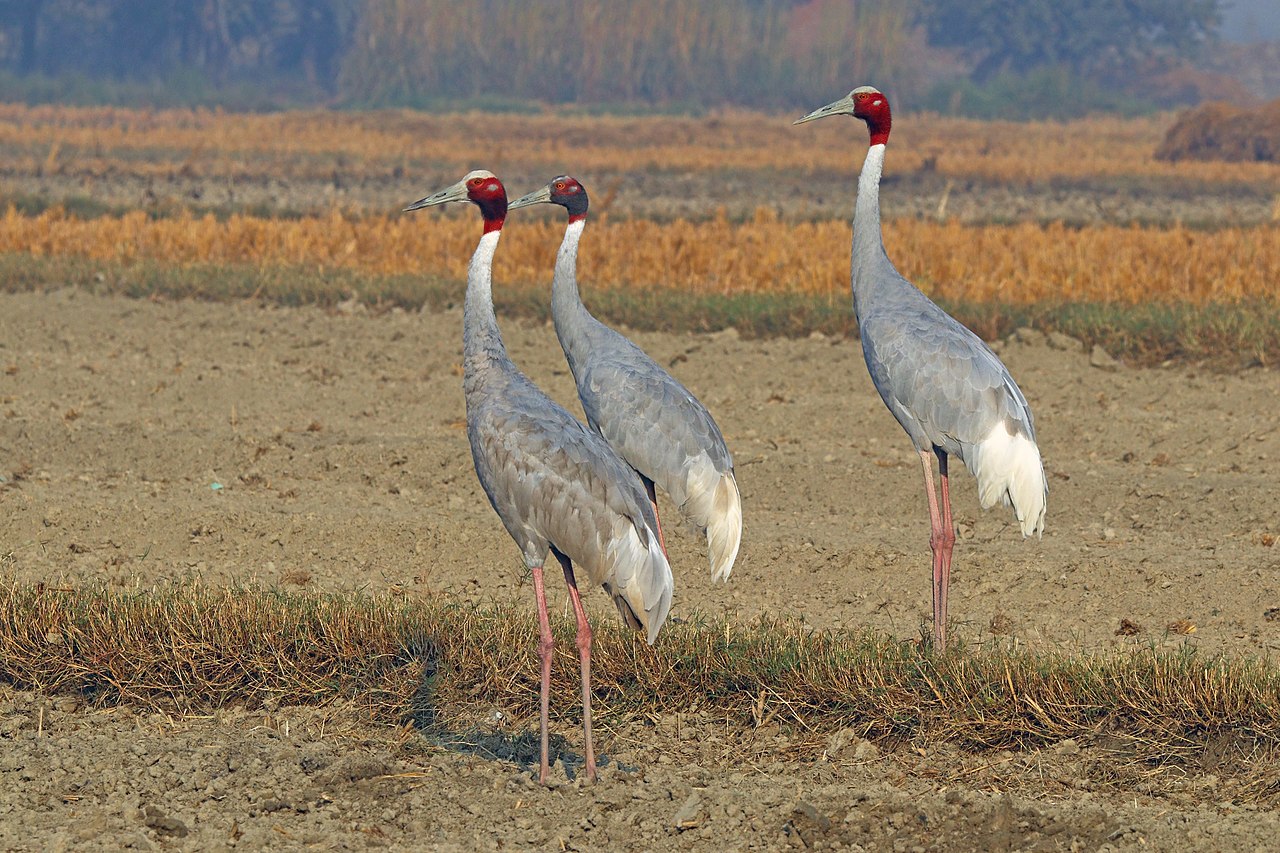
The sarus crane (Antigone antigone) is a very large, non‑migratory bird best known for its height and striking appearance. It is often described as the tallest flying bird, with adults reaching nearly 1.8 m in height and a wingspan that can approach 2.4 m. The species belongs to the genus Antigone and is characterized by a mostly grey body, long legs and neck, and an unfeathered red head and upper neck.
Image gallery
10 Images




Appearance and size
Adults have long, powerful wings for sustained flight and walk with a stately gait in shallow water. Average body mass is substantial compared with most cranes; large individuals may weigh several kilograms. Plumage is largely pale grey; juveniles are duller and the red bare skin around the head develops with age. Sexual differences are subtle, and males and females look similar to casual observers.
Range and habitat are closely linked. The sarus is native to the Indian subcontinent, South Asia, parts of Southeast Asia and northern Australia. It favors open wetlands, marshes, flooded fields and the margins of lakes and rivers, and it commonly uses agricultural wetlands and rice paddies for feeding and nesting. Typical wetland habitats are described in more detail at wetland resources.
Behavior, diet and breeding
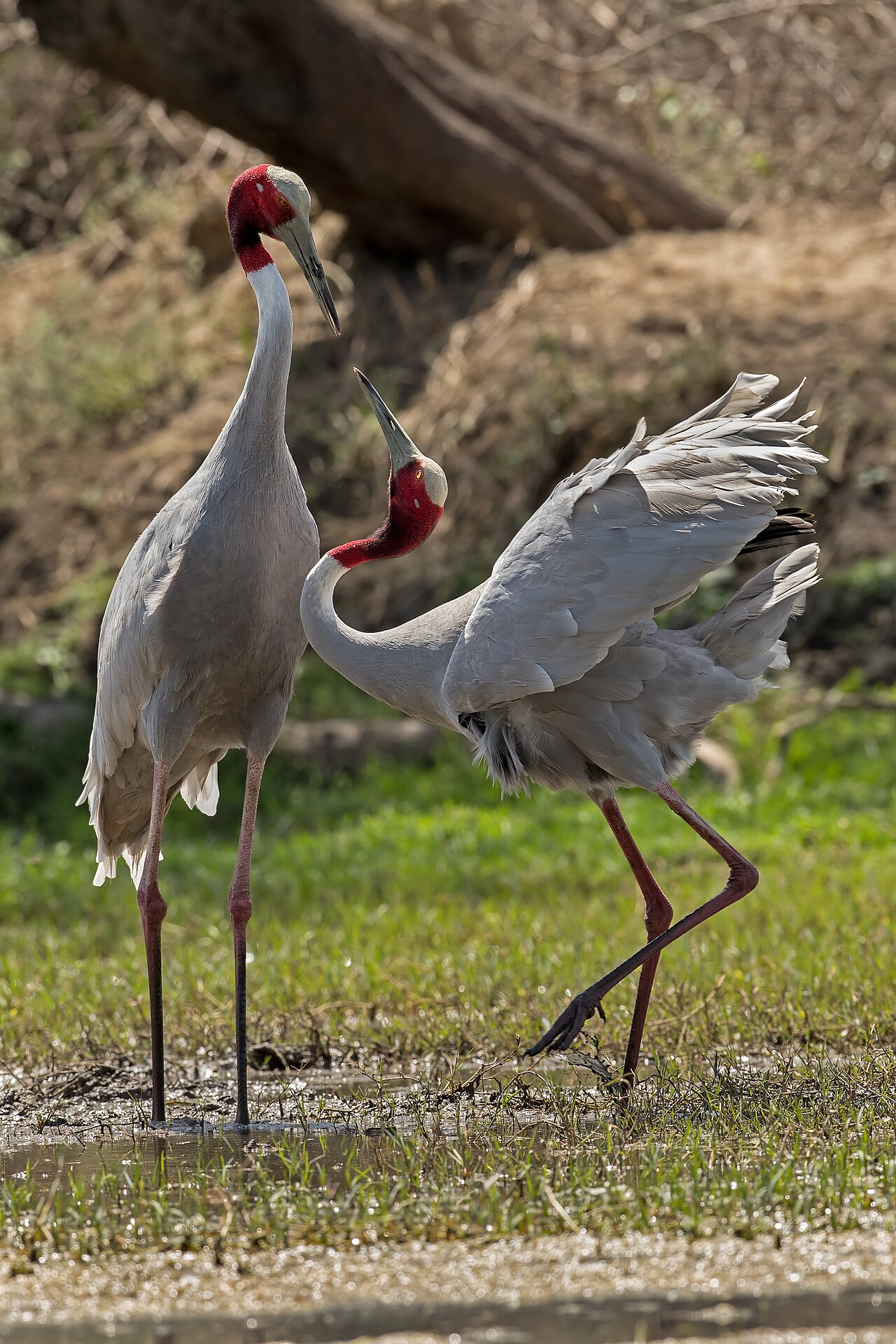
Sarus cranes are mainly omnivorous: they feed on a mix of aquatic plants, seeds, insects, small vertebrates and invertebrates. They form long‑term pair bonds and are known for elaborate pair displays that include dancing, calling, and synchronized movements. Pairs defend territories during the breeding season and build large nests of vegetation in shallow water. Chicks are relatively mature at hatching and follow parents to forage shortly after emerging.
Conservation status varies across the species' range. Habitat loss through wetland drainage, agricultural expansion, pollution and disturbance are major threats. In some places local populations have declined, while targeted conservation efforts — protecting wetlands, regulating disturbance and promoting coexistence with agriculture — have helped stabilize or increase numbers. Collisions with power lines and changes in water management also pose risks.
Culturally, the sarus crane is often associated with fidelity and paired life because of its long‑term bonds; it appears in folklore and local traditions in parts of its range. Biologically notable features include its exceptional standing height among flying birds and its close ties to wetlands, which make it both an iconic species and an indicator of wetland health.
Questions and answers
Q: What is the sarus crane?
A: The sarus crane (Antigone antigone) is a large crane that lives in the Indian subcontinent, southeast Asia and Australia.
Q: Does it migrate?
A: No, the sarus crane does not migrate.
Q: How tall can it grow?
A: The sarus crane can grow to 1.8 metres (5.9 ft) tall.
Q: How long are its wings?
A: The wings of a sarus crane can reach 2.4 metres (8 ft) from tip to tip.
Q: How much does it weigh?
A: A sarus crane can weigh 8.4 kg (18.5 lb).
Q: Where does it live?
A: The sarus crane lives in open wetlands.
Related articles
Author
AlegsaOnline.com Sarus crane (Antigone antigone) Leandro Alegsa
URL: https://en.alegsaonline.com/art/87397
Sources
- iucnredlist.org : "Grus antigone"
- elibrary.unm.edu : elibrary.unm.edu
- zoosprint.org : "Status of sarus crane Grus antigone antigone in Rajasthan and its ecological requirements"