
Sardinian language: overview, dialects, history and contemporary status
Sardinian (Sardu, Limba sarda) is a Romance language native to Sardinia. It has several dialects, a regional standard, and a distinctive linguistic history with strong Latin conservatism and diverse substratum influences.
Overview
Sardinian (Sardu, Limba or Lingua sarda) is a Romance language spoken on the island of Sardinia, an autonomous region of Italy. It is estimated to have around 1.2 million speakers, many of whom are bilingual in Sardinian and Italian. Scholars consider Sardinian one of the most conservative Romance varieties in terms of its retention of certain Latin forms and phonological traits.
Image gallery
10 Images
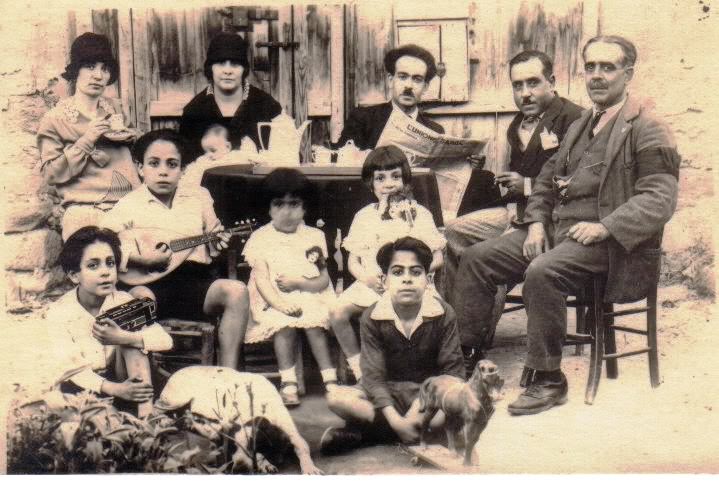


Dialects and standardization
The language is internally diverse. Principal varieties include:
- Logudorese (central-northern areas) — often regarded as conservative in phonology and morphology.
- Campidanese (southern regions) — with distinct vowel and consonant patterns.
- Gallurese and Sassarese — spoken in the north-east and north-west; these show strong contact features with Corsican and Tuscan varieties.
To promote mutual comprehension and written usage a regional standard known as Limba Sarda Comuna has been proposed and used in official and educational contexts, while local orthographies and literary traditions remain in use.
Linguistic characteristics
Sardinian preserves many features traceable to Latin: conservative vowel systems in some dialects, retention of certain consonant clusters, and a lexical core that often reflects direct Latin inheritance. At the same time, Sardinian shows layers of influence from pre-Roman substrates, Phoenician/Punic contacts, medieval Catalan and Aragonese, and later Spanish and Italian loanwords. These strata make its vocabulary and grammar a mosaic of long-term contacts.
History and development
The language developed from the Latin introduced during Roman rule of the island, evolving locally and absorbing substratum elements from indigenous languages. Over centuries Sardinian became differentiated from neighbouring Romance languages on the mainland and Corsica. Its written record includes medieval documents, folk literature, modern poetry and descriptive grammars compiled by linguists and local scholars.
Usage, transmission and contemporary status
Sardinian is used in daily communication, regional media, music and cultural events. Use in formal education and administration has varied by region and period; many speakers are bilingual with Italian, and revitalization efforts include teaching materials, broadcasts and publications in Sardinian. Political and cultural advocacy has sought greater legal recognition and support for intergenerational transmission.
Notable distinctions
Academically, Sardinian is treated as a distinct Romance language rather than a dialect of Italian. Public perception and legal classification have been matters of local and national debate; nevertheless its distinct phonology, grammar and lexicon make it of particular interest to linguists studying Romance evolution and language contact phenomena.
For authoritative introductions and resources on Sardinian grammar and usage see regional language offices and linguistic surveys that document its varieties and efforts at standardization.
Questions and answers
Q: What is Sardinian language?
A: Sardinian is a Romance language native to the island of Sardinia, an autonomous region of Italy.
Q: How many people speak Sardinian?
A: Approximately 1.2 million people speak Sardinian.
Q: What are the main dialects of Sardinian?
A: The main dialects of Sardinian are Campidanese (Campidanian), Gallurese (Gallurian), Logudorese (Logudorian), and Sassarese (Sassarian).
Q: What is the standard version of Sardinian language called?
A: The standard version of Sardinian language is called Limba Sarda Comuna.
Q: Which language is Sardinian closest to?
A: Sardinian is often seen as the closest language to Latin.
Q: Did Sardinian language receive basic recognition from the Italian government easily?
A: No, Sardinian language fought for decades to get basic recognition by the Italian government.
Q: What is the location of Sardinia?
A: Sardinia is a Mediterranean island and autonomous region of Italy.
Related articles
Author
AlegsaOnline.com Sardinian language: overview, dialects, history and contemporary status Leandro Alegsa
URL: https://en.alegsaonline.com/art/87342