
Saraiki language
Saraiki (Siraiki, Seraiki) is an Indo-Aryan language of central and southern Pakistan, spoken by tens of millions and notable for distinct phonology, regional varieties, literary traditions and a modern cultural movement.
Overview: Saraiki (also written Siraiki or Seraiki) is an Indo-Aryan language spoken primarily in central and southern Pakistan. Estimates of the number of speakers vary by source but commonly range in the tens of millions; a 2017 estimate gave about 26 million. The language serves as a primary means of everyday communication, folk culture and regional media across several provinces.
Image gallery
4 Images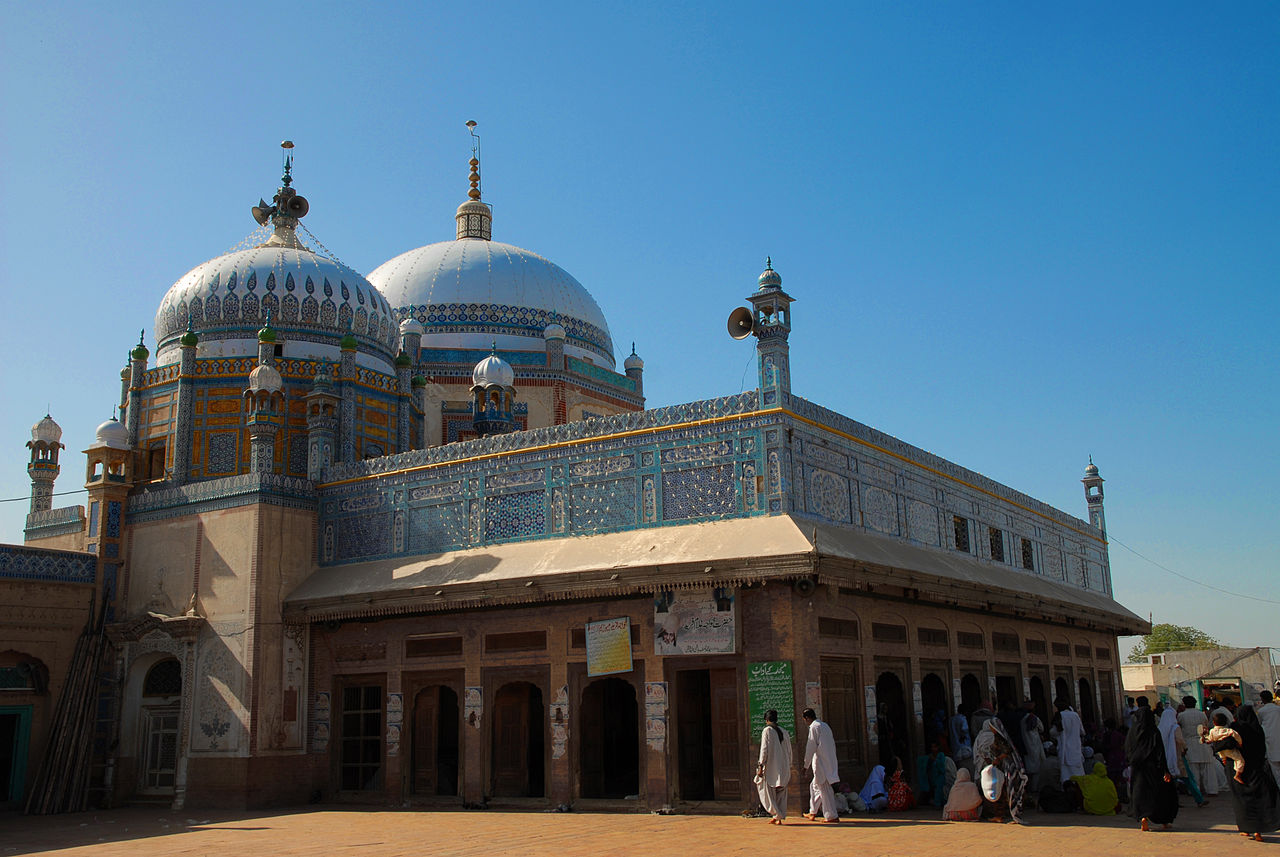


Classification and geographic range
Saraiki belongs to the broader group of Indo-Aryan languages and is frequently discussed in relation to Punjabi. Some scholars treat it as part of the Lahnda or "western Punjabi" group; others emphasize its separate identity from standard Punjabi (Punjabi) because of distinctive phonology and vocabulary. Large concentrations of speakers live in southern Punjab, adjacent districts of northern Sindh and parts of Khyber Pakhtunkhwa and Balochistan. Regions in which it is common are sometimes described informally as part of a Punjabi–Sindhi transition zone (regional overlap) and include communities in and around Multan and Bahawalpur as well as areas of Sindh.
Varieties and writing systems
The language comprises several regional varieties with local names; central Multani and southern varieties such as Bahawalpuri are among the better known names. Historically a Landa-style script called Multani was used in commercial contexts; today Saraiki is most often written in a Perso-Arabic script known locally as Shahmukhi, with additional letters to represent sounds absent in standard Persian and Urdu. In academic and descriptive work, Roman transliteration and specialized phonetic notation are also used.
Sounds and grammar (features)
Saraiki shows a rich consonant inventory and some phonological features that distinguish it from neighboring languages. One widely noted characteristic is the presence of implosive consonants and a set of retroflex sounds; vowel quality and length contrasts are important as well. Grammatically it follows typical Indo-Aryan patterns: subject–object–verb word order, use of postpositions instead of prepositions, and morphology that marks gender, number and case in nouns and agreement in verbs. As with many related languages, there are shared syntactic and lexical patterns with Punjabi and Sindhi alongside local innovations.
History, literature and culture
Saraiki has a long oral tradition of folk song, Sufi verse and storytelling. Sufi poets and rural singers have been central to the language's literary presence; their work remains important in regional identity and performance culture. Modern printed and broadcast media in Saraiki, including radio programmes and local newspapers, have increased the language's visibility since the mid-20th century.
Status and contemporary issues
Debate continues over whether Saraiki should be classified as an independent language or as a Punjabi dialect; linguistic criteria, speaker identity and political factors all play a role. There is an active movement among some Saraiki speakers seeking greater cultural recognition and administrative autonomy within Pakistan. In education and government the dominant national languages (Urdu and English) often prevail, but regional initiatives promote Saraiki literacy, literature and media production.
Notable facts and distinctions
- Saraiki's implosive consonants make its sound system distinct from many neighboring varieties.
- It occupies a transitional zone between Punjabi and Sindhi cultural areas, which is reflected in vocabulary and idiom.
- Modern revival efforts emphasize literature, radio and policy recognition while preserving folk traditions.
For introductions to comparative grammar, sound inventories, or regional surveys, consult linguistic overviews and regional studies that treat Saraiki alongside neighbouring languages and dialects.
Questions and answers
Q: What is Saraiki language?
A: Saraiki language is a language of Pakistan, which belongs to the Indo-Aryan language group and is closely related to the Punjabi language.
Q: How many people speak Saraiki language as of 2017?
A: As of 2017, about 26 million people speak Saraiki language.
Q: Where are most of the Saraiki language speakers found in Pakistan?
A: Most of the Saraiki language speakers are found in the south of the province of Punjab and also Northern Sindh.
Q: What is the relationship between Saraiki language and Punjabi language?
A: Saraiki language is closely related to the Punjabi language, and many linguists consider it a mix of Punjabi and Sindhi.
Q: Is Saraiki language considered to be part of the Indo-Aryan language group?
A: Yes, Saraiki language is considered to be part of the Indo-Aryan language group.
Q: How is Saraiki language spelled?
A: Saraiki language is sometimes spelled Siraiki and Seraiki.
Q: How many people spoke Saraiki language in 2010?
A: The text does not mention how many people spoke Saraiki language in 2010.
Author
AlegsaOnline.com Saraiki language Leandro Alegsa
URL: https://en.alegsaonline.com/art/87306
Sources
- incubator.wikimedia.org : Saraiki language test