
Sappho: Ancient Greek Lyric Poet of Lesbos
Ancient Greek lyric poet from Lesbos (c. 630–570 BC), known for intimate, musical poems about love and desire. Most of her work survives only in fragments, but her influence remains central to poetic history.
Overview
Sappho was an ancient Greek poet traditionally associated with the island of Lesbos and active in the late seventh and early sixth centuries BCE. In antiquity she was counted among the greatest lyric poets: her work was performed to musical accompaniment and prized for its concentrated emotional intensity. Although ancient scholars credited her with a substantial corpus—often cited as roughly ten thousand lines—only a small portion, some hundreds of lines, survives today. What remains has shaped perceptions of personal poetry and the language of love for millennia.
Image gallery
10 Images





Form, language and performance
Sappho wrote in the Aeolic dialect and composed poems intended to be sung or chanted with a lyre. Her verse is associated with a stanzaic form now named the "Sapphic stanza," a metrical pattern of three longer lines followed by a shorter one (an Adonic line). Her poems range from brief epigrams to longer odes, and they often combine vivid sensory detail with direct address and inward reflection. The immediacy of the voice and the musical basis of the poetry are central to its character; her work belongs to the broader tradition of lyric poetry, which prioritizes personal feeling and performance over epic narrative.
Themes and subject matter
Many of Sappho's surviving fragments explore desire, passion, and interpersonal relationships. Her speakers frequently describe longing, jealousy, and the physical or emotional effects of attraction. Several well-known fragments depict affection between women, which has led later readers to associate Sappho with female same-sex desire; scholars debate the extent to which the poems are autobiographical or represent literary voices shaped for performance. Other themes include praise of companions, ritual or mythic invocations (notably an addressed poem to the goddess Aphrodite), and acute observations of beauty and nature.
Transmission and survival
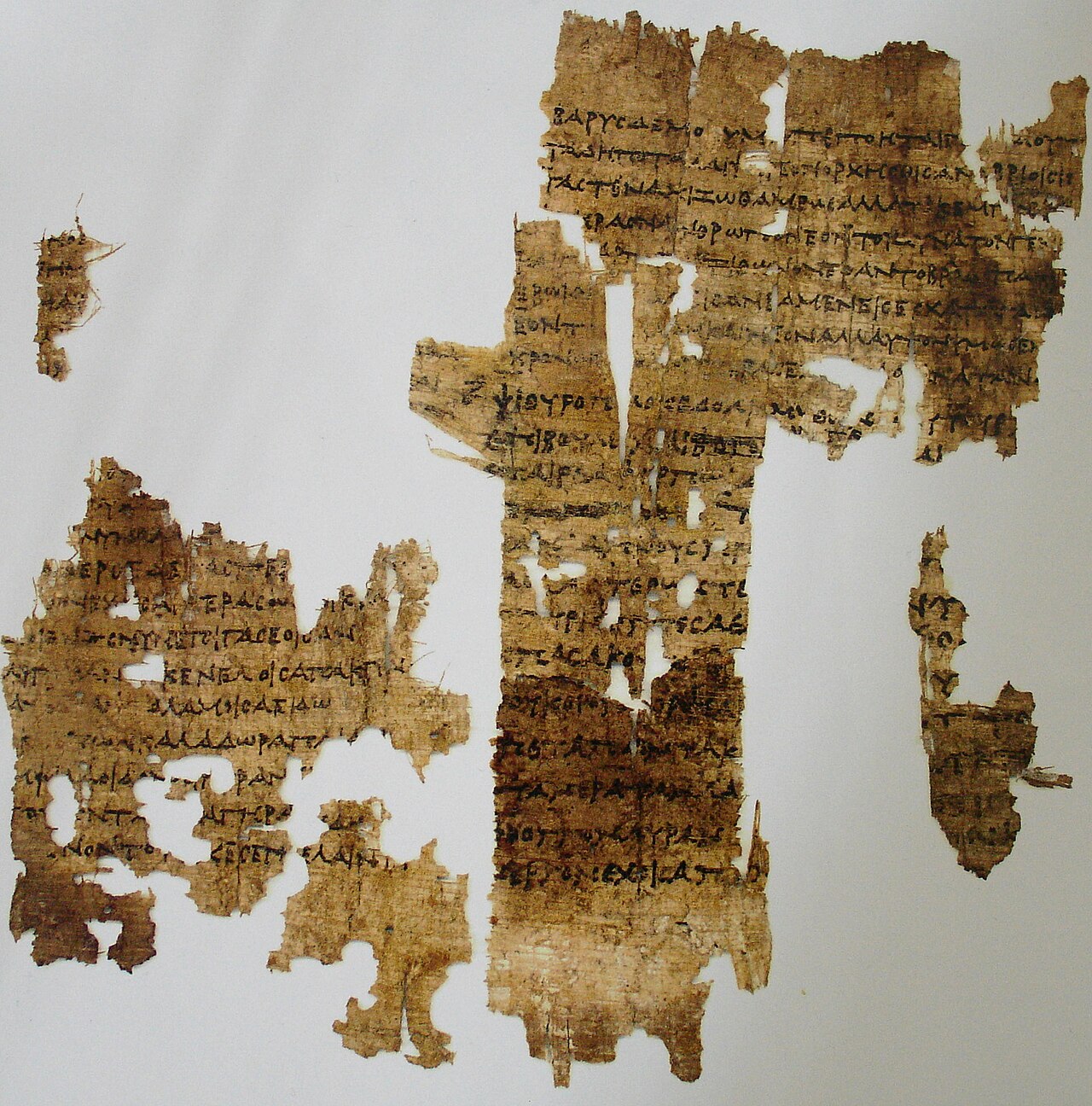
The loss of most of Sappho's poetry is a result of the fragile survival of ancient books and the selective interests of later readers. Hellenistic scholars organized her work into collections and excerpted lines; these editorial efforts helped preserve fragments quoted in other authors. Many of the extant pieces come from quotations in ancient prose writers or from papyrus fragments recovered in modern archaeological finds, especially from Egyptian rubbish heaps such as Oxyrhynchus. A handful of poems, including an invocation to Aphrodite, survive in nearly complete form; the remainder exist as incomplete lines or brief fragments.
Reception and influence
In antiquity Sappho's reputation was high: critics admired her skillful use of language and emotional precision, and she was included in canonical lists of eminent lyric poets. Later literary traditions, from the Hellenistic period through Roman and Byzantine times, transmitted her fame even as much of the text vanished. In modern eras, Sappho has inspired translations, scholarly debate, and artistic adaptations. Her name has also become the root of modern terms and categories used in discussions of female same-sex desire and poetic style, though contemporary scholars approach such labels with attention to historical nuance.
Notable facts and distinctions
- Associated with Lesbos; her work is central to the island's cultural legacy.
- Composer of lyric poetry in the Aeolic dialect and linked to the Sapphic stanza.
- Much of her oeuvre survives only as fragments quoted by other ancient authors or recovered on papyrus.
- Her best-known pieces include an address to Aphrodite and several intensely personal fragments that have been widely translated and discussed.
Sappho's surviving voice is fragmentary but powerful: brief moments of lyric attention that reveal how early Greek poets shaped the language of intimacy and desire. Scholars continue to study the fragments, contextualizing them within ancient performance practices and the wider social life of archaic Greece, while readers keep returning to the emotional directness that made Sappho memorable in every age.
Questions and answers
Q: Who was Sappho?
A: Sappho was an Ancient Greek lyrical poet.
Q: When was Sappho born?
A: Sappho was probably born around 630 BC on the island of Lesbos.
Q: What is known about Sappho's poetry?
A: In the ancient world, Sappho's poetry was highly thought of. Today, most of it has been lost. Sappho presumably wrote about 10,000 lines of poetry, but only around 650 lines survive today.
Q: What is the central theme of Sappho's poetry?
A: Sappho's poetry centres on passion and love for both men and women.
Q: Did Sappho write about physical acts between women?
A: Descriptions of physical acts between women are few and open to debate.
Q: Are Sappho's poems autobiographical?
A: Whether these poems are meant to be autobiographical is not known, although elements of other parts of Sappho's life do make appearances in her work.
Q: Why might it be like Sappho's style to have intimate encounters expressed poetically?
A: It would be like her style to have these intimate encounters expressed poetically.
Related articles
Author
AlegsaOnline.com Sappho: Ancient Greek Lyric Poet of Lesbos Leandro Alegsa
URL: https://en.alegsaonline.com/art/87274
Sources
- newyorker.com : Girl Interrupted: Who Was Sappho?