
São Paulo Metro — urban rapid transit system of São Paulo
Overview of the São Paulo Metro: organization, network characteristics, history, role in the metropolis, notable lines and ongoing development.
Overview
The São Paulo Metro (Metropolitano de São Paulo) is the core rapid transit system serving Brazil's largest city. Operated by Companhia do Metropolitano de São Paulo, the network carries millions of passenger trips daily and is widely recognized as the country’s first large-scale urban metro system. It was created in the late 1960s and began passenger service in the 1970s, evolving into a backbone for commuting across the metropolitan area. Contemporary ridership, system reach and service patterns make it central to São Paulo’s transport strategy.
Image gallery
4 Images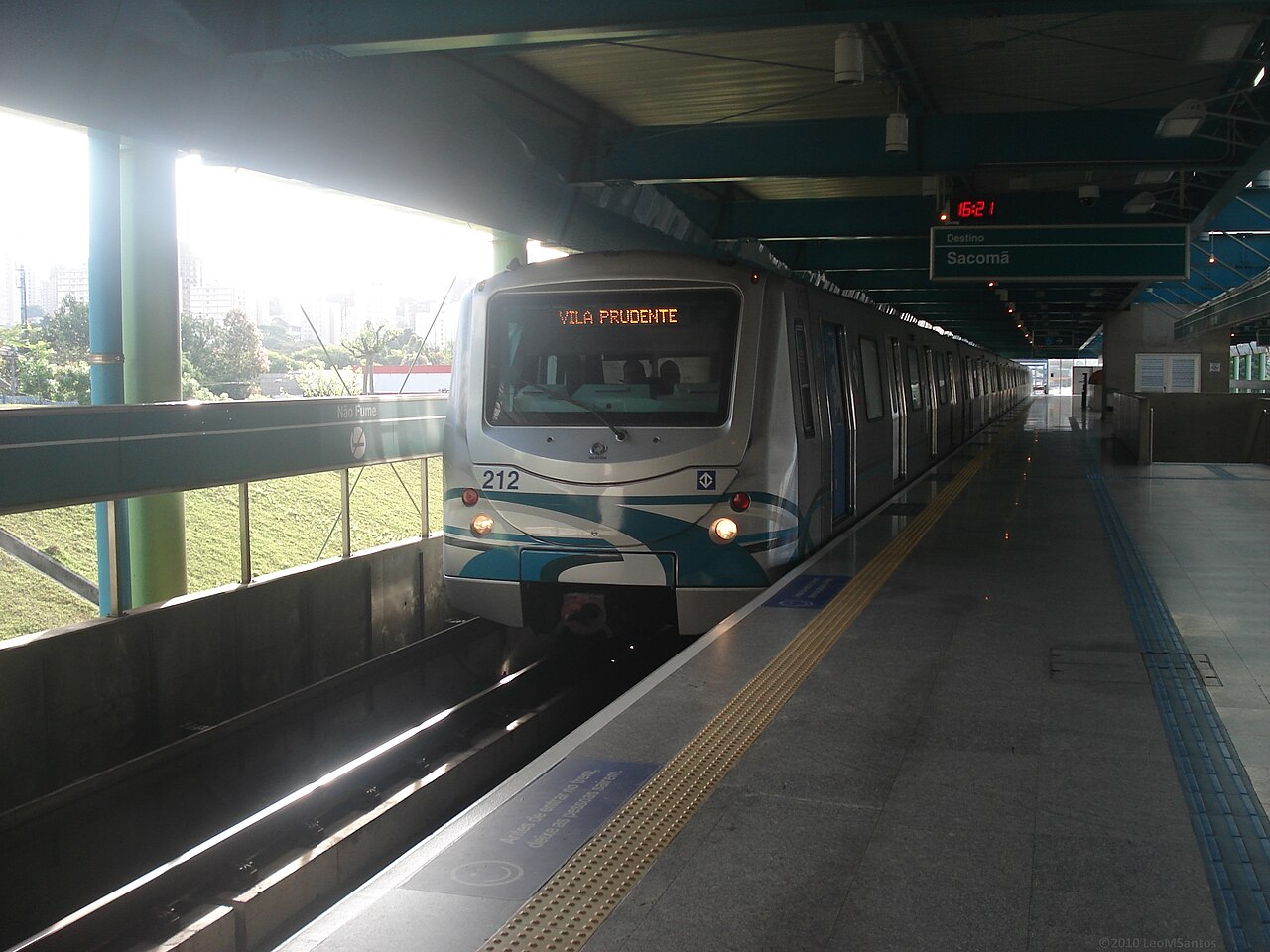


Network and characteristics
The metro combines underground, elevated and at-grade segments and includes both conventional heavy-rail lines and a modern monorail. Lines are identified by numbers and colors for easy navigation. Rolling stock, signaling systems and station designs vary between lines and between older and newer extensions, reflecting decades of incremental upgrades and differing procurement models.
- Passenger service: frequent headways during peak hours and integrated ticketing with other public transit.
- Infrastructure: mix of deep tunnels, cut-and-cover sections and elevated viaducts.
- Operation: staffed stations, automated control centers and accessibility improvements on many stations.
Notable lines
- Line 1 — Blue: one of the first lines and a central axis through older neighborhoods.
- Line 2 — Green and Line 3 — Red: high-capacity corridors serving major commuter flows.
- Line 4 — Yellow and Line 5 — Lilac: later additions featuring modern stations and different procurement models.
- Line 15 — Silver: an example of monorail technology integrated into the metro network.
History and development
Planned amid rapid urban growth in the 1960s, construction began after the system’s formal establishment and the first segment opened in the 1970s. Expansion occurred in waves, driven by public investment, partnerships and occasional private concessions. The system adapted to changing needs: extensions reached new suburbs, new technologies were adopted, and operational practices were modernized. Its development is closely tied to the wider urban and economic history of São Paulo.
Role, uses and significance
The metro reduces travel times across dense corridors, supports economic activity by connecting residential areas with employment hubs, and forms an essential part of an integrated public-transport network alongside suburban rail and buses. Integrated fare systems and multimodal transfer points help passengers move across different operators and modes. Safety campaigns, station accessibility upgrades and real-time information services are part of ongoing efforts to improve the user experience.
Current trends and future outlook
Recent years have seen investment in new extensions, refurbishment of older assets and introduction of advanced signaling and ticketing technologies. The system continues to expand incrementally to serve previously underserved neighborhoods, while planners balance capacity, funding and urban impact. For technical reports, service details and official announcements see operator and planning resources (network overview, historical summary).
Questions and answers
Q: What is the São Paulo Metro?
A: The São Paulo Metro is a metro system serving the city of São Paulo.
Q: Who controls and monitors the São Paulo Metro?
A: The São Paulo Metro is controlled and monitored by Companhia do Metropolitano de São Paulo.
Q: How many passengers does the São Paulo Metro carry every day?
A: The São Paulo Metro carries around 3.4 million passengers every day.
Q: When was the São Paulo Metro founded and opened?
A: The São Paulo Metro was founded on April 24, 1968 and opened on September 14, 1974.
Q: How many lines and stations does the São Paulo Metro have?
A: The São Paulo Metro has five lines, 74 kilometers, and 64 stations.
Q: Is the São Paulo Metro currently booming?
A: Yes, the São Paulo Metro is currently booming.
Q: Is the São Paulo Metro the largest and first rapid transit system in Brazil?
A: Yes, the São Paulo Metro is the largest and first rapid transit system in Brazil.
Related articles
Author
AlegsaOnline.com São Paulo Metro — urban rapid transit system of São Paulo Leandro Alegsa
URL: https://en.alegsaonline.com/art/87242