
Santiago (Cape Verde) — the archipelago’s largest island and national center
Santiago is Cape Verde’s largest and most populous island, home to the capital Praia. It is an agricultural, cultural, and administrative heart of the country with varied landscapes and Macaronesian connections.
Overview
Santiago (called Santiagu in local speech) is the largest island in the Cape Verde group. It supports roughly half of the nation’s people and contains the archipelago’s principal urban and political center. The island balances densely populated coastal cities with rural agricultural zones inland.
Image gallery
9 Images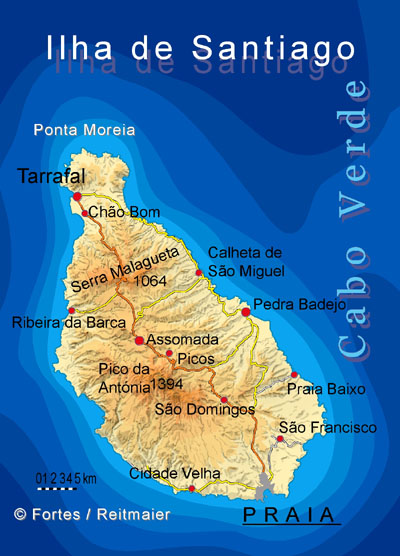




Geography and landscape
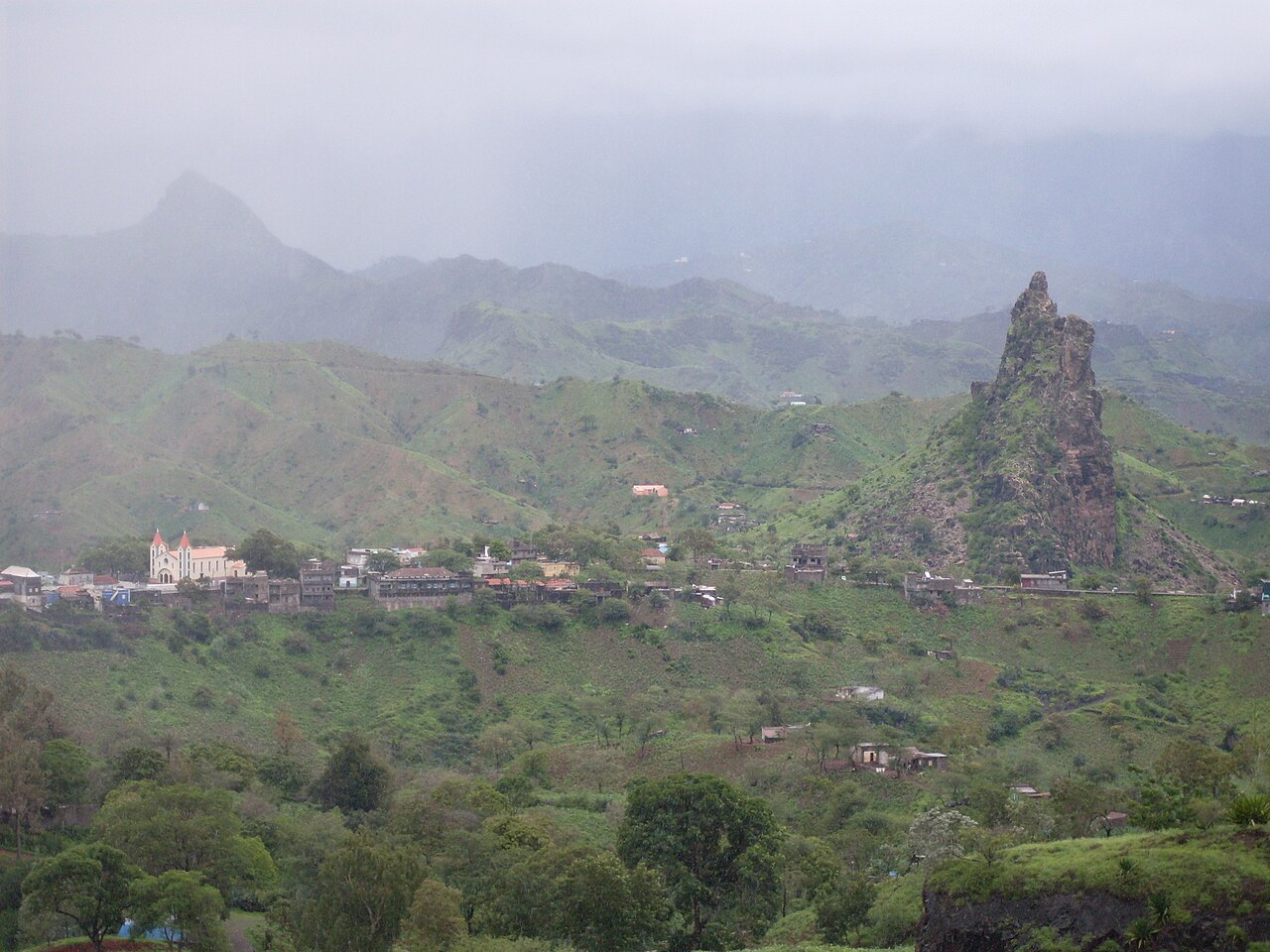
Santiago rises from the Atlantic Ocean with a mix of rugged mountains, deep valleys and fertile plains. Its interior features higher elevations and permanent springs in places, while the coast provides natural harbors and sandy beaches. The island is part of the wider Macaronesia region and shares some climatic and geological traits with nearby Atlantic islands.
Administrative divisions and towns
Praia, the largest city, serves as the national capital and main port. Other notable towns include Assomada and Tarrafal, which act as regional centers for commerce and services. Santiago anchors the country politically and economically within the broader archipelago.
History and development
First settled by the Portuguese in the 15th century, Santiago developed early as a stop on Atlantic shipping routes. Over centuries it became a focus for agriculture, trade and administrative institutions. The growth of Praia into a government and commercial hub shaped much of the island’s modern identity.
Economy, agriculture and society
Much of Santiago’s inland area is cultivated for subsistence and market crops; agriculture remains important alongside fisheries and urban services. The island concentrates national institutions, higher education and cultural venues, contributing to migration from other islands and continuing urban expansion around Praia (Praia).
Nature, conservation and notable facts
Santiago supports a variety of habitats and endemic species and features protected areas and reforestation efforts. Local ecosystems are influenced by island topography, human land use and Atlantic weather patterns; for more on the natural setting see ecosystems. The island is also a cultural focal point, known for music, festivals and historical neighborhoods that reflect Cape Verde’s multicultural heritage.
Questions and answers
Q: What does Santiago mean in Portuguese?
A: Santiago means "Saint James" in Portuguese.
Q: What is the largest island in the Cape Verde archipelago?
A: Santiago is the largest island in the Cape Verde archipelago.
Q: What is the importance of Santiago island?
A: Santiago island is the most important agricultural centre and home to half the nation's population.
Q: Where is the capital of Cape Verde located?
A: The capital of Cape Verde, Praia, is located on Santiago island.
Q: What is Macaronesia?
A: Macaronesia is a group of islands in the Atlantic Ocean with similar ecosystems.
Q: Is Santiago island a part of Macaronesia?
A: Yes, Santiago island is a part of Macaronesia.
Q: How much of Cape Verde's population lives on Santiago island?
A: Half of Cape Verde's population lives on Santiago island.
Related articles
Author
AlegsaOnline.com Santiago (Cape Verde) — the archipelago’s largest island and national center Leandro Alegsa
URL: https://en.alegsaonline.com/art/87183
Sources
- commons.wikimedia.org : Santiago (Cape Verde)
- ine.cv : "Distribuição da população residente por meio de residência - RGPH 2010"
- capeverde.com : "History - Part 2"
- capeverde.com : "Cape Verde: Island of Santiago"
- areasprotegidas.gov.cv : "Parques Naturais"
- weatherbase.com : "Praia, Cape Verde"