
Santa Fe Trail: 19th-Century Trade Route Between Missouri and New Mexico
Historic 19th-century overland route linking Independence, Missouri and Santa Fe, New Mexico; opened trade, shaped relations with Plains peoples, aided U.S. expansion, and declined after railroads arrived.
Overview
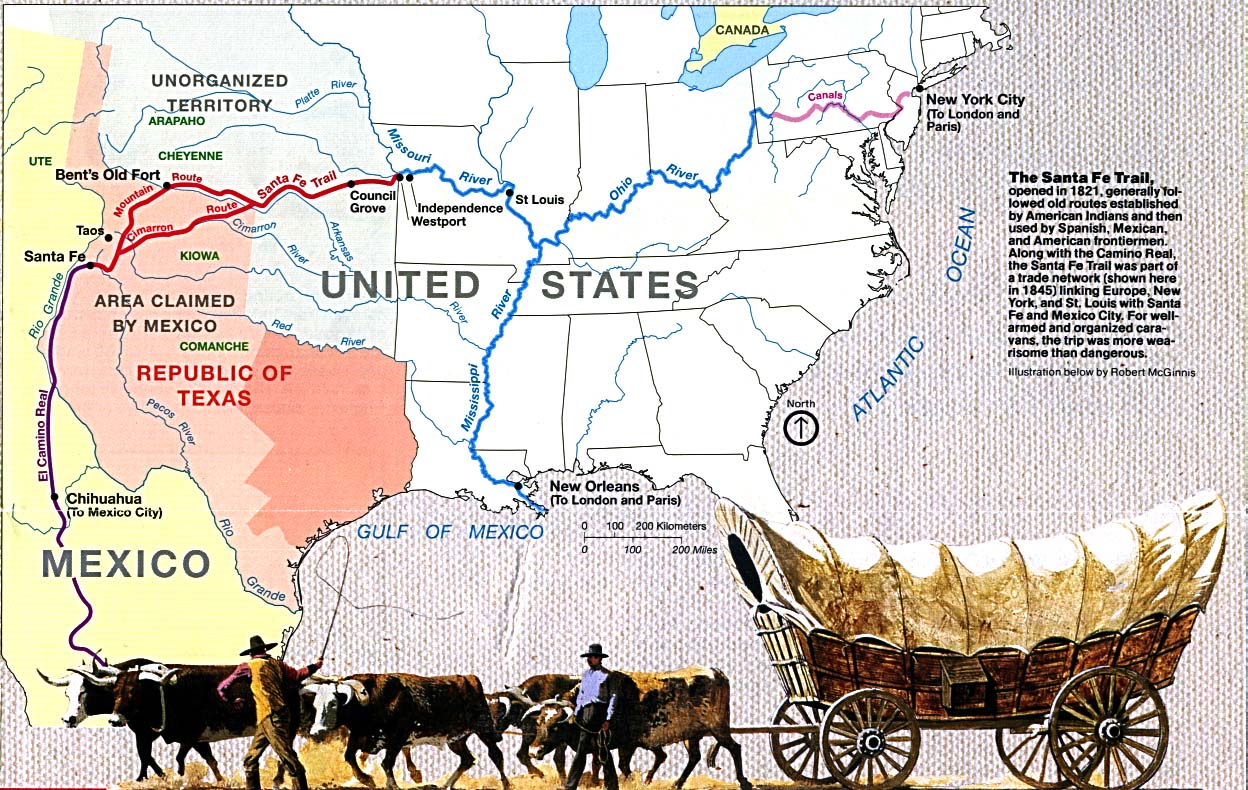
The Santa Fe Trail was a major 19th-century overland corridor linking Independence, Missouri, with Santa Fe in what is now New Mexico. Opened to regular Anglo‑American trade in 1821 by William Becknell, the route became a principal commercial link between the American interior and the northern provinces of New Spain and, after independence, Mexico. It functioned as both a highway for traders and a zone of cultural contact among Anglo, Hispanic and Indigenous peoples until railroads diminished its commercial role late in the century.
Image gallery
10 Images




Route and principal branches
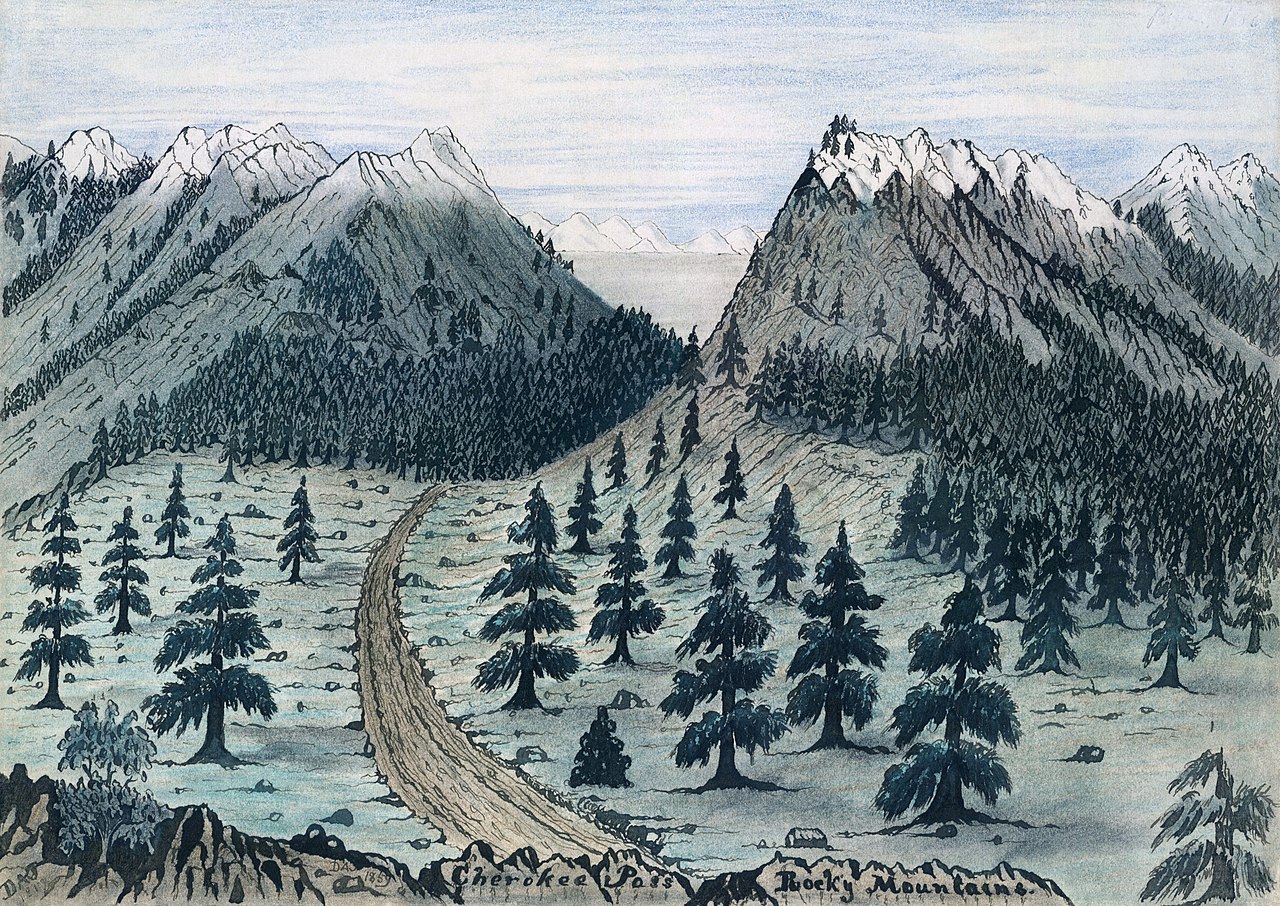
The trail was not a single paved road but a set of tracks and wagon routes spanning roughly nine hundred miles across plains and mountain approaches. Two principal branches were widely used: the Mountain Route, which followed river valleys and crossed higher country near the Sangre de Cristo and Raton Pass, and the Cimarron Route, a shorter but drier cut across the plains. Choice of route depended on season, water availability and security concerns; travelers planned carefully to find reliable springs and grazing.
Trade, caravans and organization
Caravans on the Santa Fe Trail were often organized as well‑supplied wagon trains carrying manufactured goods, textiles, metalware and hardware westward. Eastbound loads returned with mules, furs, silver, and locally produced goods. Merchants formed partnerships to share the costs and risks of long journeys; caravans could include guides, blacksmiths and armed escorts. Travel was seasonal and could take many weeks; the trail linked markets, credit networks and information across a vast interior.
Interactions with Indigenous peoples
The corridor crossed lands used by several Plains peoples, most notably the Comanche. Relations ranged from cooperative trade and negotiated passage to armed conflict. Plains groups sometimes exacted tolls or demanded payment for safe transit, and at times raiding and reprisals occurred. The introduction of American manufactured goods, horses and market incentives reshaped local economies and power balances in ways that were often disruptive for Indigenous societies.
Ecological and social effects
Intense trail traffic, market hunting and expanding settlement contributed to declines in bison herds on parts of the plains. Reduced bison availability weakened the subsistence base of many Indigenous groups and altered patterns of mobility and conflict. At the same time the trail fostered demographic and economic links between the Midwest and the Southwest, encouraging migration, settlement, and the diffusion of new technologies and crops.
Military use and the Mexican–American War
Because it was the established overland route into northern New Mexico, the Santa Fe Trail had strategic value. In 1846 U.S. forces used it to enter and occupy New Mexico during the Mexican–American War. Thereafter, as the United States extended civil and military institutions into the region, the corridor continued to serve as a supply and communication line for troops, settlers and federal agents.
Decline, legacy and preservation
Commercial use of the trail declined with the arrival of the railroad to Santa Fe and the region in the late 19th century, which offered faster, cheaper and more reliable transport. Despite that decline, the Santa Fe Trail left a durable legacy in the built environment, place names and cultural memory of the American West. Many segments are preserved or interpreted today, and public agencies and local organizations commemorate the trail with markers, museums and historic sites.
Further reading and resources
- Transportation route overview
- Central North America context
- Independence, Missouri starting point
- Santa Fe, New Mexico destination
- Commercial highway history
- El Camino Real de Tierra Adentro connection
- Northern route boundaries
- Comanche territory and interactions
- Regional raiding and security issues
- Relations with Mexico
- American traders and migration
- Arkansas River valley traffic
- Bison populations and ecological change
- Military use in 1846 invasion
- Mexican–American War background
- U.S. acquisition of the Southwest
- Settlement and development after the war
- Expansion and transportation transition
Note: This entry summarizes broadly known aspects of the Santa Fe Trail: its origins, principal routes, economic role, interactions with Indigenous peoples, military significance and eventual decline with the rise of rail transportation. For detailed archaeological, local and primary-source studies consult specialized monographs and archival collections.
Questions and answers
Q: What was the Santa Fe Trail?
A: The Santa Fe Trail was a 19th century transportation route through central North America that connected Independence, Missouri with Santa Fe, New Mexico.
Q: Who pioneered the Santa Fe Trail?
A: The Santa Fe Trail was pioneered in 1821 by William Becknell.
Q: When did the introduction of the railroad to Santa Fe end its use as a commercial highway?
A: The introduction of the railroad to Santa Fe in 1880 ended its use as a commercial highway.
Q: What other trade route did it connect with?
A: The route skirted the northern edge and crossed the northwestern corner of Comancheria, and also connected with El Camino Real de Tierra Adentro which carried trade from Mexico City.
Q: How did this affect Comanche power in the region?
A: Heavy trail traffic along the Arkansas River valley prevented bison herds from reaching important seasonal grazing land, contributing to their decline which in turn hastened the decline of Comanche power in the region.
Q: How was it used during Mexican–American War?
A: During Mexican–American War, it was used as an invasion route for U.S forces into New Mexico.
Q: How did this contribute to U.S expansion into new lands after war's end? A: After U.S took control of Southwest at end of Mexican–American War, it helped open up new settlement and contributed to expansion of U.S into lands taken during war's conclusion
Related articles
Author
AlegsaOnline.com Santa Fe Trail: 19th-Century Trade Route Between Missouri and New Mexico Leandro Alegsa
URL: https://en.alegsaonline.com/art/87133
Sources
- fhwa.dot.gov : "Santa Fe Trail"