
Sanhedrin: The Ancient Jewish Council and High Court
The Sanhedrin was the assembly of Jewish judges and leaders that served as local courts and a supreme council in ancient Israel. This article explains its composition, roles, history and legacy.
The Sanhedrin was the collective name given to assemblies of Jewish judges and elders that performed judicial, legislative and communal leadership functions in ancient Israel. The word comes from Greek and means "assembly" or "council." In rabbinic literature the institution appears as both local courts that served individual towns and as the Great Sanhedrin that sat in Jerusalem and acted as a high court and central authority for matters of law and religious practice.
Image gallery
4 Images


Composition and functions
Sanhedrins varied in size and authority. Local tribunals could be relatively small, while the Great Sanhedrin of Jerusalem is traditionally described as comprising seventy-one members; rabbinic sources also specify a minimum of twenty-three judges for a court empowered to try capital cases. Members included sages, priests and elders with legal training or recognized wisdom. Typical duties included adjudicating civil and criminal disputes, interpreting religious law, issuing legal rulings, and overseeing communal matters such as calendar decisions and ritual standards.
How the Great Sanhedrin operated
The Great Sanhedrin met in or near the Temple precincts when the Temple stood, and met frequently to deliberate important questions of law and policy. Proceedings combined legal argument, appeal and majority vote; some traditions describe formal procedures for evidence, interrogation and sentencing. The Great Sanhedrin also issued enactments intended to guide Jewish life across different cities and regions, and it served as a final court of appeal for difficult or precedent-setting cases.
Historical development and decline
Roots of the Sanhedrin are often traced to biblical instructions that emphasize appointment of judges and elders to govern justice. During the Second Temple period the Sanhedrin in Jerusalem had its greatest institutional prominence. After the Roman destruction of the Temple and the political transformations of Late Antiquity, the center of the Sanhedrin moved away from Jerusalem and later to Galilee. Rabbinic sources record that the central court gradually lost power and ceased regular activity in late antiquity; tradition often identifies the fourth century CE as the time when the classical Sanhedrin ceased to function effectively.
Legacy, attempts at revival and modern significance
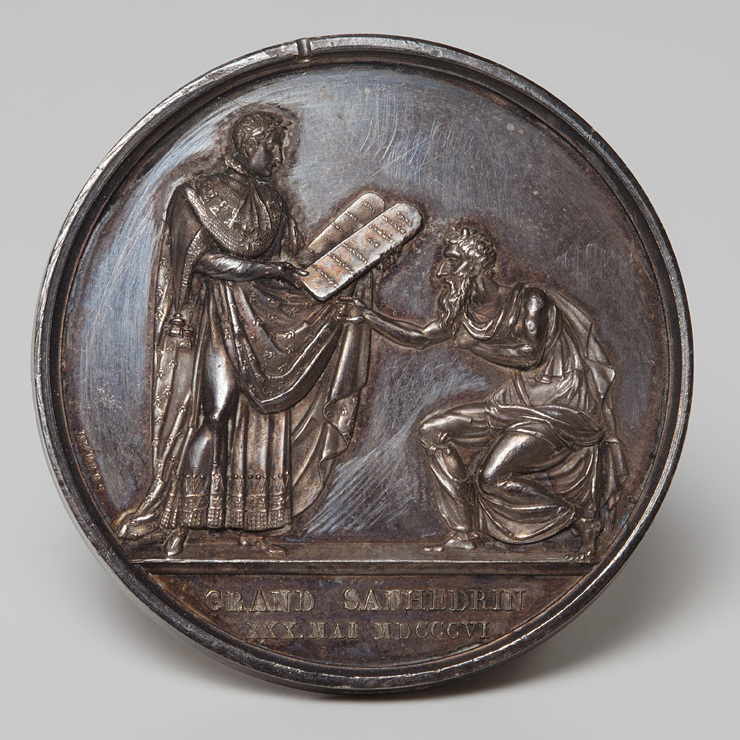
The Sanhedrin left a deep imprint on Jewish legal method, institutional practice and communal organization. Rabbinic models of deliberation, qualification of judges, and legal responsa draw from its procedures. At various times there have been efforts to re-establish a formal Sanhedrin or a similar central rabbinic council—for example, an assembly convened by Napoleon in the early 19th century sought Jewish legal opinion on civil questions—yet no continuous restoration of the classical Great Sanhedrin has taken root in modern times. Contemporary Jewish scholarship and law studies treat the Sanhedrin as a formative institution for understanding ancient Judaism and the development of Jewish law.
Notable distinctions and resources
- Size and jurisdiction: local courts versus the Great Sanhedrin.
- Legal authority: advisory rulings, binding decisions, and capital jurisdiction.
- Cultural role: balancing religious law, communal governance and interaction with external authorities.
For further reading and source references see: judicial councils, regional assemblies, etymology of the name, biblical background, divine command in tradition, Moses and judicial structures, Israelite elders, Jerusalem Sanhedrin, Sabbath and holidays, Second Temple era, Galilean courts, late antique chronology, calendar authority, persecution and decline.
Questions and answers
Q: Who were the Sanhedrin?
A: The Sanhedrin were a group of judges who led the Jewish people of every city in the Land of Israel.
Q: What does the name Sanhedrin mean?
A: The name Sanhedrin means "council" or "assembly" in Greek.
Q: How many judges were present in each Sanhedrin?
A: There were between twenty-three and seventy-one judges in each Sanhedrin.
Q: Did God command Moses and the Israelites to make councils of judges?
A: Yes, according to the Hebrew Bible, God commanded Moses and the Israelites to make councils of judges and to do what they said.
Q: Which Sanhedrin led the other councils?
A: The Great Sanhedrin in Jerusalem led the other councils.
Q: When did the Great Sanhedrin move to Galilee?
A: After the Romans destroyed the Second Temple, the Great Sanhedrin moved to Galilee.
Q: Why did the Great Sanhedrin stop meeting?
A: The Great Sanhedrin stopped meeting because of persecution. It made its last law in 358 CE when it abandoned the Hebrew calendar.
Related articles
Author
AlegsaOnline.com Sanhedrin: The Ancient Jewish Council and High Court Leandro Alegsa
URL: https://en.alegsaonline.com/art/87040