
Sanford Dole: Lawyer, President of the Republic of Hawaii, and Territorial Governor
Sanford Dole (1844–1926) was a Hawaiian-born lawyer and politician who helped overthrow the Hawaiian monarchy, served as president of the Republic of Hawaii, and became the first territorial governor and a federal judge.
Sanford Ballard Dole (April 23, 1844 – June 9, 1926) was a prominent lawyer and politician in late 19th-century Hawaiʻi. Born into a family of American missionaries and settlers, Dole played a central role in the 1893 overthrow of Queen Liliʻuokalani, led the subsequent Republic of Hawaii as its president, and later served in high office after the islands were annexed by the United States.
Image gallery
6 Images


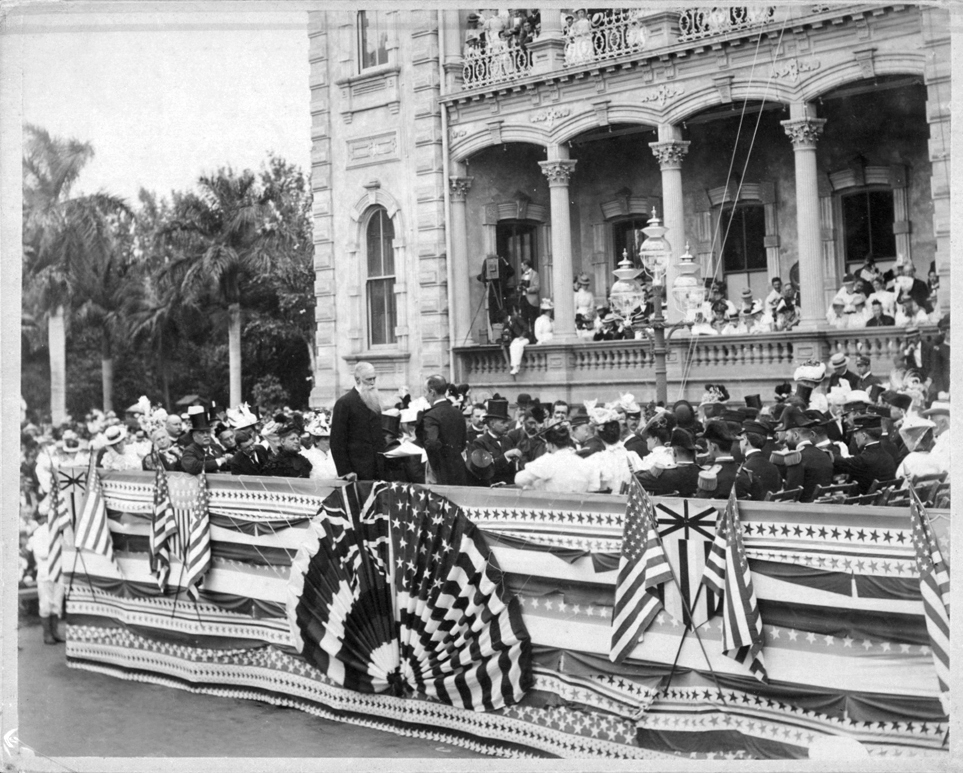
Background and early career
Dole was raised in the changing social landscape of the Hawaiian Kingdom, where native institutions and immigrant communities interacted through trade, religion and law. He trained in law and entered public life, becoming known for his civic involvement and connections with business and legal circles. Over time he aligned with other residents and planters who favored closer ties with the United States and greater political control by non‑native residents.
Overthrow of the monarchy and the Republic
In January 1893 a group of mostly American and European businessmen and residents formed a Committee of Safety that deposed the reigning monarch, Queen Liliʻuokalani. The action was supported by the presence of United States naval forces in Honolulu harbor and led to the establishment of a provisional government. Dole became a leading figure in that provisional government and, when the Republic of Hawaii was proclaimed in 1894, he was chosen as its president. The overthrow and the methods used to achieve it—especially the intervention or presence of U.S. forces—became the subject of controversy and political debate in Washington.
U.S. response, annexation, and territorial government
President Grover Cleveland investigated the events and criticized the overthrow as unjust; he urged that the queen be restored. Dole, leading the republic, declined to reinstate Liliʻuokalani, arguing that the provisional and then republican governments represented the will of many residents. The question of Hawaiʻi’s status remained contentious until the administration of President William McKinley supported annexation. In 1898 the Newlands Resolution annexed the islands, creating a U.S. territory. Dole served as the first territorial governor after the organic act took effect and later accepted appointment as a federal judge, serving on the United States District Court for the Hawaiian Territory until 1915.
Legacy and differing perspectives
Dole’s role is interpreted in contrasting ways. Supporters credit him with stabilizing government, promoting economic development, and guiding the islands through a major constitutional transition. Critics emphasize that the overthrow curtailed native Hawaiian sovereignty and was driven by economic and political interests that marginalized the native population. The legal and moral questions raised by the coup and annexation continue to influence debates about Hawaiian history and indigenous rights.
Further reading and references
- Primary source collection 1
- Biographical details and chronology
- Contemporary accounts of the overthrow
- Obituary and later assessments
- Legal background and law in the Hawaiian Kingdom
- Political biographies and analysis
- Committee of Safety records
- Monarchy history and institutions
- Constitutional changes in the 1880s–1890s
- Overview of the provisional government
- King Kalākaua: reign and policies
- Succession and royal family context
- Queen Liliʻuokalani: life and deposition
- U.S. naval presence in Honolulu harbor
- Military aspects and diplomatic reports
- Local reaction and civic responses
- Harbor and strategic importance
- Revolutionaries and their aims
- Grover Cleveland’s administration and policy
- U.S. diplomatic correspondence
- Dole’s presidency of the Republic of Hawaii
- Dates and timeline of the republic
- Transition to territorial status
- President William McKinley and annexation
- Newlands Resolution and annexation documents
- Legal arguments and court cases
- Military considerations and reports
- Territorial administration and governance
- Dole’s term as governor
- Federal judgeship and later public service
- Retirement, death, and historical evaluation
Note: This article presents a concise overview of Sanford Dole’s public life and the major controversies associated with it. For detailed archival materials, see the items listed above or consult specialized histories of Hawaiʻi and U.S. diplomatic affairs in the late 19th century.
Questions and answers
Q: Who was Sanford Dole?
A: Sanford Dole was an American politician who was part of a group of businessmen that forced a new Hawaiian national constitution on the country during King David Kalakaua's reign and then after his death removed Queen Liliuokalani from the throne and took control of the country in 1893.
Q: How did they remove Queen Liliuokalani?
A: The group threatened to use the warships of the U.S. Navy that were in Honolulu harbor, so she agreed to do what they wanted to avoid her people being harmed.
Q: What did President Grover Cleveland decide about this act?
A: President Grover Cleveland decided that it had been an act of war against the Hawaiian Kingdom and ordered Sanford Dole, who had become president of the newly formed republic, to make Liliuokalani queen again.
Q: Why didn't Dole comply with Cleveland's order?
A: Dole refused to comply with Cleveland's order because he said that President Cleveland was interfering.
Q: What happened after Grover Cleveland left office?
A: After Grover Cleveland left office, newly elected American president William McKinley signed the Newsland Resolution which made Hawaii a territory of the United States, ending any legal or military chance of restoring the Queen and Hawaiian Kingdom.
Q: What position did Dole take after McKinley signed Newsland Resolution?
A: After McKinley signed Newsland Resolution, Dole served as governor of Hawaii from 1900 until 1903 and then accepted a position as United States District Court judge where he remained until 1915.
Q: When did Sanford Dole die?
A: Sanford Dole died on June 9th 1926.
Related articles
Author
AlegsaOnline.com Sanford Dole: Lawyer, President of the Republic of Hawaii, and Territorial Governor Leandro Alegsa
URL: https://en.alegsaonline.com/art/87022