
San Pedro Department, Paraguay
San Pedro is a large, primarily rural department in northern-central Paraguay. Its capital is San Pedro de Ycuamandiyú (ISO code PY-02). Economy centers on agriculture, cattle and local trade.
San Pedro is one of Paraguay's departments located in the country's northern-central eastern region. The area is chiefly rural, with scattered towns and farming communities. Its administrative status and local name are often given in Spanish as Departamento de San Pedro, while generic references may call it a department of Paraguay. The department's ISO 3166-2 code is PY-02.
Image gallery
7 Images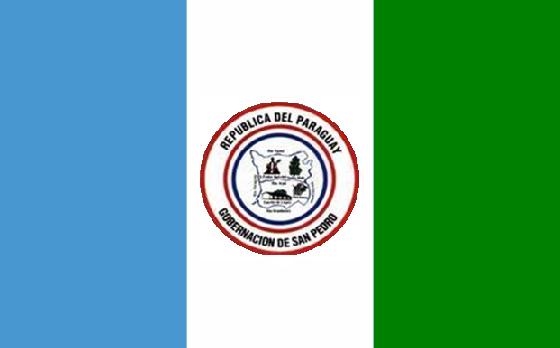


Capital and administration
The departmental capital is San Pedro de Ycuamandiyú, a market town that serves as the administrative and commercial center for the surrounding countryside. Locally the capital and many communities retain Spanish and Guaraní bilingual traditions; the department takes its common name from Saint Peter, and that influence appears in place names and festivals. The chief urban settlements, including the principal city, provide basic public services, municipal government and regional trade hubs.
Landscape and climate
Topography ranges from low rolling plains to seasonally wet lowlands and patches of gallery forest. The climate is humid subtropical, with warm summers and mild winters; rainfall supports pasture and crop cultivation but also creates areas prone to seasonal flooding. Natural vegetation historically included woodland and savanna, much of which has been altered by farming.
Economy and land use
The department's economy is dominated by agriculture and livestock. Typical activities include:
- Smallholder and commercial crop production (such as soy, cotton and tobacco in parts of the region).
- Cattle ranching and dairy production on extensive pastures.
- Local commerce, timber extraction, and informal trade that link rural producers with urban markets.
Many communities depend on seasonal harvests and market access, and the rural character shapes social and economic life.
History, culture and contemporary issues
Indigenous Guaraní peoples historically inhabited the territory and their language and customs remain influential. Colonial-era missions and later settlement patterns established towns that became municipal centers. In recent decades San Pedro has faced development challenges common to interior regions: improving road connections, expanding education and health services, and addressing environmental impacts from agricultural expansion. Conservation, land tenure and rural livelihoods are ongoing policy concerns.
As a department within Paraguay, San Pedro combines agricultural importance, cultural traditions and governance responsibilities, balancing rural development with environmental and social priorities.
Questions and answers
Q: What is the San Pedro department?
A: The San Pedro department is a department in Paraguay.
Q: What is the capital city of the San Pedro department?
A: The capital city of the San Pedro department is San Pedro de Ycuamandiyú.
Q: What is the ISO 3166-2 code for the San Pedro department?
A: The ISO 3166-2 code for the San Pedro department is PY-02.
Q: Why was the San Pedro department named San Pedro?
A: The San Pedro department was named San Pedro because its capital city is called San Pedro de Ycuamandiyú.
Q: What language is spoken in the San Pedro department?
A: The text does not provide information on the language spoken in the San Pedro department.
Q: Where is Paraguay located?
A: Paraguay is a country located in South America.
Q: What does "San Pedro" mean in English?
A: "San Pedro" means "Saint Peter" in English.
Related articles
Author
AlegsaOnline.com San Pedro Department, Paraguay Leandro Alegsa
URL: https://en.alegsaonline.com/art/86912
Sources
- sanpedro.gov.py : "El Gobernador"
- dgeec.gov.py : "Proyección Densidad Tasa 2012"
- sanpedro.gov.py : "Plan de Desarrollo Departamental 2013/1018"
- dgeec.gov.py : "Compendio Estadístico Ambiental del Paraguay 2014"
- eumed.net : "Territorio y Población"
- dgeec.gov.py : "Proyección de la población por sexo y edad, según distrito. Revisión 2015 (8.3 MB)"