
San José Chinantequilla — a Mixe community in the Sierra Mixe of Oaxaca
Small Mixe-speaking village in the Sierra Mixe of Oaxaca, Mexico. Located in the municipality of Totontepec at about 1,160 m elevation with coffee production, mixed agriculture and a distinct local dialect.
San José Chinantequilla is a small indigenous community in the highland Mixe region of northern Oaxaca. Administratively it forms part of the municipality of Totontepec. Situated at roughly 1,160 metres above sea level, the settlement had an enumerated population of about 463 people in the 2005 census. Its location in the Sierra Mixe gives it the characteristics of many mountain villages in this part of Mexico: relative remoteness, strong local identity and an economy tied to hillside agriculture.
Image gallery
5 Images


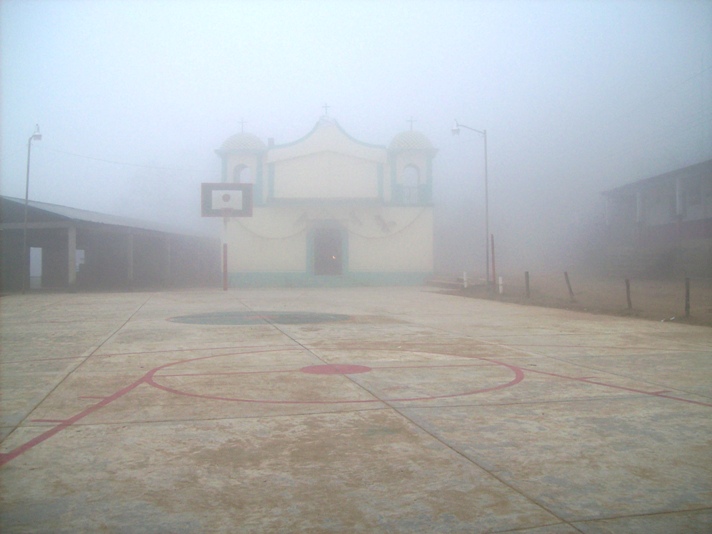
Geography and climate
The immediate surroundings are steep and rugged, part of a larger landscape where elevations in the Sierra Mixe rise to around 2,500 metres in higher peaks. These changes in elevation create a mosaic of microclimates. In and around San José Chinantequilla one can observe cooler, humid conditions at higher slopes, temperate and semi-humid conditions on mid-elevations and warmer, more humid conditions toward lower valleys. Soil types and slope aspects influence what is grown where and make transport and road-building more challenging than in flatter, coastal zones.
Population, language and culture
The community is primarily composed of indigenous Mixe people. Residents commonly speak a local variety of the Mixe language and many are bilingual in Spanish. Mixe is not a single uniform language but a set of related varieties: each village often preserves distinctive speech features. Cultural life in the village is organized around family networks, communal work practices and local customary institutions. Because formal historical documentation specific to the village is limited, much local history is transmitted by oral memory and regional studies.
Economy and livelihoods
Economic activity is dominated by smallholder agriculture and complementary activities. Coffee is an important cash crop in the higher and mid-elevation zones and is often grown alongside subsistence crops such as maize and beans. Households typically combine cultivation for self-consumption with market-oriented production, seasonal labour, and small-scale trade. Local commerce links Chinantequilla to nearby market towns and to municipal centres where goods and services are obtained.
History and settlement patterns
Researchers and regional observers suggest that some villages in this part of the Sierra Mixe were settled later than older Mixe centres, a conclusion drawn from comparative settlement patterns and oral testimony rather than extensive archival records. As a result, San José Chinantequilla is sometimes described as relatively young in the local settlement sequence. Its development reflects broader patterns of highland colonization, land use and adaptation to rugged terrain.
Infrastructure and access
Historically the Sierra Mixe has been difficult to reach, and remoteness limited economic exchanges and public services. In recent decades improvements in roads and communications have gradually changed access for many villages, including this one. Better transport links and the arrival of telecommunications and other services have facilitated movement of goods and people and expanded opportunities for education, health access and trade. Discussions about further improvements to roads and communications appear in regional planning, though local conditions remain variable.
Social challenges and contemporary issues
Like many small indigenous communities, San José Chinantequilla faces challenges related to economic opportunity, access to consistent public services and environmental sustainability. Out-migration for work is common across the region as residents seek wage labour in larger towns, other parts of Mexico or abroad. Locally led initiatives and external development programs both play roles in addressing needs for infrastructure, education and agricultural support, but outcomes vary by community.
Role within the region
- Part of the Sierra Mixe ecological and cultural zone with varied microclimates and steep terrain.
- Maintains Mixe language and customs while also using Spanish for wider communication.
- Economy centered on coffee and mixed agriculture with local trade links to municipal centres.
- Governed within the municipal framework of Totontepec and connected administratively to the state of Oaxaca and the country of Mexico.
Overall, San José Chinantequilla illustrates the combination of cultural resilience and geographic challenge found across the Sierra Mixe. Its small size and limited written record mean that much available information comes from census data, ethnolinguistic research and local testimony. For further context on the municipality and regional initiatives see municipal sources and regional development discussions referenced under transport and communications.
Questions and answers
Q: Where is San José Chinantequilla located?
A: San José Chinantequilla is located in the Mixe region of Oaxaca state, Mexico.
Q: In which municipality is Chinantequilla located?
A: Chinantequilla is located in the municipality of Totontepec.
Q: How many people live in Chinantequilla?
A: According to the 2005 census, the town had a population of 463 people.
Q: What is the indigenous language spoken in Chinantequilla?
A: The indigenous language spoken in Chinantequilla is Mixe.
Q: What economic activities are practiced in Chinantequilla?
A: Economic activities that are practiced in Chinantequilla include the production and marketing of coffee, agriculture, and trade.
Q: How far is Chinantequilla from the capital city of Oaxaca state?
A: Chinantequilla is approximately 85 km from the capital city of Oaxaca state.
Q: What are the different climates in the Mixe region?
A: The Mixe region has varied climates including cold and humid in the mountain, temperate semi-humid in the part mean, and hot and humid in the lower.
Related articles
Author
AlegsaOnline.com San José Chinantequilla — a Mixe community in the Sierra Mixe of Oaxaca Leandro Alegsa
URL: https://en.alegsaonline.com/art/86841