
Samuel Morse: inventor of the single‑wire telegraph and Morse code
Samuel F. B. Morse (1791–1872), American painter turned inventor, developed the practical single‑wire telegraph and an early system of dots‑and‑dashes that became Morse code, transforming long‑distance communication.
Samuel Finley Breese Morse was an American artist and inventor whose later work transformed long‑distance communication. Trained as a painter, he became better known for inventing a practical telegraph system that used a single wire and for helping develop the dot‑and‑dash signaling method that came to be called Morse code. His innovations accelerated the spread of instant messaging across continents and reshaped business, news and transportation in the 19th century.
Image gallery
10 Images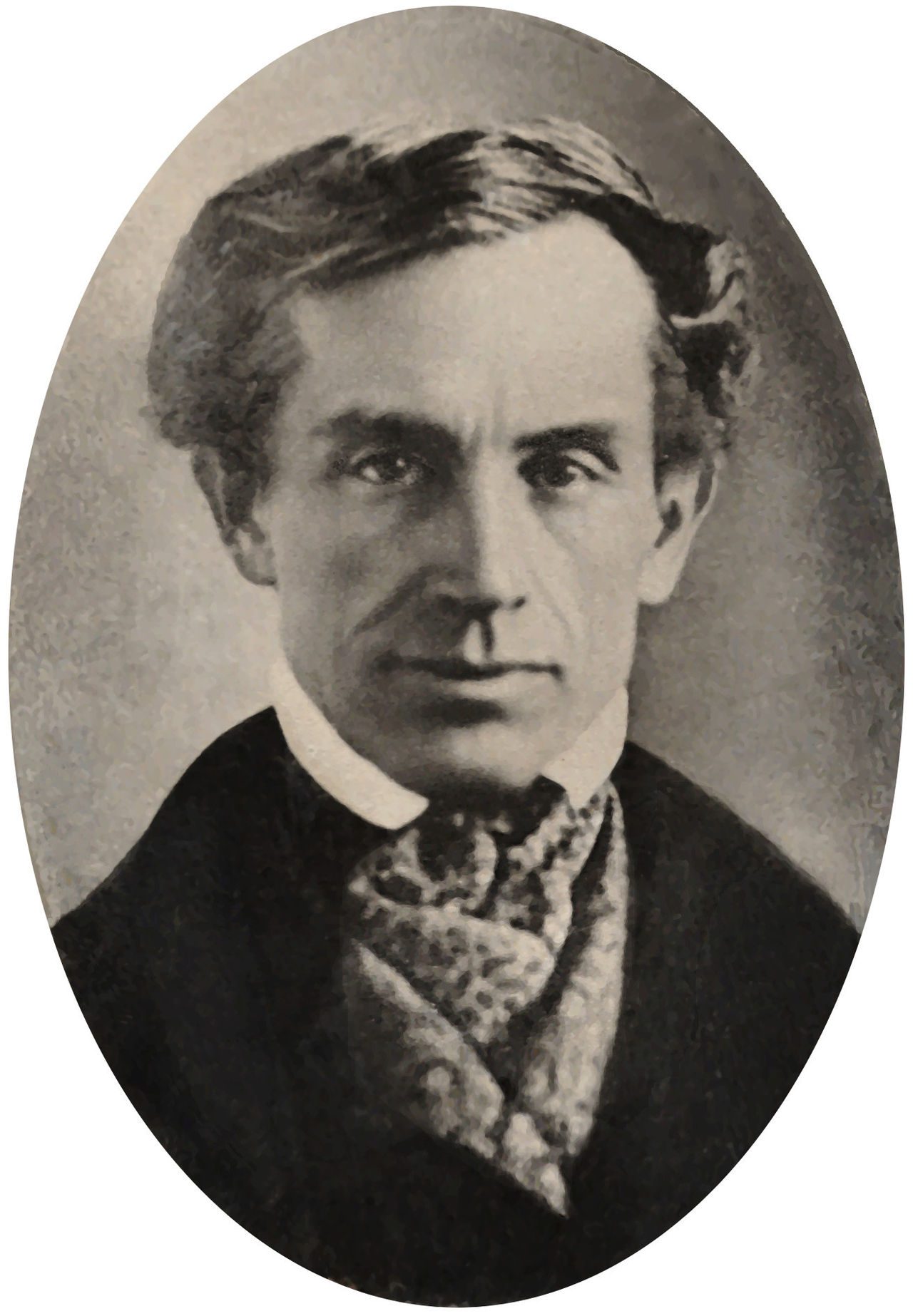


Early life and turning point
Morse was born in 1791 and trained at Yale and in Europe as a portrait painter. During a transatlantic voyage in the early 1830s he encountered developments in electromagnetism and telegraphy and began to think about applying those discoveries to practical communication. Moving from art to invention, he pursued an electrical telegraph design that emphasized simplicity and reliability, rather than the many‑wire schemes others were experimenting with.
Invention, code and demonstration
By the mid‑1830s Morse and collaborators had built a system that operated over one conducting wire and produced a sequence of short and long signals — “dots” and “dashes” — to represent letters and numerals. He worked with assistants and instrument makers to refine the transmitter (a key) and receiver (a sounder or recording mechanism). After securing congressional funding, his first public demonstration of a commercial telegraph line took place in 1844 between Washington, D.C. and Baltimore, where the message "What hath God wrought" was transmitted, showing the technology’s practical potential.
How his telegraph worked
- Single conductor: a single wire returned current through the ground rather than requiring multiple wires for different letters.
- Transmitter: a hand‑operated key opened and closed the circuit to make short and long pulses.
- Receiver: an electromagnet produced audible clicks or moved a marker that recorded the pattern.
- Coding: letters were encoded as patterns of short and long signals, allowing alphabetic information to travel as electrical impulses.
Spread and impact
The Morse telegraph rapidly spread across the United States and elsewhere. By the 1860s networks linked cities and regions across North America, and international efforts culminated in an undersea connection across the Atlantic later in the century. Telegraphy sped reporting of news, coordinated railroad traffic, aided commerce and military operations, and laid foundations for globalized communications.
Credit, standardization and legacy
Although Morse is the name most associated with the invention, development was collaborative: instrument makers and assistants—most notably Alfred Vail—contributed to the apparatus and to refinements of the code. Over time Morse’s original signaling scheme was standardized into international variants. Even after electrical telephony and radio largely replaced telegraph networks, Morse code remained important in maritime distress signaling, aviation until late in the 20th century, and among amateur radio operators. His work marks a turning point from slow physical messages to near‑instant electronic exchange.
Today Samuel Morse is remembered both for his technical contribution to communications and as an example of a professional who shifted careers to pursue engineering innovation. For further reading, see entries on his role as an inventor and the technical and social history of Morse code and telegraph networks between Washington, D.C. and Baltimore, their expansion across North America, and the eventual transatlantic connections.
Questions and answers
Q: Who was Samuel Finley Breese Morse?
A: Samuel Finley Breese Morse was an American inventor who is known for inventing the telegraph with only one wire and for helping to come up with the idea of Morse code.
Q: What was the problem with the telegraphs before Morse's invention?
A: Before Morse's invention, telegraphs had several wires which made them hard to use. The first-ever telegraph had 26 wires which made it almost impossible to use.
Q: What did Morse do to solve the problem with the telegraph?
A: Morse spent years trying to build a telegraph with only one wire and finally managed to do it in 1836.
Q: What is Morse code?
A: Morse code is a system of communication that uses "dots" and "dashes" to represent letters and numbers. It was invented by Samuel Morse and his assistant.
Q: What was the significance of Morse's invention?
A: Morse's invention made it possible to quickly communicate with people far away, and many telegraph lines were built. A telegraph line using his invention was built between Washington, D.C. and Baltimore in 1844.
Q: When were telegraph lines built all around North America?
A: By the 1860s, telegraph lines were built all around North America.
Q: When was a telegraph line built across the Atlantic Ocean?
A: In 1866, a telegraph line was built across the Atlantic Ocean.
Related articles
Author
AlegsaOnline.com Samuel Morse: inventor of the single‑wire telegraph and Morse code Leandro Alegsa
URL: https://en.alegsaonline.com/art/86748
Sources
- web.mit.edu : "Inventor of the Week: Archive"
- memory.loc.gov : "Samuel F. B. Morse Home Page"
- smithsonianmag.com : "Samuel Morse's Reversal of Fortune | History & Archaeology |"