
Samtskhe–Javakheti: geography, history and cultural heritage
Mountainous region in southern Georgia centered on Akhaltsikhe, combining volcanic plateaus, medieval monuments, strategic transport corridors and diverse cultural communities.
Overview
Samtskhe–Javakheti is a region in southern Georgia that brings together three historical provinces: Meskheti, Javakheti and Tori. Its administrative centre is Akhaltsikhe, a town with a layered urban ensemble and a focal point for administration, culture and tourism. The region occupies a strategic position between the South Caucasus highlands and the approaches toward Anatolia and the Armenian Highlands.
Image gallery
9 Images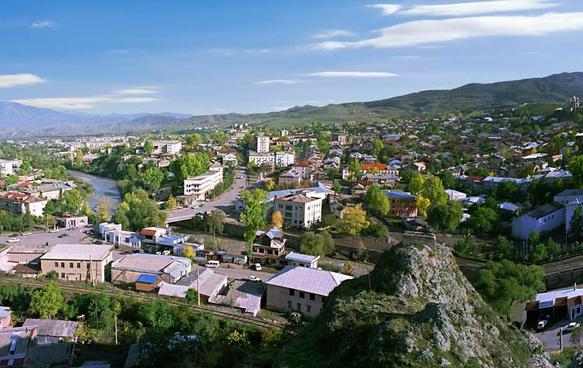


Geography and climate
The landscape ranges from alpine ridges of the Lesser Caucasus to broad volcanic plateaus, lake basins and river valleys. Javakheti is notable for its high volcanic plateau, numerous lakes and peatlands, and a cooler, more continental climate compared with Georgia's lowlands. Elevation and local relief create significant climatic variation, with cold winters at higher altitudes and milder conditions in lower river valleys.
Population, languages and culture
The population is culturally diverse. Ethnic Georgians form the majority overall, while sizeable Armenian communities live in parts of Javakheti, reflecting centuries of settlement and population movement. Georgian is the main state language; Armenian and other minority languages are spoken locally. Religious life is dominated by the Georgian Orthodox Church, with Armenian Apostolic communities and other faiths present in specific localities.
History and monuments
Samtskhe–Javakheti preserves a long sequence of human activity from medieval principalities to Ottoman and Russian periods that have left castles, monasteries and vernacular settlements. Important archaeological and architectural sites illustrate defensive, ecclesiastical and monastic traditions. Among the best-known monuments are:
- Vardzia: the cliff-cut monastery and troglodyte complex that attracts visitors for its rock-carved churches and corridors.
- Vanis Kvabebi: a series of rock-cut churches and fortifications set high on a cliff.
- Khertvisi fortress: an ancient hilltop stronghold controlling a river valley route.
- Rabati Castle in Akhaltsikhe: a restored ensemble with medieval and later layers, now a cultural attraction.
Economy and transport
The regional economy combines livestock and upland agriculture, forestry and services related to tourism. Samtskhe–Javakheti is also a transit corridor for major international energy and transport projects that connect the Caspian region with the Mediterranean and beyond. Notable infrastructures that pass through or near the region include the Baku–Tbilisi–Ceyhan oil pipeline, the South Caucasus natural gas pipeline and international rail links such as the Kars–Tbilisi–Baku railway. These corridors influence local development, logistics and strategic planning.
Tourism and outdoor activities
Tourism highlights combine cultural monuments with outdoor recreation. Visitors seek Vardzia and other medieval sites, explore fortified towns and castles, and use the highlands for hiking, birdwatching and nature study. Seasonal festivals, local crafts and traditional cuisine are elements of cultural tourism that support rural economies.
Conservation and contemporary issues
The region faces challenges typical of highland areas: protection of wetlands and peatlands, sustainable grazing practices, preservation of archaeological sites, and balancing infrastructure development with environmental stewardship. Community-led initiatives, heritage conservation projects and regional planning aim to reconcile economic needs with protection of unique landscapes and cultural assets.
Administration and outlook
Administratively Samtskhe–Javakheti is a unit within Georgia with several municipalities and local councils. Ongoing efforts focus on improving transport links, promoting sustainable tourism, and supporting intercommunal cooperation. The region's combination of strategic location, rich heritage and distinctive natural environments makes it an important part of Georgia's cultural and geographic mosaic.
Questions and answers
Q: What is Samtskhe-Javakheti?
A: Samtskhe-Javakheti is a region in Georgia.
Q: What is the capital city of Samtskhe-Javakheti?
A: The capital city of Samtskhe-Javakheti is Akhaltsikhe.
Q: What are the historical provinces of Samtskhe-Javakheti?
A: The historical provinces of Samtskhe-Javakheti are Meskheti, Javakheti, and Tori.
Q: What major pipelines and railway pass through Samtskhe-Javakheti?
A: The Baku-Tbilisi-Ceyhan oil pipeline, South Caucasus natural gas pipeline, and Kars–Tbilisi–Baku railway pass through Samtskhe-Javakheti.
Q: What are some of the major tourist attractions in Samtskhe-Javakheti?
A: Some of the major tourist attractions in Samtskhe-Javakheti are the cave monasteries of Vardzia and Vanis Kvabebi, Rabati Castle, and Khertvisi fortress.
Q: What are the cave monasteries of Vardzia and Vanis Kvabebi?
A: The cave monasteries of Vardzia and Vanis Kvabebi are historical sites built into caves in the region.
Q: What is Rabati Castle and Khertvisi fortress?
A: Rabati Castle and Khertvisi fortress are historical fortifications in Samtskhe-Javakheti that are now open to visitors.
Related articles
Author
AlegsaOnline.com Samtskhe–Javakheti: geography, history and cultural heritage Leandro Alegsa
URL: https://en.alegsaonline.com/art/86734