
Samaritan Pentateuch (Samaritan Torah)
A distinct ancient Hebrew recension of the first five books of Moses preserved by the Samaritans, important for biblical studies, textual criticism, and Samaritan religion.
The Samaritan Pentateuch, often called the Samaritan Torah, is the version of the first five books of Moses preserved and used by the Samaritan community. It is written in a form of Hebrew and transmitted in the Samaritan script. The work functions as the central scripture for Samaritan religious life and differs in places from other ancient Hebrew and Greek witnesses to the Torah. For background on the broader category of Pentateuchal literature see Torah.
Image gallery
8 Images


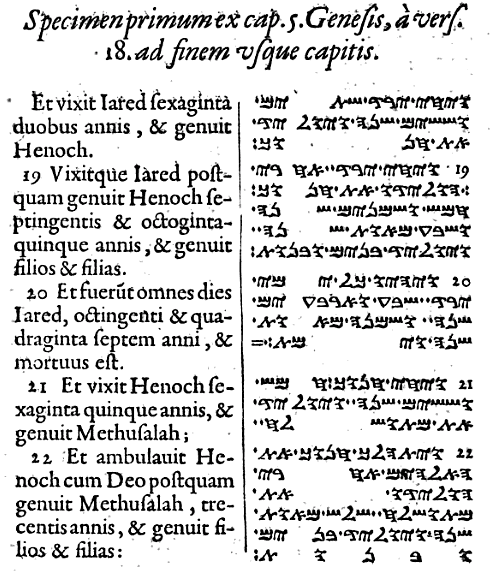
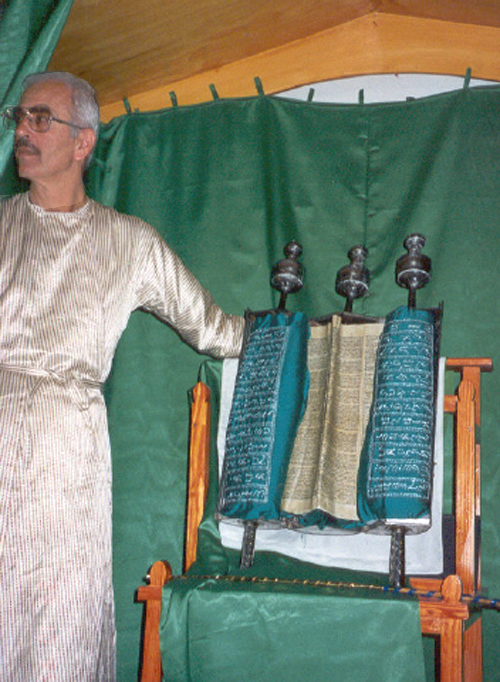
Textual characteristics
The Samaritan Pentateuch shares much material with the Masoretic Text (the medieval Hebrew text that underlies most modern Old Testaments) but shows numerous variant readings. Some variants are minor (spelling, chronology, ages in genealogies); others affect law, place-names, or theological emphasis. The Samaritan text is written in the community's script and includes marginal and liturgical readings unique to Samaritan ritual practice.
History and transmission
The text developed within the Samaritan community during the late Second Temple period and later. Samaritans maintained their own sanctuary on Mount Gerizim and a separate identity from the Judean community centered on the Temple in Jerusalem; events connected with the destruction and contests over sanctuaries affected the community's development and textual tradition. Scholars have compared Samaritan readings with other witnesses such as the Greek translation tradition (Septuagint) and finds from the Judean desert (Dead Sea Scrolls) to trace the history of the Pentateuch's transmission.
Notable differences and distinctive features
- Place of central worship: the Samaritan Pentateuch emphasizes Mount Gerizim as the chosen sanctuary, a key theological distinction from texts that point to Jerusalem.
- Legal and ritual variants: a number of commandments and their formulations diverge from the Masoretic Text; some differences influence ritual practice among Samaritans.
- Chronological and lexical variants: genealogical ages and certain words often differ, providing alternative readings for translators and exegetes.
Importance for scholarship and religion
For biblical scholars the Samaritan Pentateuch is a crucial witness to the diversity of ancient Hebrew textual traditions. It is used in textual criticism to assess how the text of the Pentateuch evolved, to reconstruct earlier readings, and to understand how different communities received these books. For Samaritans the Pentateuch is authoritative scripture that shapes liturgy, law, and identity.
Manuscripts and the Abisha Scroll
Samaritan tradition attaches special significance to a manuscript known as the Abisha Scroll, kept and read in the Samaritan community at Nablus and other centers. The community attributes the scroll's origin to Abishua, described in Samaritan genealogy as the great-grandson of Aaron and an early keeper of the tradition. The scroll is associated with the Samaritan synagogue in Nablus. Modern palaeography and codicology, however, indicate that the extant manuscripts are composite and that surviving material includes later medieval copying and corrections rather than a single continuous text from antiquity; portions of the tradition date to centuries well after the time of Joshua (Joshua) and Aaron (Aaron).
The Samaritan Pentateuch therefore stands at the intersection of living religious use and historical-critical study. It is both a sacred book central to Samaritan identity and a valuable comparative source for anyone studying the development of the Pentateuch, the history of Israelite religion, and the textual prehistory that also touched Jerusalem's city and its Temple.
Researchers and readers wishing to consult other summaries and textual resources may follow general references to the Pentateuchal corpus and related textual witnesses such as the Torah, the Septuagint, and manuscript discoveries noted in the Dead Sea Scrolls. For community-specific information and local history see studies that discuss the Samaritan community in Nablus and its traditions.
Summary points:
- The Samaritan Pentateuch is the Samaritan community's Hebrew text of the five books of Moses.
- It preserves unique readings important for both religious practice and textual scholarship.
- Tradition and manuscript evidence about origins (including claims tied to Abishua) must be weighed alongside palaeographic and codicological research.
Further study can explore editions and translations of the Samaritan Pentateuch and comparative commentaries that place it alongside the Masoretic Text and the Septuagint for deeper analysis.
Questions and answers
Q: What is the Samaritan Pentateuch?
A: The Samaritan Pentateuch is a special version of the Torah used by the Samaritans. It contains the first five books of Moses, or the Torah.
Q: When was it created?
A: The latest date that it was created is 127 BC when the Temple in Jerusalem was destroyed and the Samaritans split from other groups in the Temple.
Q: Why do scholars use this version?
A: Scholars use this version when they want to find meaning of words in original Pentateuch or if they want to learn about history of different versions of Bible.
Q: Are there any differences between this version and others?
A: Yes, some differences are small such as ages of people mentioned in genealogy while others are major such as commandment to only have one wife which appears in Samaritan text but not other versions.
Q: What importance does Abisha Scroll have for Samaritans?
A: The Abisha Scroll has special importance for Samaritans as it is used in their synagogue at Nablus and they claim it was penned by Abishua, great-grandson of Aaron thirteen years after entry into land of Israel under Joshua's leadership.
Q: How old is Abisha Scroll according to modern scholars?
A: Modern scholars believe that oldest texts within Abisha Scroll date back to 12th century A.D.
Related articles
Author
AlegsaOnline.com Samaritan Pentateuch (Samaritan Torah) Leandro Alegsa
URL: https://en.alegsaonline.com/art/86643