
Salman Rushdie: novelist, essayist, and prominent literary figure
Profile of Salman Rushdie, an Indian-born British-American writer known for magical realism, major novels such as Midnight's Children and The Satanic Verses, and his role in debates about art and free expression.
Overview
Salman Rushdie is an Indian-born novelist and essayist who became one of the most influential English-language writers of the late 20th and early 21st centuries. He is widely praised for his narrative energy, inventive prose and blending of the real and the fantastic. His reputation rests on novels that interweave personal and national histories and that often address migration, identity and the legacies of empire. For a general biography see biographical sources, and for a catalog of his works see bibliographies.
Image gallery
9 Images


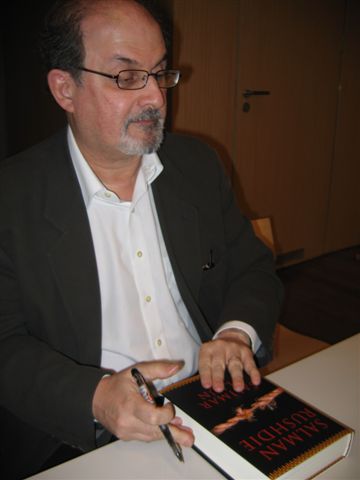


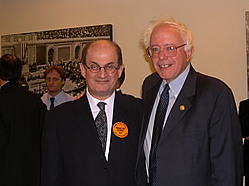
Style and recurring themes
Rushdie is commonly associated with magical realism, a mode in which extraordinary or supernatural elements are presented matter-of-factly within ordinary settings. Critics link this approach to a larger postcolonial project: his narratives often collapse chronological boundaries, combine satire with myth, and explore language as a site of power and resistance. For the relationship between his technique and surrealism, readers may consult discussions at critical overviews.
Major works
Among his best-known books is Midnight's Children, a multi-generational epic that won major literary recognition and is regarded as a landmark of postcolonial fiction. Another widely discussed novel is The Satanic Verses, which provoked international controversy and intensified debates about art, religion and censorship. Many of Rushdie's other works range from political satire to fables for younger readers; see collections and lists at comprehensive listings.
Life and historical context
Rushdie was born in India and spent formative years there before being educated in England; biographical summaries note his early ties to India and later moves to England and the United States. His career reflects broader cultural shifts: he emerged when former colonies were reconfiguring their relationships with metropolitan centres, and his work participates in conversations about migration, hybridity and cultural memory.
Controversy, consequences and public debate
The publication of The Satanic Verses led to calls for censorship and threats to his safety, which in turn sparked worldwide discussion about freedom of expression, the responsibilities of writers and the limits of political protest. The episode altered Rushdie's public life and made him a symbol in debates over secularism and artistic liberty. For concise reference on his major life events and writings see author profiles and worklists.
Legacy and importance
Rushdie's contributions are assessed across literary, political and educational contexts: his imaginative reinventions of history have influenced other writers, his public stance has affected policies on speech and protection for artists, and his novels remain widely taught and translated. For further reading, critical essays and archives consult general resources at work-related pages and broad literary studies available through major reference sites. Additional commentary on the cultural movements related to his style can be found at regional cultural sources and European literary discussions.
- Notable themes: identity, migration, satire, history
- Typical techniques: magical realism, polyphonic narration, interlaced timelines
- Significance: influential in postcolonial literature and free-expression debates
Questions and answers
Q: Who is Sir Ahmed Salman Rushdie?
A: Sir Ahmed Salman Rushdie is an Indian-born British-American novelist and essayist. He is the author of Midnight's Children (1981), which won the Booker Prize. His best known work was The Satanic Verses (1988).
Q: What type of writing does Rushdie use?
A: Rushdie is well known for writing stories which use "magic realism", which is similar to surrealism. This means that things in his stories happen which may be magic or impossible, such as falling from an aeroplane and floating down as gently as paper.
Q: Where was Rushdie born?
A: Rushdie was born in India.
Q: Where did he go to school?
A: He was sent to England to attend private school.
Q: When did he move to the United States?
A: He has lived in the United States since 2000.
Q: What themes are often present in his stories?
A: He often writes about India, and his stories often are set in different parts of the world.
Q:What awards has he received for his work?
A:He won the Booker Prize for Midnight's Children (1981).
Related articles
Author
AlegsaOnline.com Salman Rushdie: novelist, essayist, and prominent literary figure Leandro Alegsa
URL: https://en.alegsaonline.com/art/86516
Sources
- telegraph.co.uk : "Iran resurrects Salman Rushdie threat"
- news.bbc.co.uk : news.bbc.co.uk/onthisday/hi/dates/stories/december/26/newsid_2542000/2542873.stm