
Salisbury, Connecticut: Town at the State's Northwest Corner
Overview of Salisbury, Connecticut — geography, history, lakes and mountains, Scoville Library, recreation and notable features including the tri-state marker and the Appalachian Trail.
Overview
Salisbury is a small rural town located in Litchfield County in the extreme northwest of the United States's state of Connecticut. Incorporated in the 18th century, Salisbury has long been valued for its natural landscape, historic villages, and a low-density population — the town recorded 3,977 residents in the 2000 census. Today it is known for outdoor recreation, a number of lakes, and several cultural and historic sites.
Image gallery
6 Images



Geography and Natural Features
Salisbury occupies a portion of the Taconic highlands and sits near the tripoint of three states. The Massachusetts–New York–Connecticut tri-state marker lies close to the town border and is a notable local landmark. The town includes rolling hills, forested tracts, and a series of lakes and ponds. The south slope of Mount Frissell falls within Salisbury; while the mountain's summit is across the state line in Massachusetts, its southern slope contains the highest elevation in Connecticut.
Major Lakes and Waterways
Salisbury's water resources are central to its character and recreation. Several named lakes and ponds provide opportunities for boating, fishing, and lakeside homes. Prominent bodies of water in the town include:
- Lake Wononscopomuc
- Washinee Pond
- Washining Lake
- Wononpakook Lake
- Riga Lake
- South Pond
History and Development
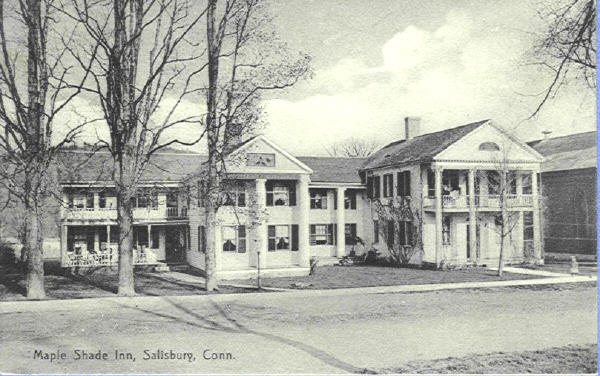
Settled in the 18th century and incorporated soon after, Salisbury developed initially around agriculture and mineral resources. In the colonial and early national periods the area was important for iron ore and related industries, which shaped early settlement and roads. Over time the economy diversified and many historic houses, civic buildings, and community institutions survived, giving the town a distinctly historic New England character.
Cultural Sites, Recreation, and Notable Facts
Salisbury hosts a number of cultural attractions, such as the Scoville Memorial Library, often cited as one of the earliest libraries in the nation to be open free to the public. The Appalachian Trail also traverses part of the town, drawing hikers and nature enthusiasts. Motor-sports fans may recognize the area for Lime Rock Park and other regional venues nearby. The town's combination of historic architecture, protected landscapes, and seasonal recreation makes it a year-round destination for residents and visitors.
Distinctive Characteristics
What distinguishes Salisbury is the mix of highland terrain and significant water bodies, its location at a three-state corner, and a small-town culture anchored by historical institutions. While it remains largely rural and residential, Salisbury's natural assets and preserved historic features contribute to its importance within northwest Connecticut as a center for outdoor activity, quiet tourism, and local history.
For more information about local services, history, and events, consult municipal resources and local historical organizations, or visit town information pages and visitor guides linked by municipal and county outlets.
Questions and answers
Q: What is Salisbury?
A: Salisbury is a town located in Litchfield County, Connecticut in the United States.
Q: Where is Salisbury located within Connecticut?
A: Salisbury is the most northwest town within the state of Connecticut.
Q: What is the population of Salisbury according to the 2000 census?
A: The population of Salisbury was 3,977 at the 2000 census.
Q: What is special about the Scoville Library in Salisbury?
A: The Scoville Library in Salisbury was the first library in the United States to be open to the public free of charge.
Q: What is the highest point in Connecticut and where is it located?
A: The highest point in Connecticut is on the south slope of Mount Frissell, which is located in Salisbury.
Q: What bodies of water can be found in Salisbury?
A: Salisbury is home to several ponds and six lakes: Wononscopomuc, Washinee, Washining, Wononpakook, Riga Lake, and South Pond.
Q: Does the Appalachian Trail run through Salisbury?
A: Yes, the Appalachian Trail runs through Salisbury.
Related articles
Author
AlegsaOnline.com Salisbury, Connecticut: Town at the State's Northwest Corner Leandro Alegsa
URL: https://en.alegsaonline.com/art/86478
Sources
- scovillelibrary.org : Scoville Library