
Saline River (Kansas)
A tributary of the Smoky Hill River in Kansas, the Saline River is noted for its saline springs, historical salt production, and role in regional ecology and water management.
Overview
The Saline River is a long tributary of the Smoky Hill River located in the central Great Plains of North America. Entirely within the Kansas portion of the plains, it has traditionally been identified by the salty character of some of its waters, a trait that influenced the river's name and local settlement patterns. The river is commonly described in regional references as a saline or salt-bearing stream and is one of several similarly named waterways in the United States.
Image gallery
2 Images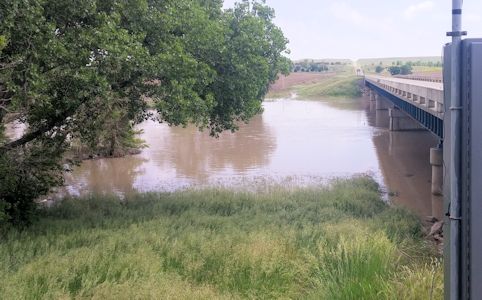

Course and physical characteristics
The Saline River drains part of the west-to-east plains landscape and ultimately joins the Smoky Hill River. Its watershed lies within the broader Great Plains physiographic region and so reflects the semi-arid climate and rolling topography found there. Sections of the river receive input from springs and seeps with elevated dissolved mineral content; these produce the mildly saline conditions that gave the river its name. Streamflow is variable, with seasonal runoff and occasional high-flow events influenced by convective storms and upstream land use.
History and name
The river's name comes from early descriptions translating a Native American name into French, with settlers later using the word "saline" to indicate salt-bearing waters. Indigenous peoples and later Euro-American explorers and settlers both noted naturally occurring salt springs and salty marshes along the valley. Those resources supported small-scale salt extraction in the 19th century and helped shape the settlement and economic development of nearby communities.
Ecology and uses
Despite localized salinity, the Saline River supports typical prairie riparian habitats: cottonwoods, willows and grasses in wetter reaches, and a variety of waterbirds and fish adapted to variable conditions. Land along the river is used for agriculture, grazing and occasional municipal or domestic water supply. Recreation such as fishing, birding and limited canoeing or kayaking occurs where access and flow permit. Conservation efforts balance agricultural use, habitat protection and water-quality concerns related to salts and sediment.
Management, hazards and notable facts
- Water management focuses on flood control, maintaining flow for wildlife and minimizing salt and sediment impacts on downstream users.
- Flash flooding can occur during summer thunderstorms; levees and small reservoirs in the basin moderate extreme flows in places.
- The river's saline character led to place names and early industry; towns and counties nearby often reflect that heritage.
For regional context and river data consult general resources about tributary systems (tributary), the Great Plains, and state-level information for the U.S. state of Kansas. Local conservation districts and state agencies maintain the most up-to-date information on streamflow, water quality and recreation access.
Questions and answers
Q: How long is the Saline River?
A: The Saline River is 397 miles long.
Q: What is the Saline River?
A: The Saline River is a tributary of the Smoky Hill River.
Q: Where is the Saline River located?
A: The Saline River is located in the central Great Plains of North America, entirely within the U.S. state of Kansas.
Q: What is the Native name of the Saline River and what does it mean?
A: The Native name of the Saline River is Ne Miskua, which means salty.
Q: Why is the Saline River called the Saline River?
A: The Saline River got its name from the French translation of its Native name Ne Miskua, which refers to the saltiness of the river.
Q: Is the Saline River salty?
A: Yes, the Saline River is salty, as its Native name Ne Miskua suggests.
Q: What river does the Saline River flow into?
A: The Saline River is a tributary of the Smoky Hill River.
Related articles
Author
AlegsaOnline.com Saline River (Kansas) Leandro Alegsa
URL: https://en.alegsaonline.com/art/86472
Sources
- geonames.usgs.gov : U.S. Geological Survey Geographic Names Information System: Saline River
- wdr.water.usgs.gov : "Water-Data Report 2010 - 06869500 Saline River at Tescott, KS"
- viewer.nationalmap.gov : The National Map
- geonames.usgs.gov : U.S. Geological Survey Geographic Names Information System: South Fork Saline River
- kwo.org : "Smoky Hill-Saline Basin"
- geonames.usgs.gov : U.S. Geological Survey Geographic Names Information System: North Fork Saline River
- kancoll.org : "Ferries in Kansas, Part VII -- Saline River"
- skyways.lib.ks.us : "Saline River"
- globalsecurity.org : "Smoky Hill Air National Guard (ANG) Range"
- doi.org : 10.1525/aa.1920.22.3.02a00050
- lasr.net : "The Battle of the Saline River"
- nwk.usace.army.mil : Wilson Lake: The Clearest Lake in Kansas