
Saitama — capital city of Saitama Prefecture, Japan
Saitama is the prefectural capital north of Tokyo. Formed by mergers of Urawa, Ōmiya, Yono and Iwatsuki, it is a designated city, a major commuter base and a regional transport, cultural and sporting center.
Saitama is the administrative centre of Saitama Prefecture in Japan and one of the country's designated cities. It lies in the south-eastern part of the prefecture, roughly 15–30 kilometres north of central Tokyo, which makes it a significant suburban and commuter area. The municipality was formed from the merger of several older cities and later expanded; its wards retain distinct local identities.
Image gallery
10 Images
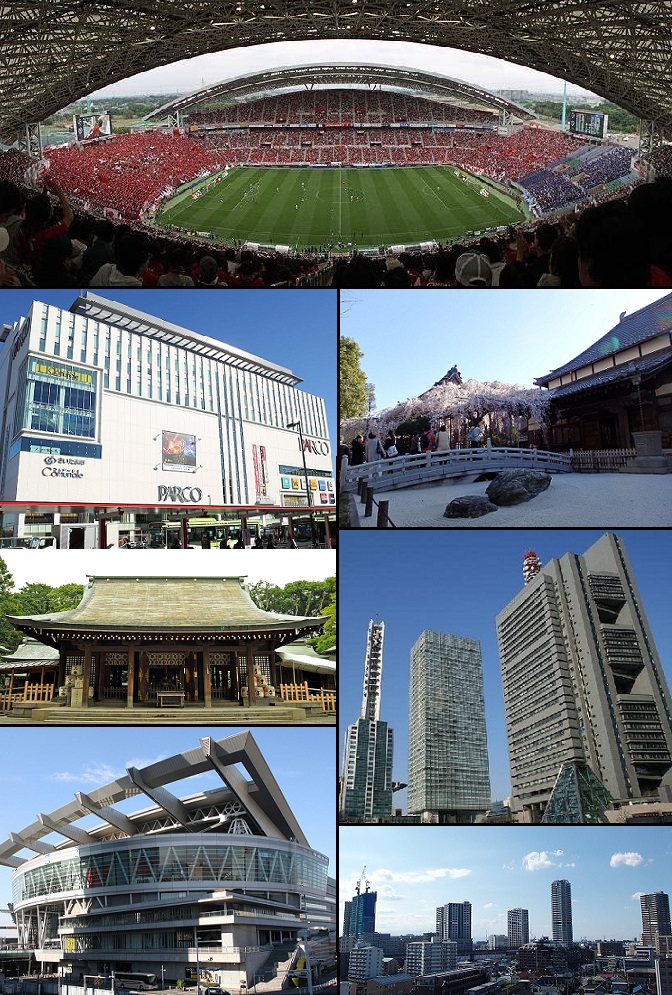


Origins and administrative structure
The modern city grew by combining the former cities of Urawa, Ōmiya, Yono and later Iwatsuki into a single municipal government. As a city designated by government ordinance it is divided into wards that handle many local administrative functions. The designation reflects its population size and the complexity of services it provides to residents across residential, commercial and industrial districts.
Geography and parts
Saitama occupies a band of lowland and riverine terrain at the southern edge of the prefecture. Major urban centres within the city include the areas built around Omiya Station and Urawa, each known for different roles: Omiya as a transport and commercial hub, and Urawa as a civic and cultural focus. Iwatsuki to the east preserves a more suburban and traditional character.
Transport, economy and daily life
Omiya is one of the region's principal railway junctions, linking local, regional and high-speed services and supporting commuter flows into Tokyo. Many residents commute daily to the capital, while the city itself sustains retail, service industries and light manufacturing. Transit connections and urban planning have shaped Saitama into both a dormitory area and a regional centre of employment.
Culture, sports and attractions
Saitama hosts several venues and cultural institutions that attract visitors from the wider region. Notable sites include large indoor arenas, museums and public parks; the city is also associated with professional sports teams and stadiums that stage national events. These facilities help define Saitama's identity beyond its role as a commuter town.
- Key districts: Omiya (transport and commerce), Urawa (administration and culture), Iwatsuki (local history and community)
- Typical attractions: performance arenas, museums, shrine precincts and urban parks
- Regional role: prefectural capital, transport hub, suburban residence for Tokyo workers
Significance and distinguishing facts
As the most populous city in its prefecture, Saitama combines municipal functions with suburban living. Its creation through municipal mergers reflects a wider trend in Japan toward administrative consolidation. Visitors and new residents will find a mix of modern infrastructure and neighborhood-level traditions, shaped by proximity to both the Tokyo metropolitan area and the rest of Saitama Prefecture (prefecture information).
For general context on Japan and the nation's urban geography see broader resources on Japan. Saitama's evolution continues as planning, transport links and cultural programming influence how it serves residents and the region.
Questions and answers
Q: What is Saitama?
A: Saitama is the capital city of Saitama Prefecture in Japan.
Q: Where is Saitama located?
A: Saitama is located in the south-east of Saitama Prefecture in Japan.
Q: Which former cities are included in Saitama?
A: Saitama includes the former cities of Urawa, Ōmiya, Yono, and Iwatsuki.
Q: What type of city is Saitama?
A: Saitama is a city designated by government ordinance.
Q: How far is Saitama from central Tokyo?
A: Saitama is about 15 - 30 kilometres north of central Tokyo.
Q: Do many people commute from Saitama to Tokyo?
A: Yes, many people commute from Saitama to Tokyo.
Q: What is significant about the population of Saitama?
A: More people live in Saitama than any other prefecture in Saitama.
Related articles
Author
AlegsaOnline.com Saitama — capital city of Saitama Prefecture, Japan Leandro Alegsa
URL: https://en.alegsaonline.com/art/86352
Sources
- 5931bus.com : Haneda bus · web.archive.org