
Saint Petersburg Stadium (Krestovsky Stadium / Gazprom Arena)
Multiuse football stadium on Krestovsky Island in Saint Petersburg, Russia; known for its retractable roof, long construction period and role in major international tournaments.
Overview
The Saint Petersburg Stadium, commonly called Krestovsky Stadium and commercially known as Gazprom Arena, is a large multiuse stadium in Saint Petersburg, Russia. Primarily built for association football, it became the home ground for FC Zenit Saint Petersburg and one of the main venues for international tournaments held in Russia.
Image gallery
9 Images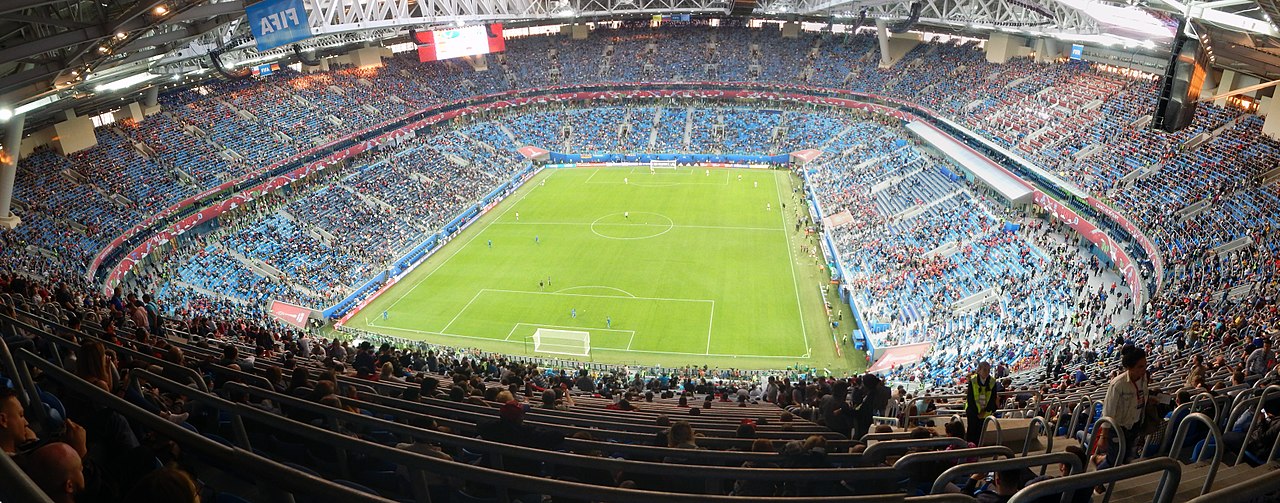




Design and characteristics
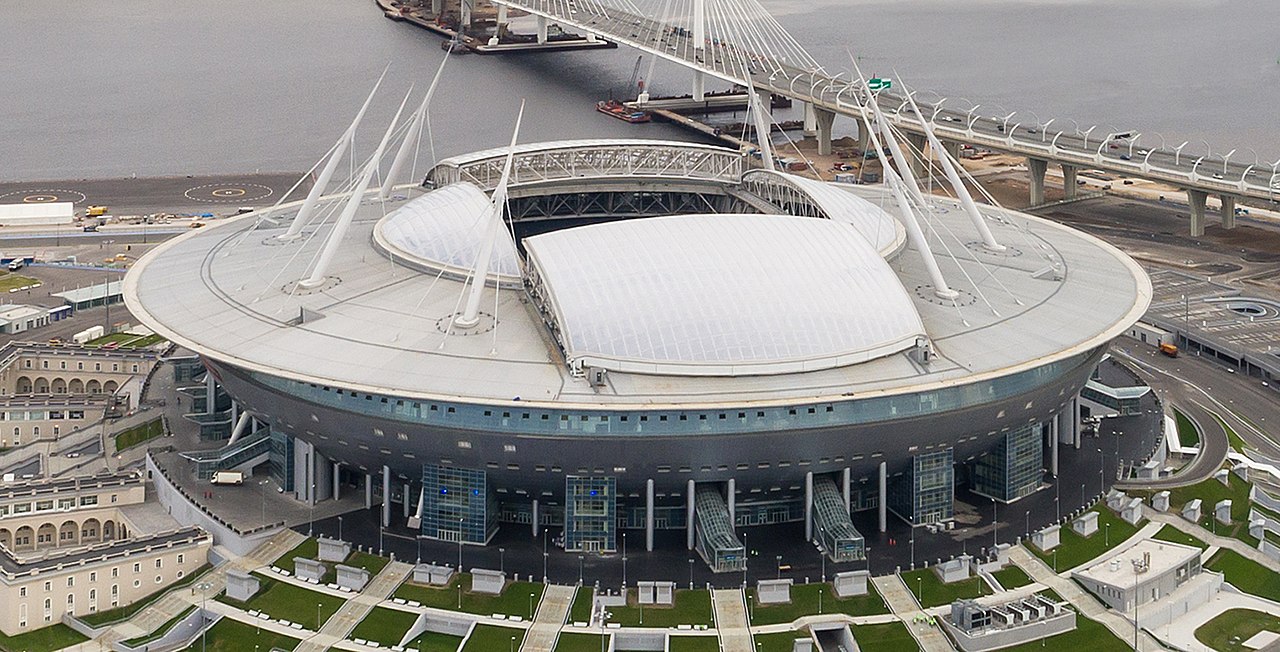
The stadium sits on Krestovsky Island and features a distinctive modern shell with a retractable roof and a movable pitch system that allows the playing surface to be removed or retracted for maintenance and non-sporting events. Capacity has varied with configuration; during the 2018 FIFA World Cup it seated roughly 64,000 spectators, while other arrangements have accommodated a larger number. Facilities include multiple tiers of seating, corporate boxes, and infrastructure for television and media.
Construction and history
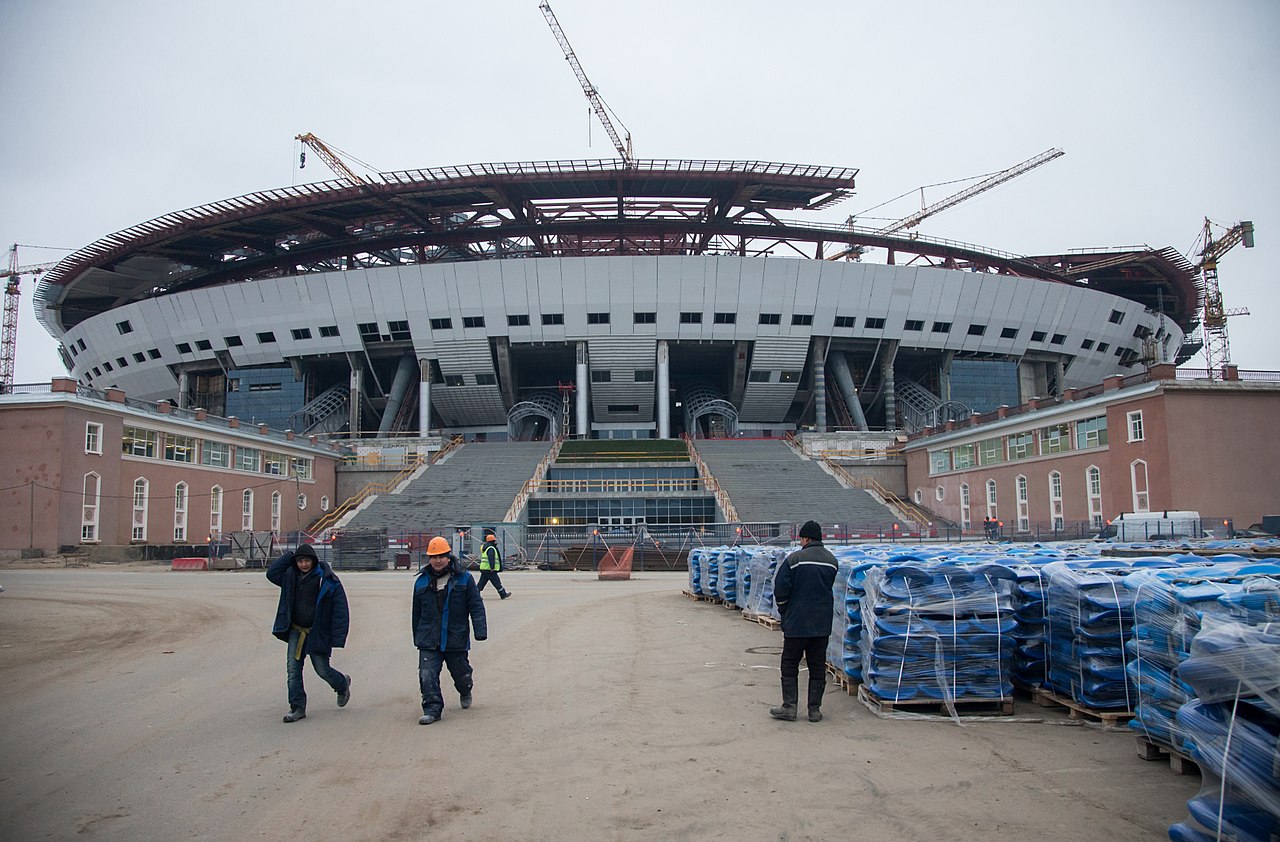
Planned in the 2000s as part of Russia's preparations to host major tournaments, construction began after design stages that involved international firms. The project experienced long delays, cost increases and public scrutiny; estimates of total cost have commonly ranged between approximately $1.1 and $1.4 billion. The completed venue opened to the public in 2017 after several years of interrupted work and revisions to the project.
Major uses and events
Since opening, the stadium has served as the regular home for Zenit Saint Petersburg and a site for national and international matches. Notable events include the 2017 FIFA Confederations Cup, multiple matches of the 2018 FIFA World Cup, and fixtures during UEFA Euro 2020 (held in 2021). Besides football, its design allows concerts and large cultural events.
Notable facts and distinctions
- The arena replaced older city facilities as Zenit's primary venue and is part of a wider redevelopment on Krestovsky Island.
- It combines a retractable roof with modern service areas, making it suitable for a range of event types and weather conditions.
- The stadium’s construction became a focal point for discussions about public spending, major-event planning and project management in Russia.
For further reading and technical references consult official sources and event reports published around the time of the stadium’s completion and use during international tournaments. Russian-language material and photographs document its local name and variants of the stadium’s title.
Questions and answers
Q: What is the Saint Petersburg Stadium?
A: The Saint Petersburg Stadium is an association football stadium in Saint Petersburg, Russia.
Q: How many people could the stadium hold during the 2018 FIFA World Cup?
A: During the 2018 FIFA World Cup, the stadium had a capacity of 64,468 people.
Q: How much did it cost to build the stadium?
A: The stadium cost $1.1 billion to $1.4 billion to build.
Q: Which football team is using the stadium as its home?
A: The stadium is now the home of FC Zenit St. Petersburg.
Q: Which major football events has the stadium hosted?
A: The stadium was used for the 2017 FIFA Confederations Cup, 2018 FIFA World Cup, and will be used for the UEFA Euro 2020.
Q: What is the alternative name for the Saint Petersburg Stadium?
A: The stadium is also called the Krestovsky Stadium or Zenit Arena.
Q: Where is the Saint Petersburg Stadium located in Russia?
A: The Saint Petersburg Stadium is located in Saint Petersburg, Russia.
Related articles
Author
AlegsaOnline.com Saint Petersburg Stadium (Krestovsky Stadium / Gazprom Arena) Leandro Alegsa
URL: https://en.alegsaonline.com/art/86061
Sources
- fifa.com : "2018 FIFA World Cup Russia™ - Destination"
- rg.ru : rg.ru/sujet/4737
- resources.fifa.com : "Match report – Final – Chile - Germany"
- resources.fifa.com : "Match report – Group B – Morocco - IR Iran"
- resources.fifa.com : "Match report – Group A – Russia - Egypt"
- resources.fifa.com : "Match report – Group E – Brazil - Costa Rica"
- resources.fifa.com : "Match report – Group D – Nigeria - Argentina"
- resources.fifa.com : "Match report – Round of 16 – Sweden - Switzerland"
- resources.fifa.com : "Match report – Semi-final – France - Belgium"
- resources.fifa.com : "Match report – Play-off for third place – Belgium - England"