
Saint Petersburg Philharmonic Orchestra
Historic Russian symphony orchestra founded in 1882, known for long artistic leadership, close ties with Russian composers and a distinguished discography under conductors such as Evgeny Mravinsky and Yuri Temirkanov.
Overview
The Saint Petersburg Philharmonic Orchestra is a major Russian symphony ensemble based in Saint Petersburg (the city) in Russia. Founded in 1882, it is among the country's oldest professional orchestras and has played a central role in the cultural life of the city and the nation. The ensemble is resident at the Philharmonia Society's principal concert hall and presents a broad repertory of symphonic literature, with particular strength in Russian works.
Image gallery
2 Images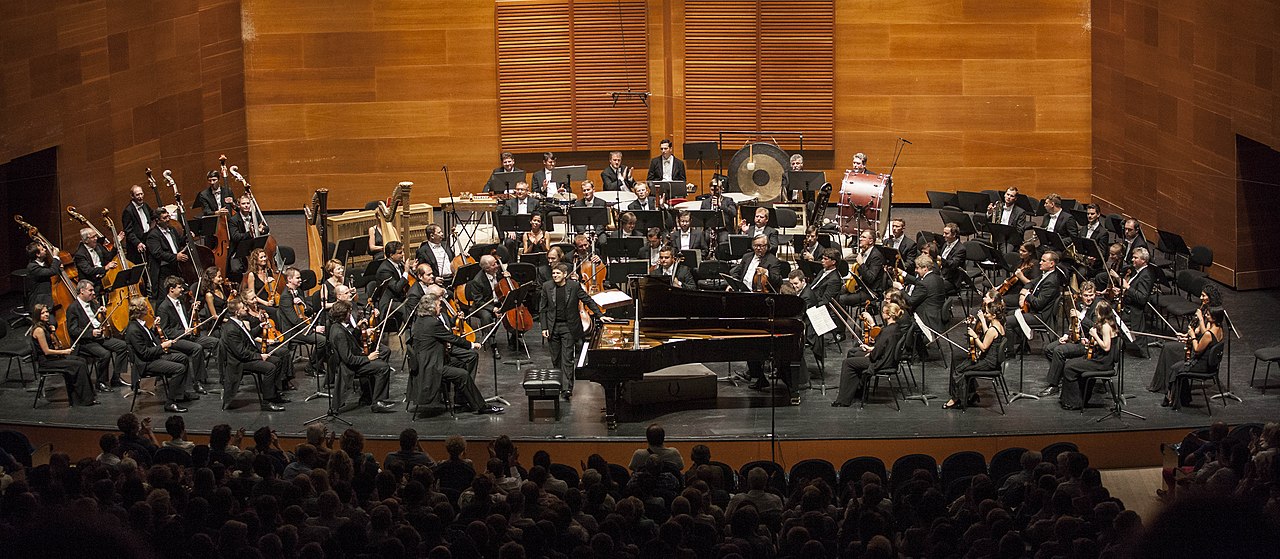

History and development
The orchestra traces its origins to 1882, when it was formed as the Imperial Music Choir (established 1882) to serve the musical needs of the imperial household. It was initially associated with the court of the emperor and provided performances for the imperial circle, including the private musical life of Emperor Alexander III. During the early decades of the 20th century the ensemble began to present public concerts more regularly (by the 1900s), attracting visiting maestros such as Richard Strauss, who conducted the group in 1912.
The political transformations of the 20th century led to several name changes. After the fall of the monarchy and the Russian Revolution (no more tsar), the city became Petrograd and the orchestra was reorganized as the State Philharmonic Orchestra of Petrograd. In the 1920s the ensemble began to receive state support (state funding in the 1920s) and, when the city became Leningrad, it was widely known as the Leningrad Philharmonic Orchestra. Throughout these decades, prominent foreign conductors visited as guests, including Bruno Walter, Ernest Ansermet and Hans Knappertsbusch.
Artistic identity and repertoire
The orchestra developed a distinctive interpretive voice, particularly under long-serving music directors who emphasized clarity, rhythmic drive and a deep engagement with Russian repertoire. During the Soviet period the ensemble maintained close working relationships with contemporary composers and conductors; it was associated with early and definitive performances and recordings of major 20th-century Russian works, including significant collaborations with Dmitri Shostakovich and other national composers. While travel was restricted for much of the mid-20th century, the orchestra's studio recordings circulated internationally and helped build its reputation outside the USSR.
Notable conductors and recordings
- Evgeny Mravinsky: a towering figure who led the ensemble for about fifty years, shaping its sound and commissioning and premiering works by Soviet composers.
- Yuri Temirkanov: appointed principal conductor and artistic director in the late 20th century; he has continued to present the orchestra on international tours and in recordings.
- Guest conductors and soloists: across its history the orchestra has collaborated with leading international artists and guest conductors, contributing to a wide-ranging discography spanning Romantic, modern and contemporary repertory.
Significance and present day
Together with its historic concert venue, educational outreach and regular festival appearances, the Saint Petersburg Philharmonic remains a flagship institution of Russian musical life. Its long institutional memory, frequent premieres, and a legacy of recordings make it an important reference point for performances of Russian symphonic music. Today the ensemble continues to combine traditional repertory with new works, tours abroad, and ongoing recordings, preserving a link between the city's imperial musical origins and contemporary concert practice.
For further reading on the orchestra's seasons, archives and current activities, consult the ensemble's official channels and scholarly histories of Russian orchestral institutions.
Chief Conductor
- Yuri Temirkanov (since 1988)
- Yevgeny Mravinsky (1938-1988)
- Fritz Stiedry (1934-1937)
- Alexander Gauk (1930-1934)
- Nikolai Malko (1926-1930)
- Valerian Bierdiaev (1924-1926)
- Emil Cooper (1920-1923)
- Sergei Kusevitsky (1917-1920)
- Hugo Warlich (1907-1917)
- Hermann Fliege (1882-1907)
Questions and answers
Q: What is the Saint Petersburg Philharmonic Orchestra?
A: The Saint Petersburg Philharmonic Orchestra is an orchestra based in Saint Petersburg, Russia. It is the oldest orchestra in Russia.
Q: When did the orchestra start?
A: The orchestra started in 1882 and was originally called the "Imperial Music Choir".
Q: Who conducted the orchestra in 1912?
A: Richard Strauss conducted the orchestra in 1912.
Q: What happened after the Russian Revolution?
A: After the Russian Revolution, there was no longer a tsar and so the town of Saint Petersburg changed its name to Petrograd and so did the name of the orchestra to "State Philharmonic Orchestra of Petrograd".
Q: How did they become famous abroad?
A: In the 1920s, they began to get money from state funding and became an excellent orchestra that was well-known abroad. They also had guest conductors such as Bruno Walter, Ernest Ansermet and Hans Knappertsbusch who helped them gain fame outside of Russia (the USSR). However, due to not being allowed to travel abroad, their fame mainly came from gramophone recordings.
Q: Who conducted for 50 years?
A: Evgeny Mravinsky conducted for 50 years with this orchestra.
Q: What is their conductor today? A: Their current conductor is Yuri Temirkanov.
Related articles
Author
AlegsaOnline.com Saint Petersburg Philharmonic Orchestra Leandro Alegsa
URL: https://en.alegsaonline.com/art/86060