
Clare of Assisi — founder of the Poor Clares and early Franciscan woman
Saint Clare of Assisi (1194–1253), noblewoman turned religious reformer; she founded the Order of Poor Ladies (Poor Clares) and shaped a life of poverty and enclosure for women in the Franciscan tradition.
Overview
Clare of Assisi (born Chiara Offreduccio, 1194–1253) is remembered as the founder of the Order of Poor Ladies, commonly called the Poor Clares, and as one of the earliest and closest female followers of Francis of Assisi. She left a privileged upbringing to embrace a radical form of Christian poverty and contemplative community life. Her choice and leadership created a distinct path for women within the Franciscan movement and had lasting influence across medieval and later religious communities.
Image gallery
10 Images




Early life and vocation
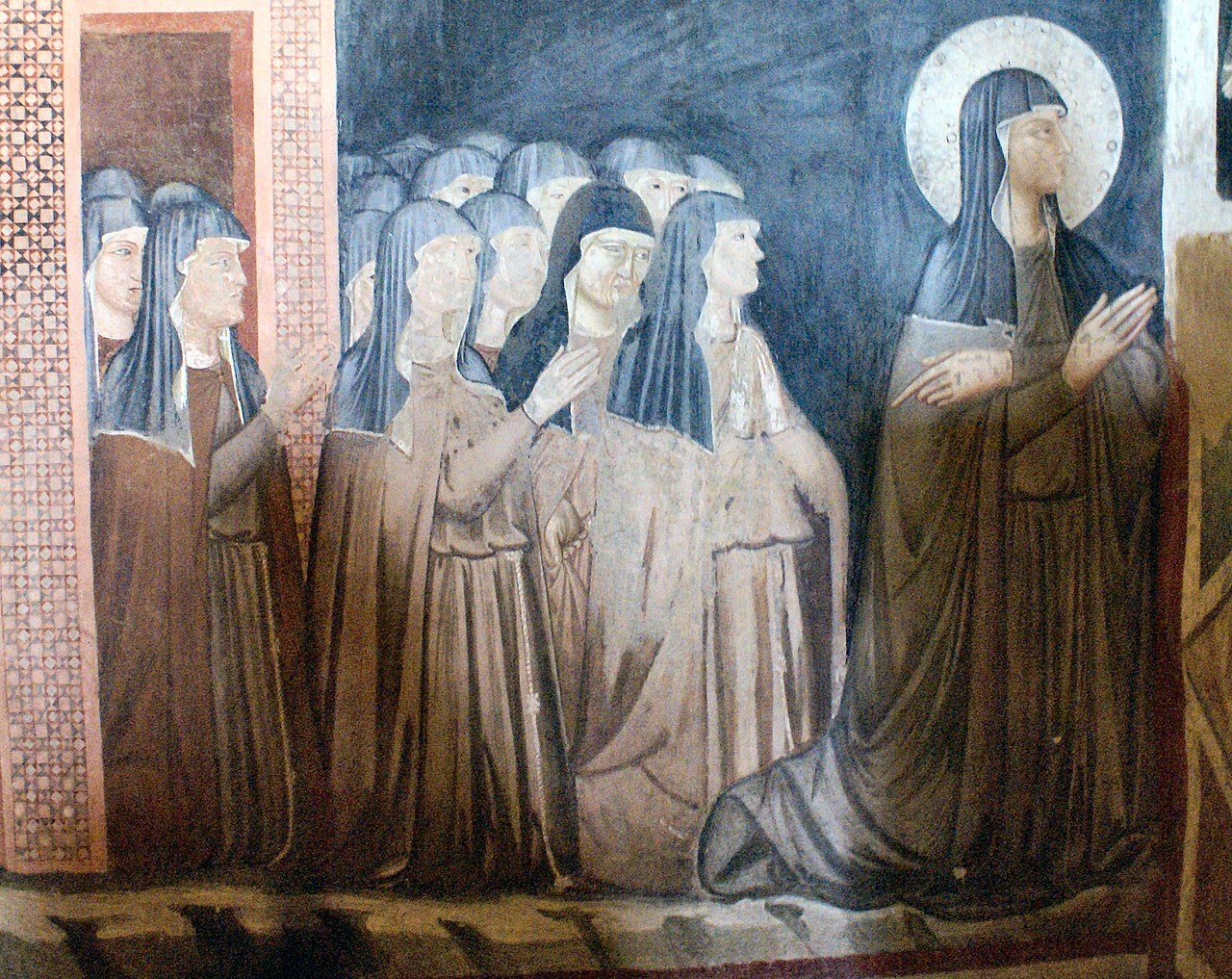
Clare was born into a noble family in Assisi. Contemporary accounts describe her as devoted from youth to prayer and charity. While still young she heard Francis of Assisi preaching; his message of evangelical poverty deeply affected her and led her to abandon an arranged marriage and her family home. Francis arranged for her to be sheltered in a nearby convent run by the Benedictine sisters until a suitable place could be found where she and other women could live according to the new Franciscan ideals. When her relatives tried to bring her back, Clare famously clung to the altar, declaring her determination to wed her life to Christ.
Founding the Order of Poor Ladies
Shortly after leaving home, Clare and several companions, including her sister Agnes, established a community at the small church of San Damiano, near Assisi. There she became superior and guided the women in a cloistered life dedicated to poverty, prayer and service. The community received various forms of recognition from church authorities, and over time spread to other towns. Clare remained abbess of the order for many decades and exercised a steady administrative and spiritual authority while maintaining a personal commitment to simplicity.
Rule, practices and distinctive features
The life Clare promoted combined strict poverty with enclosure and an emphasis on contemplative prayer. Her community took vows and observed austerities that included communal poverty, a regulated rhythm of prayer and work, and guarded silence. Important distinguishing features included:
- A formal commitment to live without property, both personally and corporately.
- An enclosed, contemplative structure that limited contact with the outside world so the sisters could devote themselves to prayer.
- An organized rule and governance under an elected abbess, often inspired by Clare’s writings and directives.
Writings, papal approval and influence
Clare left letters and a monastic rule that conveyed her theological emphasis on poverty and humility. Late in her life she sought and obtained papal recognition that affirmed the character of her order and its austere commitment; this helped secure its survival and expansion after her death. The Poor Clares became a major female religious family and inspired similar communities in Europe and beyond, contributing to debates about poverty, clerical oversight and the role of women in religious life.
Legacy
Clare was canonized and has been venerated as a model of female sanctity, leadership and devotion. Her life is remembered in liturgical calendars and in the ongoing ministries of Poor Clare communities worldwide. Her example is frequently cited in discussions of medieval spirituality, the Franciscan movement, and the development of enclosed religious life for women. Relics and places associated with her—most notably San Damiano and Assisi—remain sites of pilgrimage and historical interest.
Questions and answers
Q: Who was Clare of Assisi?
A: Clare of Assisi was an Italian saint who was born as Chiara Offreduccio and was one of the first followers of Saint Francis of Assisi.
Q: Who were Clare of Assisi's parents?
A: Clare of Assisi's father was the Count of Sasso-Rosso named Favorone Offreduccio and her mother was from aristocratic descent named Ortolana di Fiumi.
Q: Was Clare of Assisi married?
A: Clare of Assisi was promised in marriage at the age of 12, but it was canceled due to her father's death. She later joined the religious life and never got married.
Q: How did Clare of Assisi join the religious life?
A: When Clare of Assisi was 18 years old, she heard Francis of Assisi preaching and was extremely moved by his sermon, so she ran away to join him. Francis didn't have a place for women to stay, so he sent her to the Benedictine convent in San Paulo.
Q: What was the order founded by Saint Clare of Assisi?
A: Saint Clare of Assisi founded the "Order of Poor Ladies", later named “Poor Clares.” The order had strict rules such as silence vows, poverty, and strict fasting and was for women to become closer to God.
Q: Who did Clare of Assisi meet when she was staying in another monastery in Panzo?
A: Clare of Assisi met her younger sister, Agnes, when she was staying in another monastery in Panzo.
Q: What position was Clare of Assisi appointed to in the San Damiano church?
A: Clare of Assisi was appointed as the superior for 40 years in another convent next to the San Damiano church. In that church, she was reunited with her mother and her other sister named Beatrice.
Related articles
Author
AlegsaOnline.com Clare of Assisi — founder of the Poor Clares and early Franciscan woman Leandro Alegsa
URL: https://en.alegsaonline.com/art/85481