
Sahara Pump Theory
A geoclimatic model explaining recurrent humid phases in the Sahara that opened migration corridors for plants, animals and humans between Africa, the Middle East, Europe and Asia.
Overview
The Sahara Pump Theory describes how repeated climatic swings transformed the Sahara from an arid barrier into a transient corridor that allowed flora, fauna and humans to migrate out of Africa and into the Middle East, Europe and Asia. During wetter intervals the desert was fragmented into savanna, lakes and rivers, creating routes for dispersal. When the climate reverted to aridity, these corridors closed and populations retreated or became isolated.
Image gallery
2 Images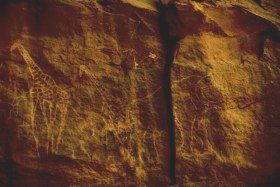
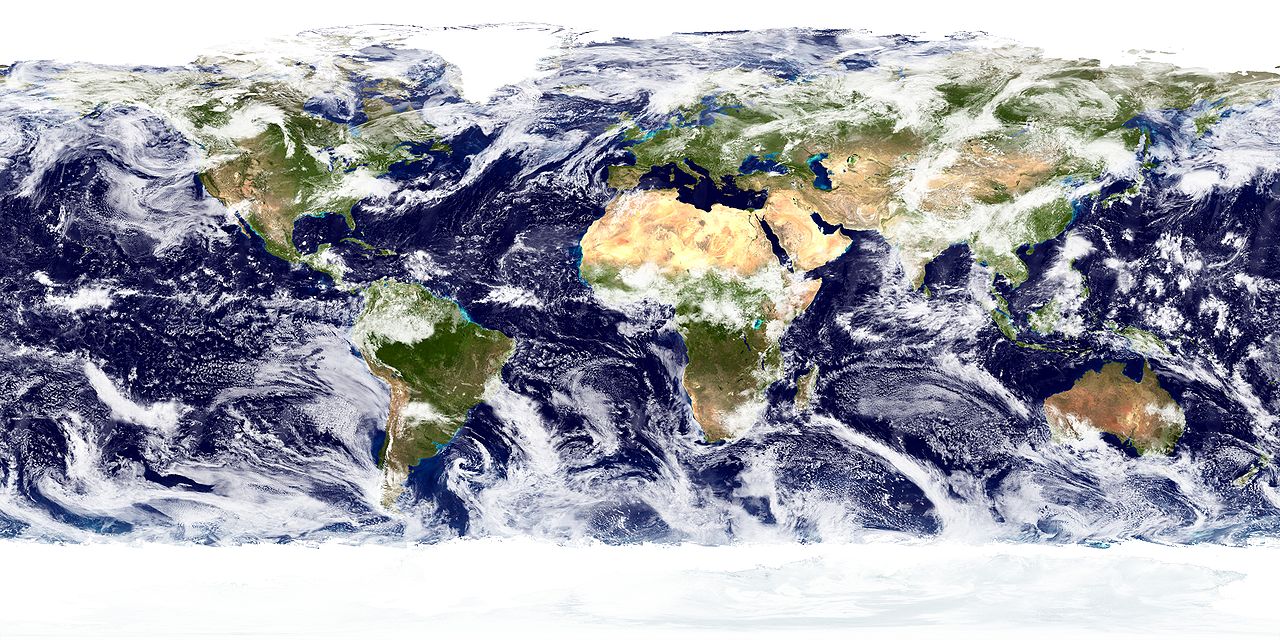
How the ‘‘pump’’ works
The mechanism depends on orbital and monsoon-driven changes that alter rainfall patterns over millions to tens of thousands of years. In wet phases the Sahara developed larger lakes and perennial rivers. Vegetation expanded into grasslands and woodlands, creating stepping-stones of habitat. In dry phases evaporation outpaced precipitation, rivers became temporary channels or wadis, and lakes such as Lake Chad shrank dramatically. These alternations effectively ‘‘pump’’ organisms out of refugia into new regions and then isolate them when the pump reverses.
Physical controls and regional examples
Regional geological features and tectonics have modified the effectiveness of these corridors. For example, uplift of the Nubian Swell has intermittently impeded the Nile’s flow and thereby altered the suitability of the Nile corridor for migration. The Nile itself (Nile) and river networks across North Africa and Arabia were crucial conduits during humid periods. Refuge areas where species could survive during dry phases include the Atlas Mountains, West Africa, and wetter highlands such as the Ethiopian Highlands and Kenya.
Evidence and temporal framework
Evidence for the pump comes from lake sediments, fossil pollen, archaeological finds and the present-day distribution of related species separated by deserts. Paleoclimatic records show repeated ‘‘Green Sahara’’ intervals in the Pleistocene and Holocene when monsoon rainfall penetrated far north. At times these changes were large enough that previously continuous populations were split into separate units; differences in climatic regimes (climate) between refugia then drove local adaptation (adaptation) and sometimes speciation (speciation).
Biological and human consequences
Biologically, the model explains why some African lineages appear in the Middle East and Eurasia and why closely related species or subspecies are found on separate continents. For humans the concept has been used to frame multiple dispersal events out of Africa. Scholars have proposed several waves, ranging from early hominin forays in the Early and Middle Pleistocene to later movements of anatomically modern humans and post-glacial expansions tied to the Holocene. These waves exploited the same fluctuating corridors when conditions permitted.
Notable distinctions and caveats
While the Sahara Pump Theory is a useful heuristic for linking climate change to biogeography, it is not a single, uniform process. Different taxa responded to changing conditions in different ways depending on mobility, habitat needs and life history. The timing and route of human migrations remain actively researched, and the pump model functions alongside other explanations (sea crossings, coastal routes, local refugia). For further reading on related topics see regional studies and syntheses that examine fossil, sedimentary and genetic lines of evidence (population studies and multi-proxy climate work).
- Key drivers: Milankovitch cycles, West African Monsoon shifts, tectonic uplift.
- Typical outcomes: range expansion in humid phases, contraction and isolation in arid phases.
- Important corridors: Nile valley, trans-Saharan river systems and Arabian connections.
For more specialized discussions and datasets consult paleoclimate literature and regional biogeographic reviews (Africa, Middle East, Europe, Asia).
Questions and answers
Q: What is the Sahara Pump Theory?
A: The Sahara Pump Theory is an attempt to explain how plants and animals from Africa moved into the Middle East, Europe, and Asia. It suggests that during wetter periods in Africa, migration along river corridors was possible due to larger lakes and rivers existing in the area.
Q: What caused changes in the type of animals found in the area?
A: Changes in the type of animals found in the area were caused by African rainy periods associated with a "wet Sahara" phase which allowed for larger lakes and more rivers to exist.
Q: When did migration along river corridors halt?
A: Migration along river corridors halted when, during a desert phase 1.8-0.8 million years ago, the Nile ceased to flow completely and possibly flowed only temporarily due to Nubian Swell uplift.
Q: How does this theory explain human emigration from Africa?
A: This theory explains human emigration from Africa by suggesting that during wetter periods of a wet Sahara, flora and fauna become common while during dryer periods they retreat northwards or eastwards into different climates which forces them to adapt and possibly gives rise to speciation (species splitting).
Q: How many waves of human emigration has this theory been used to date?
A: This theory has been used to date four waves of human emigration from Africa.
Q: What happens when evaporation exceeds precipitation?
A: When evaporation exceeds precipitation, water levels in lakes like Lake Chad fall and rivers become dry wadis.
Related articles
Author
AlegsaOnline.com Sahara Pump Theory Leandro Alegsa
URL: https://en.alegsaonline.com/art/85268
Sources
- doi.org : 10.1038/194201a0
- gsa.confex.com : "STRUCTURAL CONTROLS OF THE EGYPTIAN NILE"
- doi.org : 10.1007/978-1-4020-9726-3_4
- human-evol.cam.ac.uk : "Chronology, Adaptation and Environment of the Middle Palaeolithic in Northern Africa"