
Sahaba — Companions of the Prophet Muhammad
Companions (Sahaba) were men and women who met and followed the Prophet Muhammad. They played central roles in early Islam, transmitting teachings, participating in governance and preserving traditions.
The term as‑Sahaba (the Companions) denotes the men and women who met the Islamic prophet Prophet Muhammad, believed in his message, and died as Muslims. In Muslim practice the name of a companion is often followed by an honorific such as Radhiya Allahu anhu (may God be pleased with him), or feminine and plural forms, to show respect. The Sahaba are regarded as the first generation of Muslims and form a primary link between the Prophet's life and later Islamic teaching.
Image gallery
3 Images
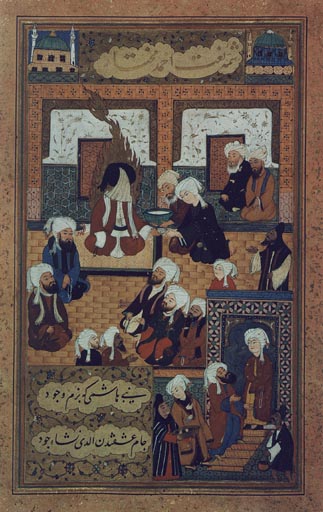
Who counts as a companion
Scholars generally define a sahabi as someone who: met the Prophet personally, embraced Islam during his lifetime, and maintained that faith until death. The category includes close family, early converts from Medina and Mecca, travelers who met the Prophet briefly, and members of his household. Beyond these basic criteria, jurists and historians apply varying standards when accepting a person as a reliable transmitter of reports.
Roles and characteristics
The companions served several interrelated roles in early Muslim society. They fought in the formative battles, advised and served in administrative positions after the Prophet's death, and narrated sayings and actions (hadith) that became a major source for Islamic law and ethics. Not all companions had the same status: a small group of prominent figures — for example Abu Bakr, Umar, Uthman and Ali, and women such as Aisha — are frequently singled out for leadership, teaching and legal testimony.
History and transmission
Accounts of the Sahaba appear in early biographies (sira), hadith collections and historical chronicles. Over the centuries scholars collected and evaluated reports attributed to companions, developing methods to judge reliability. This process shaped Sunni and Shia views of particular individuals; while both traditions revere many companions, they differ on the interpretation of some episodes and on the relative status of specific persons. Careful historiography emphasizes cross‑checking reports rather than uncritical acceptance.
Notable companions (examples)
- Abu Bakr — a close companion and the first caliph in Sunni tradition.
- Umar ibn al‑Khattab — an influential caliph known for administrative reforms.
- Uthman ibn Affan — third caliph, associated with compilation of the Qur'an text.
- Ali ibn Abi Talib — cousin and son‑in‑law of the Prophet, central to both Sunni and Shia histories.
- Aisha bint Abi Bakr — a leading female scholar and transmitter of hadith.
Importance and contemporary perspectives
The Sahaba remain a foundational reference for Muslim theology, law and communal memory. Their reports and actions are invoked in legal reasoning, devotional literature and historical study. Modern scholarship treats earlier narratives with critical tools while religious communities continue to honor companions in liturgy and teaching. For further background on terminology and Arabic usage see references to the term as‑Sahaba and to biographies of Muhammad. The conversation about the companions illustrates how history, memory and faith interact in shaping religious identity.
Questions and answers
Q: Who were Sahaba?
A: Sahaba were companions, friends, and family of the Islamic prophet, Muhammad.
Q: How are Sahaba regarded by Muslims?
A: Sahaba are highly respected by Muslims.
Q: What does Radhiya llahu anhu mean?
A: Radhiya llahu anhu means "well-pleased Allah is with them" and it is usually said after mentioning the name of a sahabi.
Q: What is the meaning of As-Sahaba?
A: As-Sahaba is the Arabic term for Sahaba, which means companions, friends, and family of the Islamic prophet, Muhammad.
Q: Why are Sahaba highly respected by Muslims?
A: Sahaba are highly respected by Muslims because they were close to the Islamic prophet, Muhammad and played a significant role in the spread of Islam.
Q: Can anyone be considered Sahaba?
A: No, only those who had direct contact with the Islamic prophet, Muhammad and died as Muslims, are considered Sahaba.
Q: What is the significance of Radhiya llahu anhu?
A: Radhiya llahu anhu is a way for Muslims to express their respect and admiration for the Sahaba and to acknowledge that their actions were guided by Allah.
Related articles
Author
AlegsaOnline.com Sahaba — Companions of the Prophet Muhammad Leandro Alegsa
URL: https://en.alegsaonline.com/art/85265
Sources
- britannica.com : "Companions of the Prophet - Islamic history"
- perseus.tufts.edu : "The Quran, sura 9, verse 100"