
Sacred Band of Thebes: organization, history, and legacy
Elite Theban military unit of the 4th century BC composed of paired male lovers; famed for its role at Leuctra and destroyed at Chaeronea. Known through later classical sources and modern scholarship.
Overview
The Sacred Band of Thebes was an elite infantry formation of the Theban city-state in the 4th century BC. Ancient writers portray it as a unit of intimately paired male companions whose bonds of affection were believed to increase courage and cohesion in battle. The force is most closely associated with Theban military resurgence that defeated Spartan dominance in Greece and with the later Macedonian victory that ended Theban independence.
Image gallery
9 Images


Composition and organization
Ancient accounts describe the unit as formed of 150 pairs of men, a reading that is often interpreted as 300 soldiers, though descriptions in surviving sources vary and the exact number is debated by scholars. The members served as heavy infantry, organized to fight as hoplites in close formation. The principle behind the arrangement was that lovers and beloveds, unwilling to appear cowardly before each other, would fight with exceptional determination and protect one another in the heat of combat.
Origins and commanders
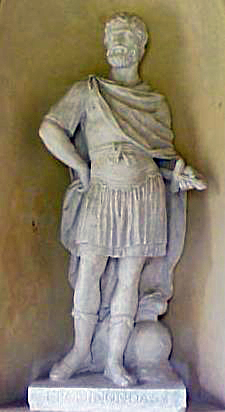
The formation of a distinct squad of companions is usually dated to the late 370s BC. Tradition credits the Theban commander Gorgidas with creating a separate corps from couples who had previously been dispersed through the army, and the statesman-warrior Pelopidas is closely associated with the unit's prominence in subsequent years. For a modern introduction to the unit within the context of Theban history see Thebes.
Battlefield role and notable engagements
The Sacred Band became renowned for its discipline and its decisive role at the Battle of Leuctra (371 BC), where Theban forces under Epaminondas achieved a major victory over Sparta, breaking Spartan hegemony. Contemporary and later accounts credit the cohesion and courage of the Band with helping to hold and exploit crucial points of the battle line. The unit continued to serve as Thebes' premier shock troops until the Macedonian rise.
Destruction at Chaeronea and historical sources
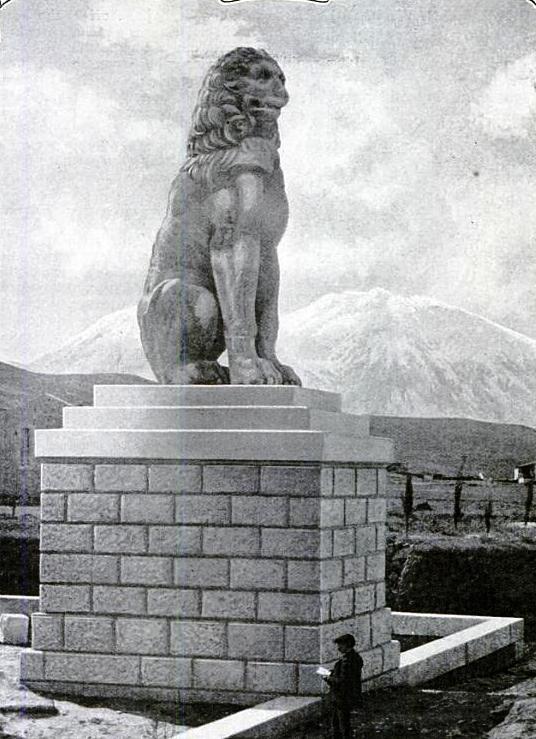
The Sacred Band was annihilated by the Macedonian army under Philip II at the Battle of Chaeronea in 338 BC, an event normally cited as marking the end of Theban military independence. Our fuller narrative of the Band comes from later classical authors; among them Plutarch offers the most detailed surviving account. Plutarch, writing in the early Roman imperial era, observes of the Band: "Since the lovers, ashamed to be base in sight of their beloved, and the beloved before their lovers, willingly rush into danger for the relief of one another." For general background on Plutarch's life-writing and sources see Plutarch.
Legacy and significance
The Sacred Band has attracted attention as a military phenomenon and as a cultural symbol. Historians and modern readers debate how much of its reputation reflects deliberate social policy, idealized literary portrayal, or battlefield effectiveness. The Band's story is often invoked in discussions about unit cohesion, the social dimensions of ancient armies, and how later authors shaped memory. Its end at Chaeronea is closely tied to the expansion of Macedon under Philip II, and the engagement itself is often linked to the broader rise of Macedonian power after the battle of Chaeronea.
- Main facts: elite Theban hoplite unit; paired fighters; active in late 4th century BC.
- Key battles: Leuctra (decisive Theban victory), Chaeronea (destruction of the band).
- Primary source: later classical accounts, especially Plutarch's biographies, supplemented by archaeological and scholarly interpretation.
Questions and answers
Q: What was the Sacred Band of Thebes?
A: The Sacred Band of Thebes was a special unit within the ancient Theban army in the 4th century BC.
Q: How many men were in the Sacred Band?
A: It consisted of 150 male lovers.
Q: Why was it believed that men in the Sacred Band would make better warriors?
A: It was believed that the strong bond of love between the men would make them more courageous in battle.
Q: Who wrote the most substantial surviving account of the Sacred Band?
A: Plutarch (46–120 AD) is the source of the most substantial surviving account of the Sacred Band.
Q: What did Plutarch write about the Sacred Band?
A: Plutarch wrote in his Life of Pelopidas that the lovers in the Sacred Band were willing to rush into danger for the relief of one another, being ashamed to be base in sight of their beloved.
Q: Who organized the Sacred Band in 378 BC?
A: The Theban commander Gorgidas reportedly organized the Sacred Band in 378 BC.
Q: When and how was the Sacred Band destroyed?
A: The Sacred Band was completely destroyed by Philip II of Macedon at the Battle of Chaeronea in 338 BC.
Related articles
Author
AlegsaOnline.com Sacred Band of Thebes: organization, history, and legacy Leandro Alegsa
URL: https://en.alegsaonline.com/art/85155
Sources
- jstor.org : "The Theban Supremacy in Fourth-Century Literature"
- books.google.com : Homosexuality and Civilization
- penelope.uchicago.edu : The Life of Pelopidas