
Ball lightning — a persistent luminous atmospheric phenomenon
Ball lightning is a rare, spherical luminous phenomenon reported during thunderstorms. This article reviews its appearance, reported behavior, scientific theories, historical observations, laboratory work, and safety notes.
Overview
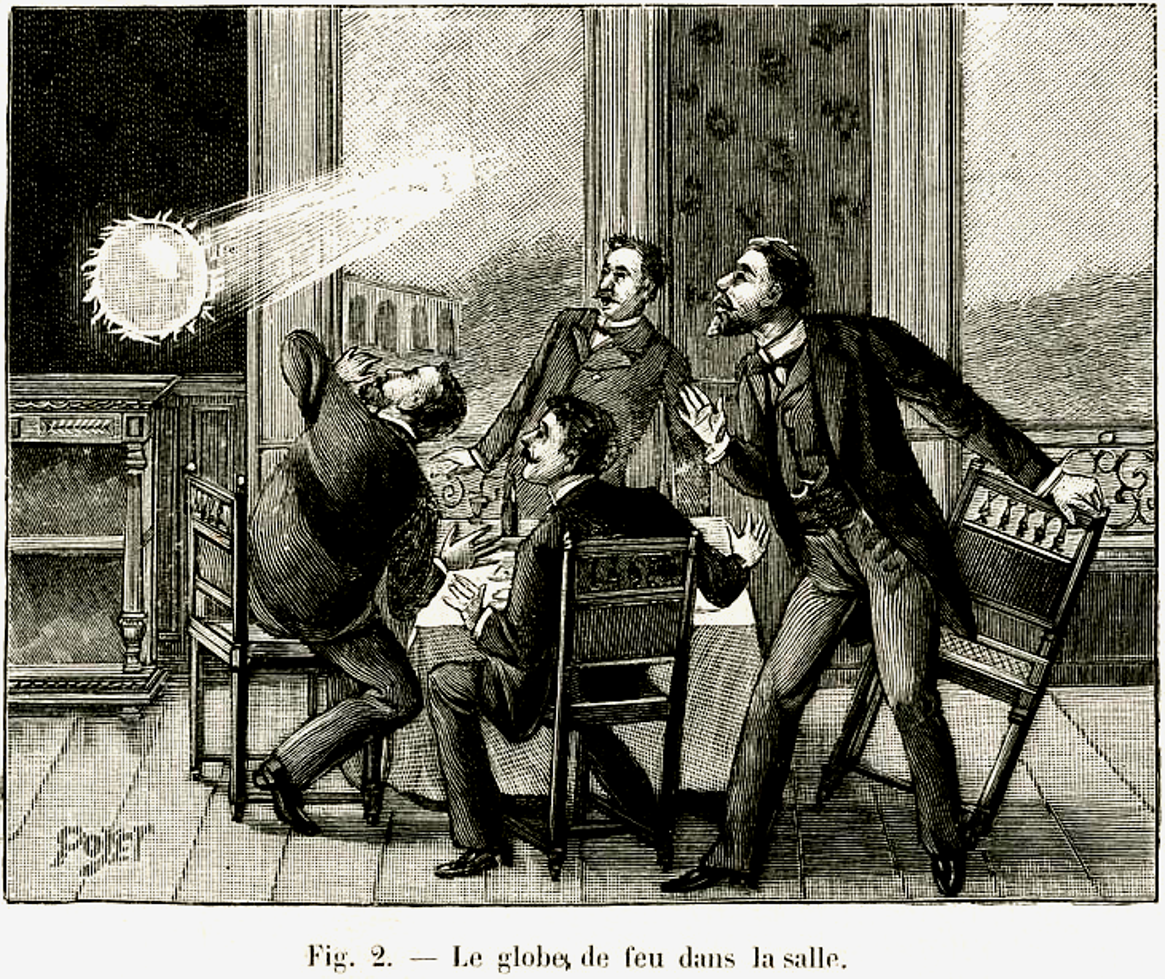
Ball lightning is an uncommon atmospheric event described as a glowing, roughly spherical object that appears during or after thunderstorms. Unlike a typical lightning flash, which lasts milliseconds, ball lightning reports often describe durations from several seconds up to a minute, unusual motion patterns, and variable brightness and color. Because sightings are sporadic and unpredictable, the phenomenon remains one of the more puzzling items in meteorology and atmospheric physics.
Image gallery
5 Images



Typical characteristics
Eyewitness accounts and some instrumental observations have highlighted a range of recurring features, though no single description fits every report. Common characteristics include:
- Size varying from a few centimeters to several meters in diameter.
- Colors from white to yellow, orange, red, or blue, sometimes changing over time.
- Motion that can be slow, hovering, drifting with air currents, or moving erratically, sometimes crossing windows or entering buildings.
- Accompanying sounds such as hissing, buzzing, or in some cases silence; reports also include a lingering odor or heat.
Scientific study and proposed explanations
There is no single accepted theory that explains all reported features of ball lightning. Proposed explanations fall into several broad classes:
- Plasma-based models: transient, magnetically confined plasmas that emit visible light.
- Chemical models: combustion of vaporized materials (for example, silicon compounds produced when lightning strikes soil) producing luminous reactions.
- Electromagnetic cavity or microwave models: localized electromagnetic fields creating and sustaining luminous structures.
- Optical effects and illusions: rare atmospheric optics or misperceptions of conventional lightning or other light sources.
Each model explains some reports better than others, and no single model yet explains every reported behavior consistently. Difficulties in reproducing long-lived, freely moving luminous balls under controlled conditions have been a major obstacle to consensus.
History, observations and experiments
Descriptions of glowing balls associated with storms appear in records going back centuries, and the phenomenon has been reported worldwide by scientists, pilots, sailors, and lay observers. In recent decades, a handful of photographic and instrumented records have been obtained, but many reports remain anecdotal. Laboratory work has produced short-lived glowing spheres and plasmoids using high-voltage discharges, microwave cavities, and combustion of vapors; these experiments help explore mechanisms but do not yet provide a complete field-ready model.
Practical importance and safety
Although often described as harmlessly floating, some accounts attribute property damage, small fires, or electrical disturbances to ball lightning. Because the phenomenon is unpredictable, standard safety advice is cautious: avoid approaching or attempting to touch an unusual luminous object during storms and follow usual thunderstorm safety measures. Researchers continue to collect eyewitness reports, analyze video evidence, and perform laboratory experiments to better understand the phenomenon.
For summaries of reported cases and reviews of proposed models, see further reading on ball lightning.
Questions and answers
Q: What is ball lightning?
A: Ball lightning is a glowing ball of lightning that sometimes appears in a thunderstorm.
Q: Does ball lightning last longer than regular lightning?
A: Yes, ball lightning usually lasts much longer than regular lightning.
Q: Do scientists fully understand ball lightning?
A: No, scientists do not understand ball lightning very well.
Q: Is there some doubt over the existence of ball lightning?
A: Yes, some scientists do not think ball lightning is real, because it is so strange.
Q: Has ball lightning been reported by reliable sources?
A: Yes, ball lightning has been widely reported in weather journals by many trustworthy people.
Q: Could it be possible that ball lightning is real?
A: Yes, based on the numerous reports of ball lightning, it is very possible that it actually exists.
Q: Why is ball lightning so mysterious?
A: Ball lightning is considered mysterious because it is not fully understood by scientists.
Related articles
Author
AlegsaOnline.com Ball lightning — a persistent luminous atmospheric phenomenon Leandro Alegsa
URL: https://en.alegsaonline.com/art/8514
Sources
- quod.lib.umich.edu : A Guide to the Scientific Knowledge of Things Familiar
- usatoday.com : "Playing with (St. Elmo's) fire"
- orthodox.net : "Tsar-Martyr Nicholas Ii And His Family"