
S-block elements of the periodic table
Overview of the s-block: definition, members (groups 1–2 plus hydrogen/helium issues), electron configuration, chemical and physical properties, common uses, history and notable exceptions.
The s-block is a major region of the periodic table whose defining feature is the occupation of an outermost s orbital by valence electrons. In practical tables it corresponds to the two leftmost columns (group 1 and group 2), and it also includes hydrogen and, by electronic configuration, helium. The block name comes from spectroscopic notation ("s" originally meant "sharp") and is tied to the quantum description of atomic orbitals rather than to a single chemical property. For a general map of elements see periodic table.
Image gallery
3 Images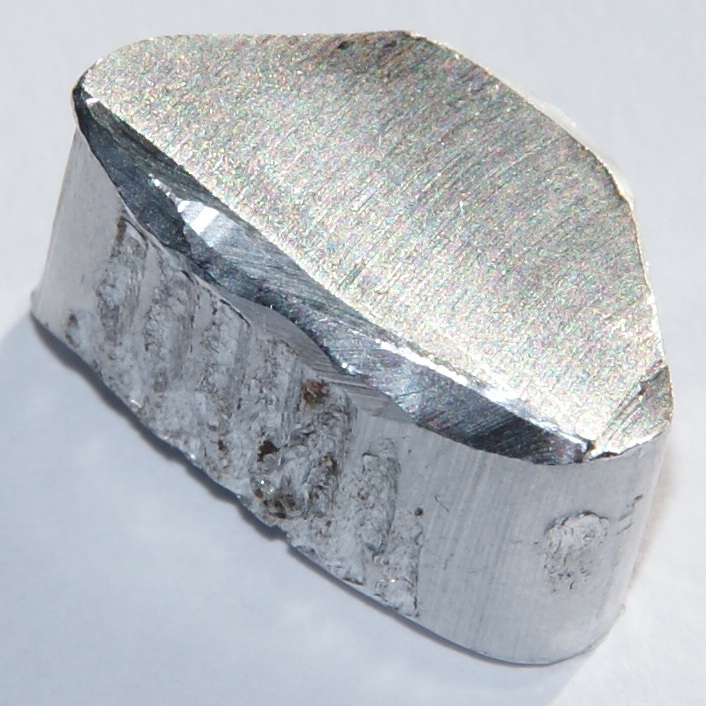


Basic characteristics
S-block elements have valence electron configurations of the form ns1 (group 1) or ns2 (group 2), which governs many of their shared behaviors. Key trends across each s-block group include increasing atomic and ionic radius down a column and decreasing first ionization energy. Many of their observable chemical properties—such as low electronegativity, readiness to form cations, and tendency to make ionic compounds—are consequences of having electrons in an outer s orbital. The role of the outermost electron is often summarized in descriptions of the valence electron and the outer electron shell.
Members and notable exceptions
Conventional s-block membership includes the alkali metals (group 1) and the alkaline earth metals (group 2). Alkali metals (Li, Na, K, Rb, Cs, Fr) characteristically have a single valence electron and form +1 ions; their compounds are typically highly soluble and strongly basic. Alkaline earth metals (Be, Mg, Ca, Sr, Ba, Ra) have two valence electrons and commonly form +2 ions; their oxides and hydroxides are often basic but vary in solubility and reactivity. Hydrogen is electronically an s-block element but is chemically distinct from the alkali metals, acting as a gas and forming covalent bonds; helium occupies an s orbital (1s2) but is usually grouped with the noble gases for chemical reasons. For the groups see alkali metals and alkaline earth metals.
Chemical behavior and common compounds
S-block elements are strong reducing agents in many contexts and readily lose their outer s electrons to form stable cations. Typical products include halides (e.g., sodium chloride), oxides, hydroxides and hydrides. Alkali metals react vigorously with water to give hydrogen and hydroxides, whereas alkaline earth metals react less vigorously (and some, like beryllium, show significant covalent character and resist simple ionic behavior). Trends in reactivity and compound solubility follow predictable periodic changes tied to increasing atomic number and orbital shielding, a modern restatement of the periodic law.
Physical properties, uses and biological roles
Many s-block metals are soft (alkali metals can be cut with a knife), have relatively low melting and boiling points for metals, and exhibit low densities—lithium, sodium and potassium are less dense than many common metals (and lithium is notably light). Important industrial and technological uses include lithium in rechargeable batteries, sodium and potassium in chemical synthesis and fertilizers, magnesium and its alloys in lightweight structural applications, and calcium compounds in construction and metallurgy. Several s-block elements are essential to life: sodium and potassium maintain cellular electrochemical gradients; calcium is vital for skeletal structure and signaling; magnesium is central to chlorophyll and enzyme function.
History, theory and distinguishing points
The block structure of the periodic table emerged as quantum mechanics explained atomic structure in the early 20th century: filling of atomic orbitals (Aufbau principle) naturally groups elements into s-, p-, d- and f-blocks. Historically, the spectroscopic origins of s/p/d/f labels predate quantum theory. Distinguishing the s-block from other blocks is useful because it links a simple orbital pattern (ns1 or ns2) to a consistent set of trends in size, ionization energy and typical oxidation states. Some elements at block boundaries—most notably hydrogen and helium—remain placed by either electronic configuration or chemical behavior depending on the table design, so their assignment is sometimes discussed in teaching and reference works. Further reading on periodic trends and orbital structure is available via outer shell, valence electron and other resources such as periodic table overviews and introductory chemistry texts (chemical properties summaries).
- Typical valences: +1 for alkali metals, +2 for alkaline earths.
- Reactivity trends: generally increase down each group for alkali metals; alkaline earth reactivity increases more moderately.
- Safety notes: many s-block metals react violently with water or air and some (e.g., beryllium) are toxic; proper handling and storage are essential.
For concise reference entries and tables consult educational chemistry sources and element data summaries at resources indicated above and in introductory inorganic chemistry references (alkaline earth metals, alkali metals, atomic number discussions).
Questions and answers
Q: What is the s-block?
A: The s-block is one of four blocks of elements in the periodic table.
Q: What property do elements in the s-group have in common?
A: Elements in the s-group have a common property that their most outward electron shell are in the s-orbital.
Q: What two groups make up the s-block?
A: The elements in group one are called alkali metals and the elements in group two are called alkaline earth metals.
Q: What does modern periodic law say about properties of elements?
A: The modern periodic law states that "The properties of elements are periodic function of their atomic number", meaning some properties of elements repeat as their atomic number gets larger.
Q: How many blocks are there for separating elements into groups?
A: There are four blocks for separating elements into groups, which include s-, p-, d-, and f-.
Related articles
Author
AlegsaOnline.com S-block elements of the periodic table Leandro Alegsa
URL: https://en.alegsaonline.com/art/85009
Sources
- periodictable.com : "Electron Configuration for all the elements in the Periodic Table"
- cytss.edu.hk : cytss.edu.hk
- learncbse.in : The s-Block Elements