
Baldwin V, Count of Flanders (1012–1067)
Baldwin V (1012–1067), known as Baldwin de Lille, ruled Flanders from 1035. A leading French noble, he strengthened Flemish ties by marriage, consolidated power, and shaped regional politics including links to Normandy.
Baldwin V (c.1012–1067), often called Baldwin de Lille or Baldwin de Insulanus, was the Count of Flanders from 1035 until his death. He belonged to the high medieval French aristocracy and is remembered as one of the most influential regional rulers of his time. His rule coincided with a period when Flanders grew in commercial importance and when dynastic bonds altered the balance of power in northern Europe.
Image gallery
2 Images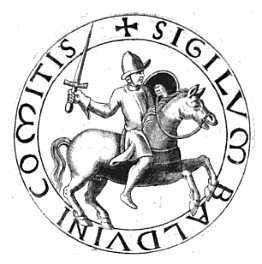

Family, succession and dynastic links
Baldwin was the son of Baldwin IV of Flanders and Ogive of Luxembourg. In about 1028 he married Adèle (Adela) of France, a daughter of King Robert II; this alliance tied Flanders more closely to the royal house of France. Their children included Baldwin VI, who succeeded as count, and Matilda of Flanders, who became duchess of Normandy and later queen of England by marriage to William the Conqueror. These marriages linked the County of Flanders to neighboring powers and had long-term consequences for northern European politics.
Rule and political role
As count Baldwin V administered a territory that combined rural lordship with thriving towns and international trade. He maintained the county's autonomy while negotiating with larger neighbors: the French crown, the duchy of Normandy, and the Holy Roman Empire. Baldwin's diplomacy and marital strategy strengthened Flemish position; he is often cited in accounts of 11th-century aristocratic networking and alliance-building.
Notable aspects of his leadership included:
- Consolidation of comital authority across Flemish territories and principal towns.
- Use of marriage to secure political alliances, most prominently with the royal Capetians and the Norman ducal house.
- Participation in regional diplomacy that shaped the politics of northern France and the Low Countries.
Although Baldwin was a feudal magnate within the orbit of the French crown, contemporaries and later historians have described him as among the more powerful counts in France. The County of Flanders itself was a commercial hub and its rulers, including Baldwin, benefited from and oversaw burgeoning trade and urban growth.
Legacy: Baldwin V's descendants continued to influence European affairs: his son Baldwin VI carried on the comital line in Flanders, while his daughter Matilda's marriage to William connected Flemish and Norman interests and helped shape the events around the Norman Conquest of England. For further contextual information about the region and its institutions see resources on the County of Flanders and on the broader milieu of French nobility.
Questions and answers
Q: Who was Baldwin V of Flanders?
A: Baldwin V of Flanders was a French nobleman and the Count of Flanders who ruled from 1035 until his death.
Q: What was Baldwin V of Flanders' nickname?
A: Baldwin V of Flanders was also known as Baldwin de Lille or Baldwin de Insulanus.
Q: When did Baldwin V of Flanders rule?
A: Baldwin V of Flanders ruled from 1035 until his death in 1067.
Q: Was Baldwin V of Flanders a powerful count?
A: Yes, Baldwin V of Flanders was one of the most powerful counts in France at the time.
Q: What region did Baldwin V of Flanders rule over?
A: Baldwin V of Flanders ruled over the region of Flanders.
Q: Did Baldwin V of Flanders have any notable accomplishments during his reign?
A: It is not specified in the text if Baldwin V of Flanders had any notable accomplishments during his reign.
Q: Did Baldwin V of Flanders have any successors after his death?
A: Yes, after Baldwin V of Flanders' death, his son Baldwin VI succeeded him as Count of Flanders.
Related articles
Author
AlegsaOnline.com Baldwin V, Count of Flanders (1012–1067) Leandro Alegsa
URL: https://en.alegsaonline.com/art/8483