
Royal Society of Arts (RSA): history, mission, and activities
British learned society founded 1754 promoting arts, manufactures and commerce; known as the RSA. It supports public policy, social innovation, research, events and a global fellowship (FRSA).
The Royal Society for the encouragement of Arts, Manufactures and Commerce, widely known as the Royal Society of Arts or simply the RSA, is a British learned society that promotes social progress through ideas, research and public engagement. Founded in 1754, the organisation combines a historic remit to improve industry and the arts with contemporary work on public policy, design, education and social innovation. The RSA maintains a visible headquarters in London (location) and publishes research, hosts events and convenes networks of practitioners and thinkers (institution overview).
Image gallery
4 Images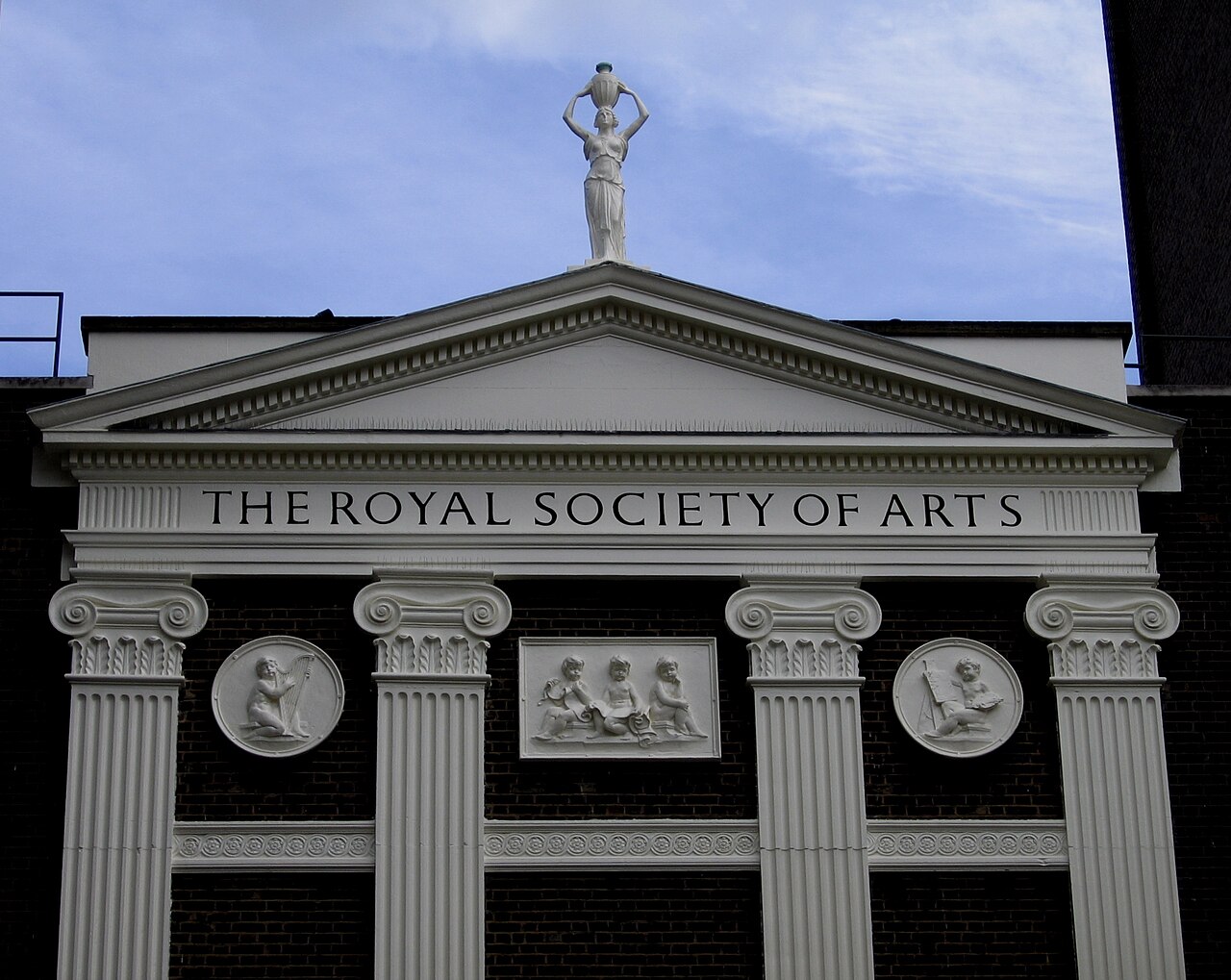


Mission and roles
Originally established to "embolden enterprise, enlarge science, refine art, improve our manufactures and extend our commerce," the RSA has long combined practical encouragement (such as prizes and premiums) with efforts to reduce poverty and improve employment prospects. In modern practice the Society supports policy research, design-led projects and community initiatives aimed at systemic change. A notable instrument of the organisation is its Fellowship: those admitted may use the postnominal FRSA and join working groups, local networks and project teams.
History and development
The RSA emerged in the mid-18th century amid wider British interest in improvement, industry and the arts. It received a Royal Charter in 1847, formalising its role and granting recognition for its public functions. Over the centuries the Society has adapted its activities to changing circumstances—shifting from early premiums for technical and artistic innovation to twentieth- and twenty-first-century programmes that foreground design thinking, education reform and public debate.
Activities and programmes
The RSA runs a mix of long-form research reports, public lectures, workshops and competitions intended to stimulate practical solutions to social problems. Its outputs include accessible publications, events series and multimedia projects (including widely shared animated talks and summaries). The Society also operates grant and award schemes that encourage students, designers and social entrepreneurs to develop new ideas and scalable models.
Notable members and influence
Across its history the RSA has attracted a diverse membership of writers, scientists, reformers and public figures. Historically associated names include Benjamin Franklin, Karl Marx, Adam Smith and William Hogarth. In later periods the Fellowship counted figures such as John Diefenbaker, Stephen Hawking and Charles Dickens. These associations reflect the RSA’s historical role as a crossroads for debate on economics, the arts and public life.
Distinctive features and legacy
The RSA is distinctive for blending a long institutional history with a contemporary focus on applied ideas. It seeks to act as a bridge between research and practice, encouraging experiments in education, public service design and civic participation. While the Society is best known in the United Kingdom, its publications, animated briefings and Fellowship network give it international reach and influence in conversations about innovation and social policy.
- Founded: 1754; Royal Charter: 1847.
- Common names: Royal Society of Arts; RSA.
- Key activities: research, public events, fellowships, awards and design projects.
Questions and answers
Q: What is the Royal Society for the encouragement of Arts, Manufactures and Commerce?
A: The Royal Society for the encouragement of Arts, Manufactures and Commerce is a multi-disciplinary institution based in London, often called the Royal Society of Arts.
Q: When was the RSA founded?
A: The RSA was founded in 1754.
Q: When was the RSA granted a Royal Charter?
A: The RSA was granted a Royal Charter in 1847.
Q: Who are some notable members of the RSA?
A: Some notable members of the RSA include Benjamin Franklin, Karl Marx, Adam Smith, William Hogarth, John Diefenbaker, Stephen Hawking, and Charles Dickens.
Q: What was the RSA set up to achieve?
A: The RSA was set up to embolden enterprise, enlarge science, refine art, improve our manufactures, and extend our commerce; but also to reduce poverty and secure full employment.
Q: What does the short name of the RSA stand for?
A: The short name of the RSA stands for the Royal Society of Arts.
Q: Can the short name be seen on the front of the RSA building?
A: Yes, the short name can be seen on the front of the RSA building.
Related articles
Author
AlegsaOnline.com Royal Society of Arts (RSA): history, mission, and activities Leandro Alegsa
URL: https://en.alegsaonline.com/art/84509
Sources
- archive.org : A history of the Royal Society of Arts