
Royal Institution of Great Britain
A London-based organization founded in 1799 to promote scientific research and public education, known for landmark discoveries, influential directors and long-running public lecture series.
Overview
The Royal Institution of Great Britain, commonly called the Royal Institution or RI, is an independent organisation in London dedicated to scientific research, education and public engagement. Since its foundation in 1799 it has combined laboratory work with a programme of lectures and demonstrations aimed at bringing scientific ideas to a wide audience.
Image gallery
6 Images



History and founding mission
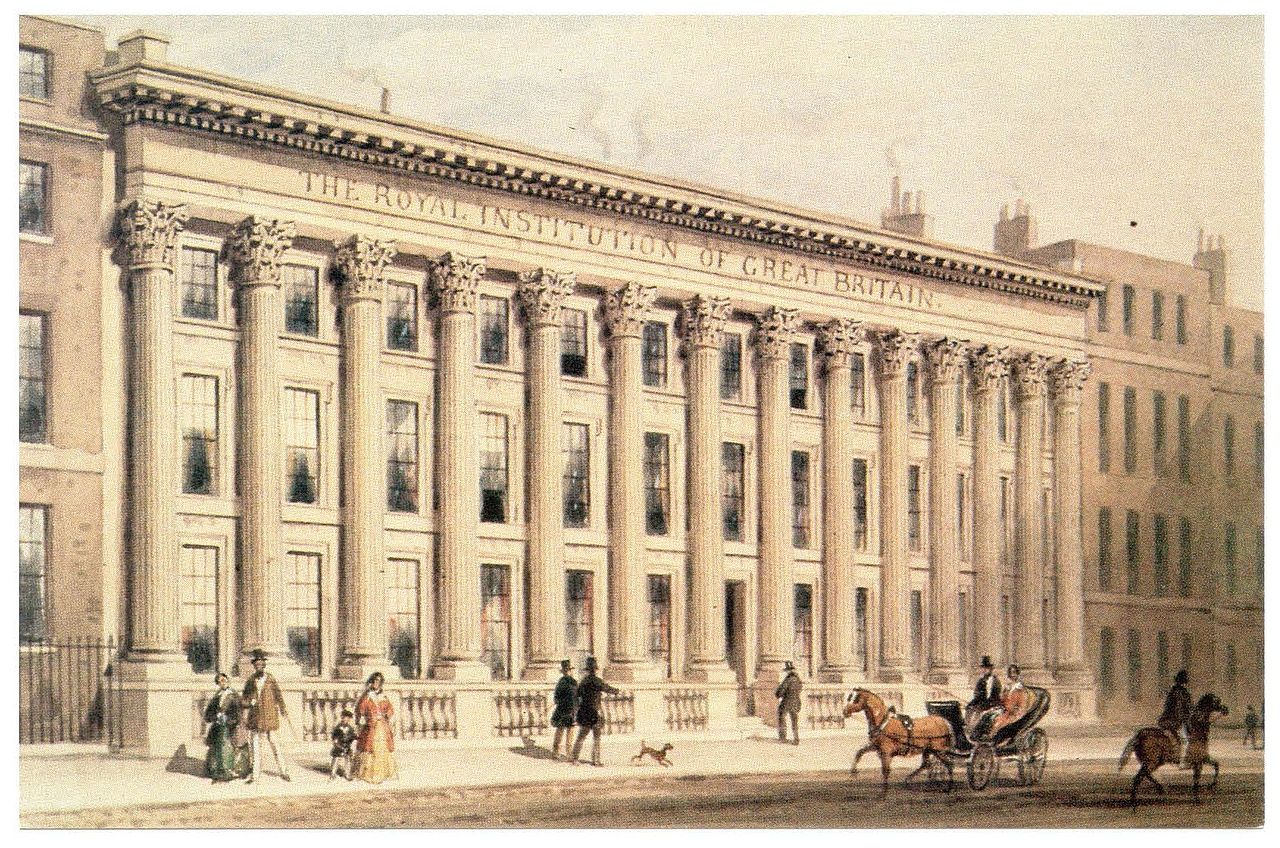
The Institution was established at the turn of the 19th century by leading British scientists and patrons who sought to "diffuse the knowledge" of practical science and to encourage useful inventions. Its early charter emphasised both experimental research and courses of public lectures that would show how science could be applied to everyday life and industry. The building in Mayfair became a centre where professional scientists and interested members of the public met to observe demonstrations and discuss new discoveries.
Notable figures and scientific achievements
Over two centuries the Royal Institution has been led and shaped by many prominent scientists. Founding supporters included Henry Cavendish, and later directors and staff featured pioneers whose work had worldwide impact. Among them were Michael Faraday, whose experiments advanced understanding of electricity and magnetism; the Braggs—William Henry Bragg and William Lawrence Bragg—known for the development of X-ray crystallography; and molecular biologists such as Max Perutz and John Kendrew, who made fundamental contributions to structural biology.
Directors and researchers associated with the RI have been recognised by major awards: in total, more than a dozen have received Nobel Prizes in fields ranging from physics to chemistry. For a compiled account of laureates and honours see the RI's records.
Public engagement: lectures, demonstrations and the Christmas Lectures
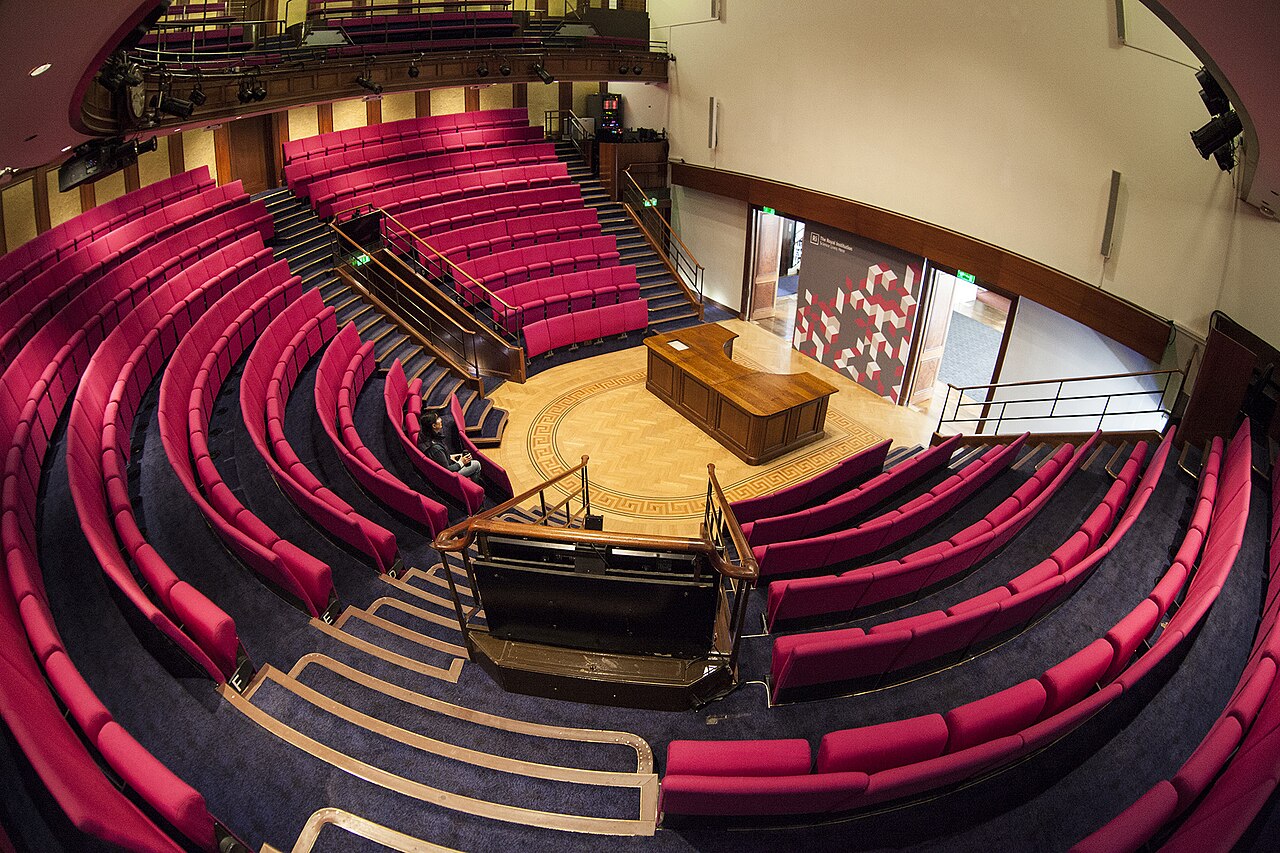
A distinguishing feature of the Royal Institution is its commitment to communicating science to non-specialists. The institution's public lecture programme includes university-style talks, specialist seminars and hands-on demonstrations. Its best known outreach tradition is the annual Christmas Lectures for young people, established in the 1820s and delivered by leading scientists to explain scientific principles through experiments and clear exposition. These lectures have helped popularise science for generations and have been adapted for radio and television.
Facilities and research activities
The RI historically combined lecture theatres with laboratories where experimental work could be undertaken. Research at the Institution has ranged from early chemistry and electromagnetism to 20th-century developments in crystallography and molecular biology. While the scale of in-house research has varied over time, the RI has remained a site where demonstration, teaching and experimental investigation intersect.
Later developments and contemporary role
Throughout its existence the Royal Institution has evolved in response to changing scientific and funding landscapes. In recent decades it has emphasised public-facing programmes, partnerships with universities and outreach that leverages its historic reputation. Preservation of its historic building and the need to sustain activities through fundraising and collaborative projects have been recurring challenges. Nevertheless, the RI continues to host lectures, exhibitions and events that connect current research with public audiences.
Significance and resources
The Royal Institution occupies an important place in the history of science in Britain: it helped institutionalise experimental research, supported early technological innovation and established models of public science communication that persist today. For readers seeking more information, the Institution maintains archival material and listings of past directors, lectures and scientific milestones. Useful starting points include profiles of founding and leading figures such as Henry Cavendish, Michael Faraday, the Braggs, Max Perutz and John Kendrew, and institutional summaries or lists of award-winning directors documenting honours.
- Key themes: research, public education, demonstrations, lecture series.
- Famous traditions: Christmas Lectures and live experimental demonstrations.
- Historical impact: advances in electromagnetism, X-ray crystallography and molecular structure.
Questions and answers
Q: What is the Royal Institution of Great Britain?
A: The Royal Institution of Great Britain is an organization based in London that focuses on scientific education and research.
Q: When was the Royal Institution founded?
A: The Royal Institution was founded in 1799.
Q: Who were the founders of the Royal Institution?
A: The Royal Institution was founded by leading British scientists of the age, including Henry Cavendish.
Q: What was the purpose of the Royal Institution?
A: The purpose of the Royal Institution was to "diffuse the knowledge, and facilitate the general introduction, of useful mechanical inventions and improvements; and for teaching, by courses of philosophical lectures and experiments, the application of science to the common purposes of life."
Q: Who have been directors of the Royal Institution?
A: Directors of the Royal Institution have included some of the greatest scientists, including Humphrey Davy, Michael Faraday, Sir William Henry Bragg and Sir William Lawrence Bragg, Max Perutz and John Kendrew.
Q: How many directors of the Royal Institution have won Nobel Prizes?
A: Fifteen directors of the Royal Institution have won Nobel Prizes.
Q: What is the Royal Institution's focus?
A: The Royal Institution's focus is on scientific education and research.
Related articles
Author
AlegsaOnline.com Royal Institution of Great Britain Leandro Alegsa
URL: https://en.alegsaonline.com/art/84465
Sources
- rigb.org : "Guides to the Royal Institution of Great Britain: 1 HISTORY"
- news.bbc.co.uk : "Science body confirms review"
- telegraph.co.uk : telegraph.co.uk/news/science/science-news/6968961/Baroness-Greenfields-redundancy-only-wa…
- theguardian.com : "Top scientist Susan Greenfield told to quit her job – and her flat"
- news.bbc.co.uk : "Royal Institution former chief suing for discrimination"
- rigb.org : Press Statement — Baroness Greenfield and the role of Director at the Royal Institution
- civilsociety.co.uk : "Baroness Greenfield drops legal action against the Royal Institution"