
Rowing at the 1980 Summer Olympics
Overview of the rowing competition held 20–27 July 1980 at the Krylatskoye man-made basin in Moscow, the events contested, the venue and format, and the effects of the U.S.-led boycott on results.
Rowing at the 1980 Summer Olympics was contested from 20 to 27 July at the man-made rowing basin of the Trade Unions Olympic Sports Centre in the Krylatskoye district of Moscow. A total of 14 Olympic rowing events were scheduled, including both men's and women's races. The regatta was organized under the international rowing federation's rules and followed the multi-round format common to Olympic competition.
Image gallery
1 Image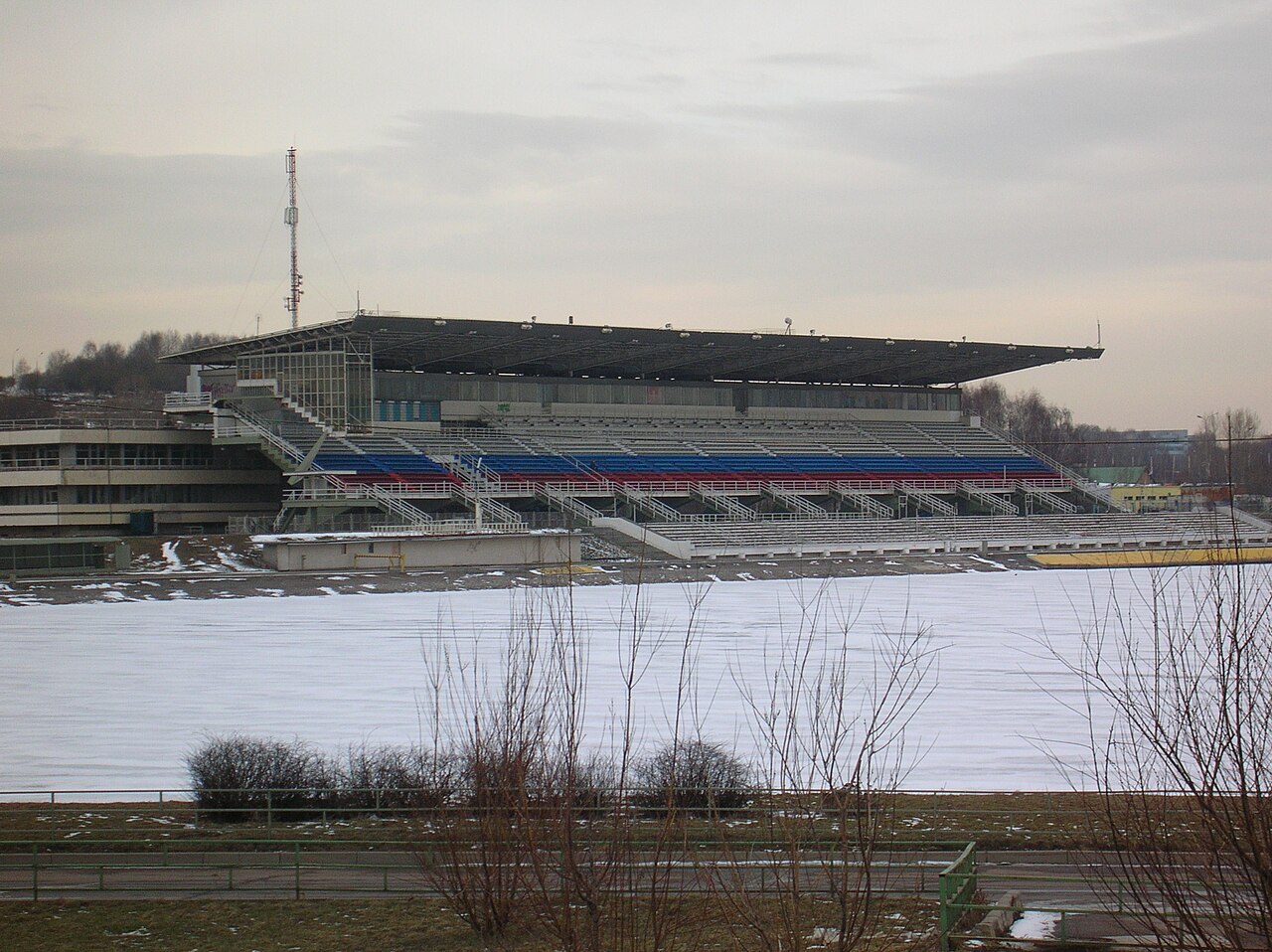
Venue and course
The Krylatskoye basin was a purpose-built, straight course designed for international regattas. Races were held on parallel lanes over the standard Olympic distance for men; at that time, women's Olympic races were held over the shorter distance used in that era. The facility included spectator stands, lanes marked for fair starts, and timing equipment consistent with contemporary international practice.
Events and competition format
Fourteen boat classes were on the program, with events for sweep rowing and sculling across single, double and larger crew boats. The competition progressed through heats, repechages (second-chance races), semifinals and finals, allowing crews multiple opportunities to reach medal races. Typical stages included:
- Opening heats to determine direct qualifiers
- Repechage rounds to fill remaining semifinal slots
- Semifinals and finals to decide medal placings
Results and political context
The rowing regatta was notably affected by the American-led boycott of the Moscow Games. Several strong rowing nations did not take part, which altered the field and competitive balance. In that context the East German team achieved exceptional success, winning medals in nearly every event and taking 11 gold medals among a total haul of 14 medals from the 14 events. The host nation also secured a range of podium finishes.
Historical significance and legacy
The 1980 regatta illustrated how geopolitics can influence sport: absences caused by boycott reshaped outcomes and left a marked signature on the medal table. For rowing, the event reinforced East Germany's position as a dominant program in the era and contributed to continuing developments in training, boat technology and international rivalry. The Krylatskoye basin remained a notable legacy venue from the Moscow Games.
For further background on the sport and the 1980 programme see the Olympic rowing overview Rowing overview, the Games summary 1980 Summer Olympics information, details about the host city Moscow and Krylatskoye, and specifics on the East German rowing program of the period East Germany in Olympic rowing.
Questions and answers
Q: How many events did rowing have at the 1980 Summer Olympics?
A: Rowing was represented by 14 events at the 1980 Summer Olympics.
Q: Where did rowing take place during the 1980 Summer Olympics?
A: Rowing took place in the Man-made Basin, located at the Trade Unions Olympic Sports Centre in the Krylatskoye district of Moscow.
Q: When did the rowing schedule begin and end at the 1980 Summer Olympics?
A: The rowing schedule began on 20 July and ended on 27 July at the 1980 Summer Olympics.
Q: Which rowing nations were not present during the 1980 Summer Olympics?
A: Due to the American-led boycott, some strong rowing nations were not present at the 1980 Summer Olympics.
Q: Who dominated the rowing competition at the 1980 Summer Olympics?
A: East Germany dominated the rowing competition at the 1980 Summer Olympics.
Q: How many medals did East Germany win at the 1980 Summer Olympics?
A: East Germany won 14 medals at the 1980 Summer Olympics, including 11 gold medals.
Q: How many events did East Germany win in rowing at the 1980 Summer Olympics?
A: East Germany won all 14 events and all 11 gold medals in rowing at the 1980 Summer Olympics.
Related articles
Author
AlegsaOnline.com Rowing at the 1980 Summer Olympics Leandro Alegsa
URL: https://en.alegsaonline.com/art/84391