
Bal du moulin de la Galette — Renoir's 1876 impression of Montmartre life
Overview of Pierre-Auguste Renoir’s 1876 Bal du moulin de la Galette: subject, style, provenance, versions, reception and why the work is central to studies of Impressionism and Parisian leisure.
Overview
Pierre-Auguste Renoir painted Bal du moulin de la Galette in 1876, producing one of the best known depictions of social life in late 19th‑century Paris. The large public version shows a crowded open‑air dance and refreshment spot in Montmartre and is celebrated for its lively surface, its informal composition and its handling of natural light. The museum-held canvas is now in the collection of the Musée d'Orsay in Paris, where it is displayed as a key example of Impressionist painting.
Image gallery
4 Images


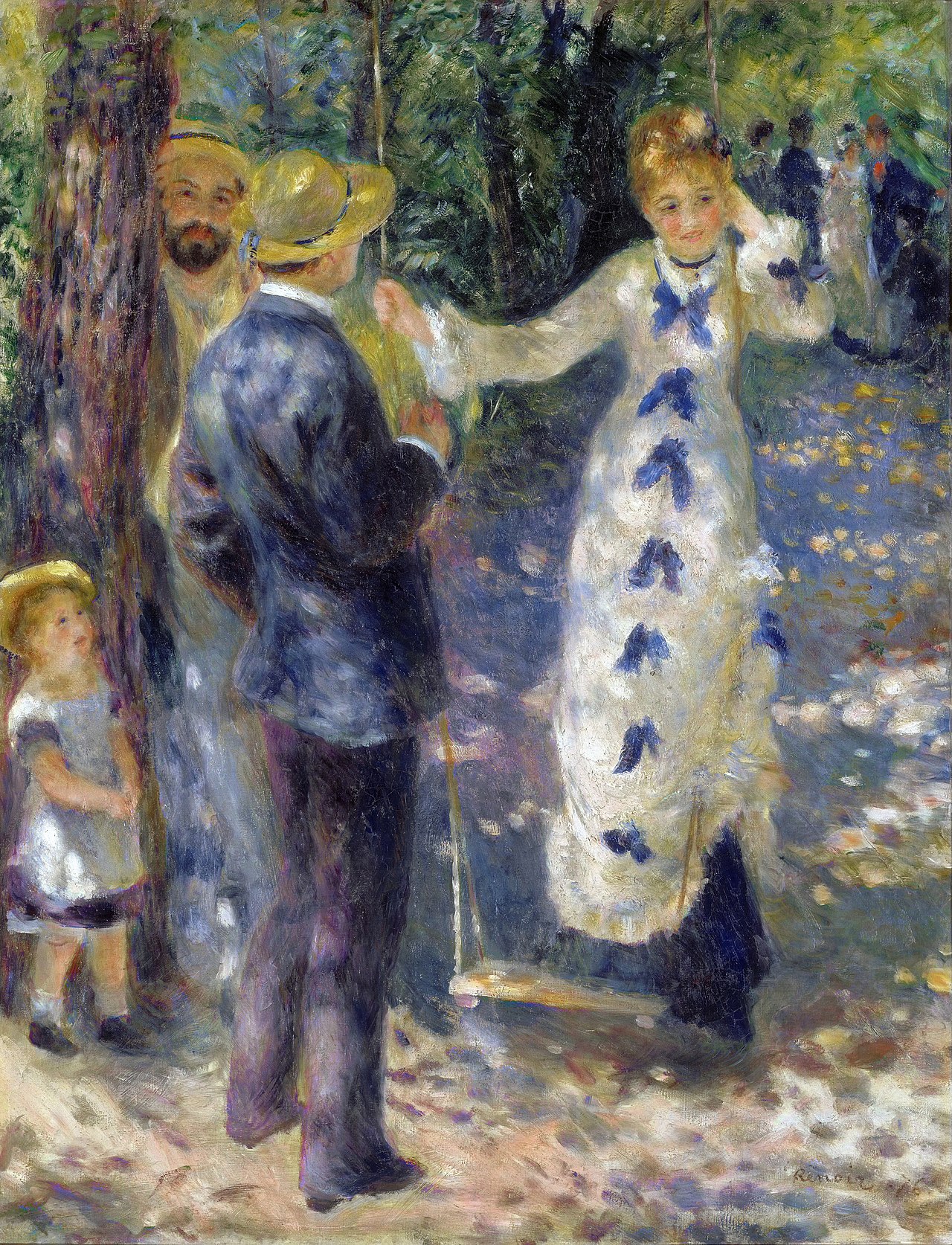
Description and style
The scene depicts men and women dressed for a Sunday afternoon at the popular windmill grounds. Renoir arranges numerous figures beneath trees and awnings, creating a tapestry of faces, gestures and patterned clothing. Rather than delineating every detail, he uses short, varied brushstrokes and patches of color to suggest movement and the play of dappled light. The overall effect is one of immediacy: viewers experience the crowd as a whole rather than following a single narrative or protagonist.
Composition and technique
Renoir balances clustered groups and open spaces to guide the eye across the canvas. Tables, chairs and musicians are indicated with economy, while reflections and highlights are rendered through subtle juxtapositions of warm and cool tones. This approach reflects Impressionist priorities: observation of fleeting effects and an interest in the sensations produced by light and color. Critics and historians often point to the painting as an example of how modern life—cafés, parks and popular entertainments—became central subjects for artists of the period.
Context and setting
The real venue, the Moulin de la Galette, was a working‑class leisure site in the district of Montmartre, known for inexpensive dances, convivial outdoor gatherings and simple local fare such as the namesake galettes. By choosing this subject Renoir aligned himself with peers who depicted urban leisure and everyday social interaction, treating ordinary activities as worthy subjects for large‑scale painting. The work captures both the atmosphere of popular entertainment and the modernizing rhythms of Parisian society.
Provenance and exhibition history
After its completion the painting entered private ownership and for roughly two decades belonged to the painter and collector Gustave Caillebotte, an important supporter of several Impressionists. On Caillebotte's death the work passed to the French state and from the late 19th century onward was displayed in national institutions: it hung in the Musée du Luxembourg and later in the Louvre before moving to the Musée d'Orsay in the 1980s. Its public placement traces changing institutional attitudes toward modern art in France and the gradual acceptance of Impressionism into official collections.
Other versions and the art market
Renoir painted more than one treatment of this subject: a smaller variant exists and remained in private hands for many years. That private version became a high‑profile auction lot when it was sold in New York City in 1990 for a notably large sum, an event that attracted attention to the financial value of Impressionist masterpieces and to the vigorous international market for works by major 19th‑century artists.
Reception and legacy
Bal du moulin de la Galette is frequently cited in surveys of Impressionism because it combines a thoroughly modern subject with experimental handling of paint and light. It helped establish visual conventions for representing public leisure and remains a standard reference for students and scholars interested in Parisian social history, nineteenth‑century urban culture and the development of modern painting. Reproductions and discussions of the painting continue to appear in museum catalogues and art history texts, where it is used to illustrate issues of composition, color and the depiction of crowds.
Further notes
- Though often reproduced, the museum version should be studied in person where possible to appreciate the surface qualities and scale that photographs cannot fully convey.
- The painting is an example of how Impressionist artists treated ephemeral optical effects as the subject of serious artistic inquiry.
- Readers seeking technical or conservation studies can consult institutional catalogues and academic publications for detailed analysis of materials, condition and restoration history.
For more on the artist and the work, museum pages and published catalogues raisonnés are recommended starting points; these resources provide further bibliographic direction and images for comparative study. Interested readers may follow links to museum entries, artist biographies and exhibition records for up‑to‑date curatorial information and research.
Questions and answers
Q: Who painted Bal du moulin de la Galette?
A: Bal du moulin de la Galette was painted by Pierre-Auguste Renoir.
Q: Where can Bal du moulin de la Galette be found?
A: Bal du moulin de la Galette can be found in the Musée d'Orsay in Paris.
Q: What is depicted in the painting Bal du moulin de la Galette?
A: The painting Bal du moulin de la Galette depicts a typical Sunday afternoon at Moulin de la Galette in the district of Montmartre, where working class Parisians would dress up and spend time dancing, drinking, and eating galettes into the evening.
Q: What art style is represented by Bal du moulin de la Galette?
A: Bal du moulin de la Galette is a typical Impressionist snapshot of real life.
Q: Who owned Bal du moulin de la Galette before it became the property of the French Republic?
A: The French painter Gustave Caillebotte owned Bal du moulin de la Galette for about 20 years.
Q: Where did Bal du moulin de la Galette hang from 1896 to 1929?
A: Bal du moulin de la Galette hung in the Musée du Luxembourg from 1896 to 1929.
Q: Who owned the smaller version of Bal du moulin de la Galette and for how much was it sold in May 1990?
A: The smaller version of Bal du moulin de la Galette was owned by John Hay Whitney and was sold for US$78 million at Sotheby's in New York City in May 1990.
Author
AlegsaOnline.com Bal du moulin de la Galette — Renoir's 1876 impression of Montmartre life Leandro Alegsa
URL: https://en.alegsaonline.com/art/8426