
Baker Street, London
Prominent street in Marylebone, London, forming part of the A41 and famed for its literary association with Sherlock Holmes and the symbolic 221B address.
Overview
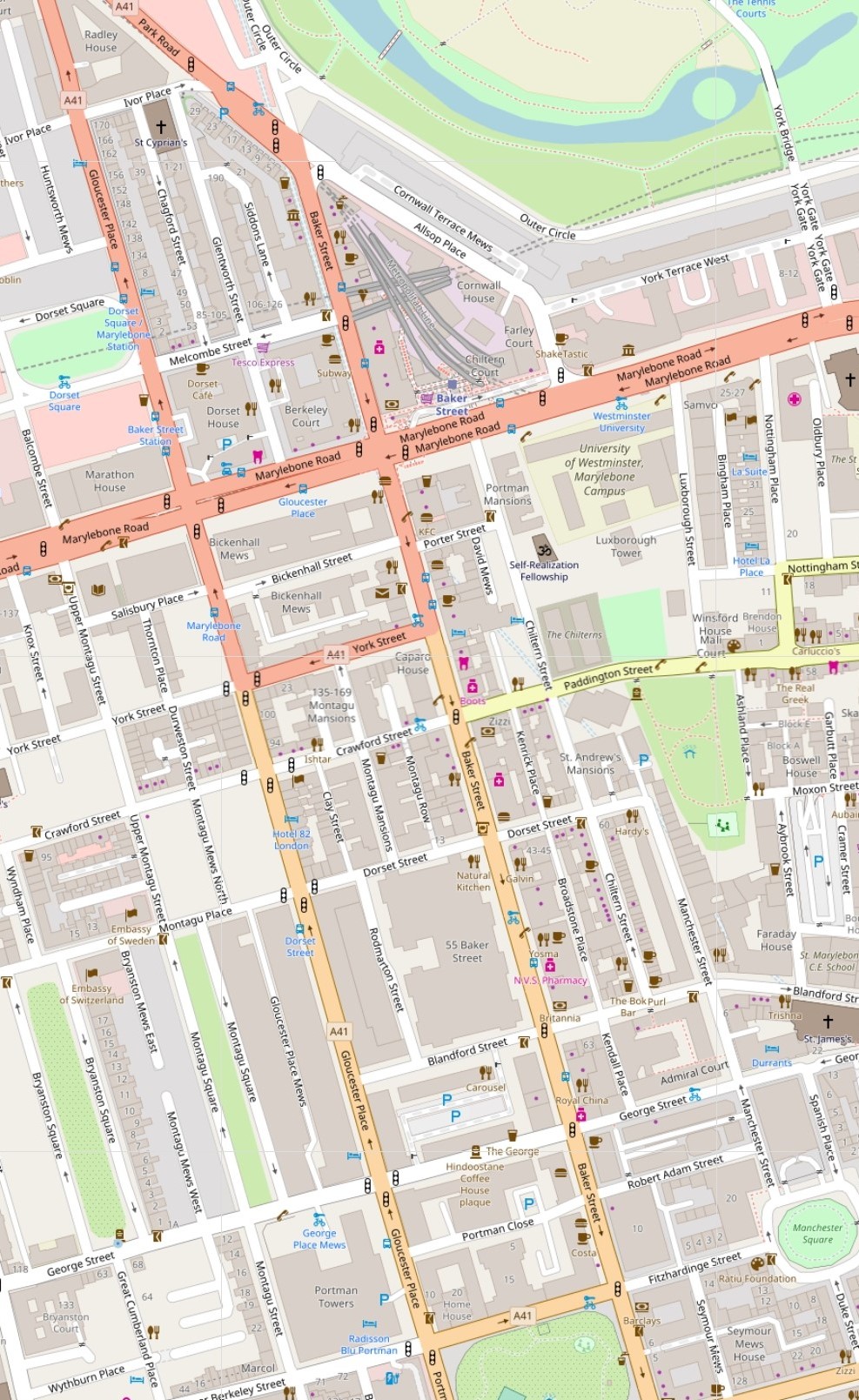
Baker Street is a well-known thoroughfare in central London, situated in the district of Marylebone. It forms a section of the A41 road and links a mix of residential, commercial and institutional buildings. The street is compact but busy, serving commuters, shoppers and visitors drawn by both everyday amenities and its cultural associations.
Image gallery
7 Images



History and name
The street takes its name from William Baker, a builder who owned or developed land in the area. The route and surrounding neighbourhood grew up during the period when Marylebone was being urbanised, and many of the buildings seen today reflect 19th- and early 20th-century development. Over time Baker Street has evolved from a local residential lane into a principal urban street with shops, offices and transport links.
Characteristics and points of interest
Baker Street is home to a range of shops, professional services and offices, and it is served by Baker Street Underground station, an important interchange on the London Underground network. Visitors will notice architectural variety along the street and several commemorative markers that reference its cultural role.
- Transport: an interchange station provides access to multiple Tube lines and connects the street to other parts of the city.
- Commemoration: plaques and small monuments celebrate connections to literature and local history.
- Local amenities: cafes, retail stores and professional businesses line much of the route.
Cultural significance and Sherlock Holmes
Baker Street is internationally associated with the fictional detective Sherlock Holmes, created by Sir Arthur Conan Doyle. The address 221B Baker Street, where Holmes is said to have lived, is a famous element of popular culture. Although 221B did not originally exist in the real street numbering, the name has been adopted by institutions and businesses that celebrate the character. A museum and other attractions near the street capitalise on this literary connection and attract many visitors each year.
Notable facts and distinctions
The street's blend of practical urban function and literary symbolism makes it distinctive: it operates as a normal London street while also serving as a focal point for fans of detective fiction. Plaques, guided walks and small exhibits help explain the Baker Street story to visitors. For further information about transport, local history or the Sherlock Holmes legacy, see references and visitor resources linked from local guides: visitor information and historical notes.
Practical notes
Today Baker Street remains both a working city street and a cultural landmark. Those interested in architecture, urban history or literary tourism will find it straightforward to reach and explore on foot or by public transport. Whether approached as part of a Marylebone walk or as a stop on a themed tour, Baker Street continues to be one of London's recognisable and frequently visited streets.

Trivia
- In 1978, Gerry Rafferty sang about the road in the rock song of the same name, notable for the saxophone solo played by Raphael Ravenscroft.
- Baker St. Muse "is a song from Jethro Tull's album Minstrel in the Gallery, released in 1975. (Baker Street is often mentioned in the lyrics of Jethro Tull songs).
- On 11 September 1971, a bank robbery took place at a branch of Lloyds Bank in Baker Street. The 2008 film The Bank Job is based on the 1971 Lloyds Bank robbery in Baker Street.
- The Seychelles maintain a consulate at 111 Baker Street.
- Dr. House also lives in a house with the number 221 and in apartment B (episode 7, season 2). In the episode Error Culture (season 7, episode 13), the address 221 Baker Street, Apt. B, Princeton, NJ 08542 can be seen on his driver's license, which can also be seen on the US immigration notice for House's wife Dominika in the episode Henry and the Women (season 8, episode 17).
Related articles
Author
AlegsaOnline.com Baker Street, London Leandro Alegsa
URL: https://en.alegsaonline.com/art/8406