
Roman Walls of Lugo (Muralla Romana de Lugo)
A largely intact late-Roman defensive circuit around Lugo's historic centre in Galicia, Spain, noted for its towers, ditch and continuous promenade; inscribed on the UNESCO World Heritage List.
Overview
The Roman Walls of Lugo form one of the most complete examples of late Roman urban fortification in Western Europe. Built in the 3rd century AD, the circuit encloses the medieval and Roman heart of the city of Lugo (historic centre) in the region of Galicia (Spain). The surviving rampart follows a continuous loop of roughly two kilometres, tracing the ancient street plan and creating a striking boundary between the old town and its surroundings.
Image gallery
7 Images




Design and physical characteristics
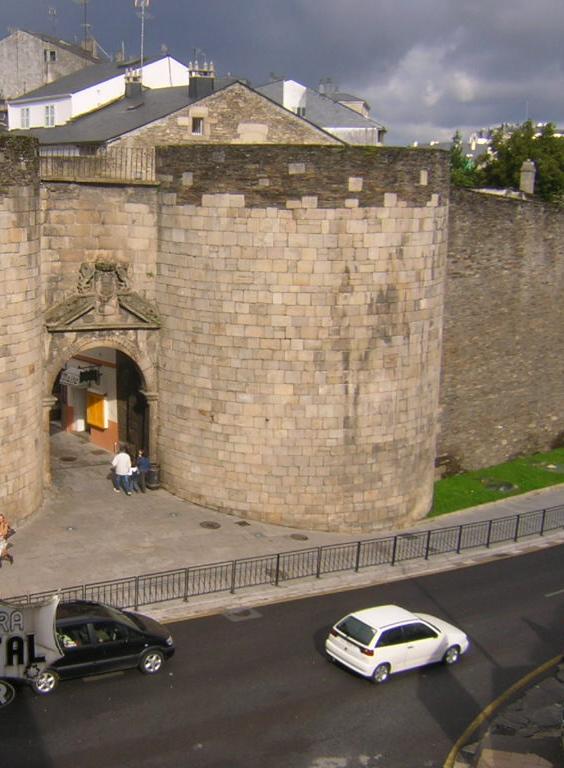
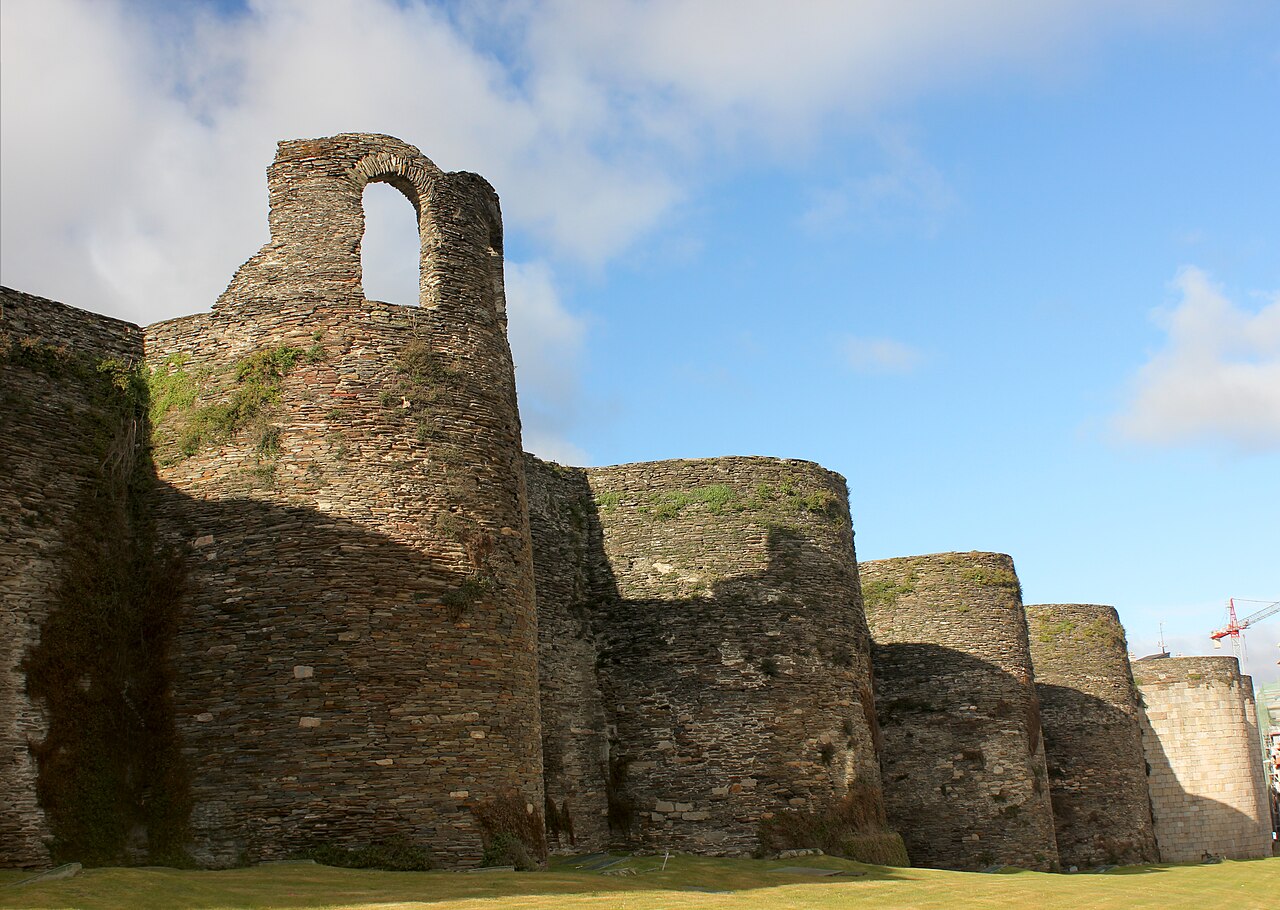
The wall stands on a raised terrace and is fronted by a broad defensive ditch (fossa). Its vertical face averages about ten metres in height and the masonry reaches several metres in breadth. A notable feature is the succession of semicircular projections formed by towers and bastions placed at intervals, some with a diameter approaching thirteen metres across. The primary building material is locally sourced schist stone, laid with lime mortar and dressed to produce a solid, durable envelope.
Construction, layout and function
Raised in a period of growing instability within the late Roman Empire, the Lugo walls were intended as practical military defences and as a statement of civic order. Historians treat them as late-Roman fortifications reflecting imperial strategy and as components of the network of frontier towns and strongpoints that secured communications and local populations in the later third and fourth centuries. Internally, the circuit contained streets, houses and the cathedral area, preserving the urban fabric while providing controlled access through the gateways.
History, adaptation and preservation
After their Roman origins the walls continued to serve successive communities. In medieval and early modern periods they were repaired and adapted rather than demolished, which helped preserve their continuity. Over centuries the ramparts have been subject to conservation work and archaeological study; modern interventions have aimed to maintain structural stability while allowing public use. The exceptional state of preservation led to their inscription as a World Heritage site by UNESCO (see link), recognizing both their integrity and their testimony to urban continuity.
Significance and visiting today
Today the walls function as an elevated promenade that encircles the old town and offers a visible sequence of defensive elements and historic streetscapes. Visitors can walk along the crown of the rampart and observe the pattern of towers and gateways that once controlled movement into the enclosed city. Practical visitor information, academic studies and local interpretation resources provide further detail about construction techniques, phased repairs and archaeological discoveries. Key points of interest include:
- the continuous walkway and viewpoints over Lugo's historic quarter;
- the series of towers and semicircular bastions that punctuate the circuit;
- the relationship between the wall and the city's Roman street grid, with references available through municipal sources (city) and regional heritage bodies (Galicia);
- conservation reports, research summaries and guided visits provided by local institutions (heritage authorities).
For further reading and official information consult regional and national heritage portals and scholarly publications (towers), (fortifications), (measurements) and material studies (stone). These resources explain how the Roman Walls of Lugo illustrate the continuity of urban life from the Roman period to the present and why they are regarded as an exceptional surviving ensemble of late Roman military architecture.
Questions and answers
Q: When were the Roman Walls of Lugo constructed?
A: The Roman Walls of Lugo were constructed in the 3rd century AD.
Q: What were the walls created for?
A: The walls were created as late Roman Empire fortifications.
Q: Are the walls still intact today?
A: Yes, the walls are still largely intact today.
Q: Where do the walls stretch around?
A: The walls stretch over 2 kilometres (1.2 mi) around the historic centre of Lugo in Galicia (Spain).
Q: What is located on a hilltop next to the walls?
A: The walls are located on a hilltop and have a wide ditch directly in front of them.
Q: What is the height and thickness of the walls on average?
A: The walls average about 10 metres (33 ft) in height and are up to 8 metres (26 ft) thick.
Q: Has the site been declared a World Heritage site?
A: Yes, the walls have been declared a World Heritage site.
Related articles
Author
AlegsaOnline.com Roman Walls of Lugo (Muralla Romana de Lugo) Leandro Alegsa
URL: https://en.alegsaonline.com/art/83874