
Roman Senate: Origins, Organization, Powers, and Historical Development
A concise encyclopedic overview of the Roman Senate: its origins, composition, constitutional role across Kingdom, Republic and Empire, decline after Diocletian, and institutional legacy.
Overview
The Roman Senate was the principal deliberative and governing council of ancient Rome for many centuries. According to Roman tradition it dates to the city's earliest years and the advisory council of elders; later it developed into the dominant political body of the Republic and then into a senior consultative institution under the emperors. Its long existence has made it one of the most enduring institutions of Roman government and a central element of Ancient Rome political life.
Image gallery
5 Images
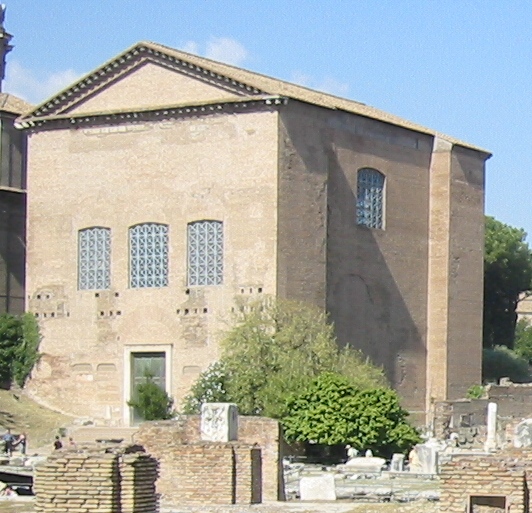


Origins and name
Tradition assigns Rome’s foundation to the mid‑8th century BC, and the Senate’s name derives from the Latin senex, "old man", reflecting its origin as a council of elders who advised the early kings. The institution is commonly presented in classical accounts as rooted in the city’s monarchical phase; see the founding tradition and its role under the Roman Kingdom for further context.
Composition and recruitment
Membership consisted of male citizens of prominent families who had held public office. During the Republic former magistrates were enrolled by the censors and the senatorial roll typically numbered several hundred, commonly around 300 in the late Republic. Over time the social basis widened from exclusive patrician control to include leading plebeian families after political reforms, and emperors later exercised decisive control over appointments. For details on the Republican membership and later changes, see the entry on the Republic-era Senate and on the Senate under the Empire.
Magistrates, the cursus honorum, and senatorial career
The Senate worked closely with Rome’s elected magistrates. Officeholders such as consuls, praetors, aediles and quaestors formed the senior public officials and typically entered the Senate after holding certain posts. The formal sequence of offices, the cursus honorum, structured political careers and helped supply the Senate with experienced administrators. Censors had a special role in reviewing membership, assessing moral standing, and revising the senatorial list.
Powers and procedures
In the Republic the Senate exercised broad informal authority. It directed foreign policy and diplomacy, supervised the treasury, controlled provincial assignments and military commands, and issued senatus consulta—formal opinions that, while technically advisory, carried great weight. In emergencies the Senate could adopt extraordinary measures, sometimes expressed as a declaration of the state's needs (senatus consultum ultimum in later usage). The Senate also heard important judicial cases and oversaw public finance.
Role in the Republic
- Dominant deliberative body: shaped long‑term strategy and foreign relations.
- Controlled administration of Italy and the provinces through senatorial assignments.
- Managed public revenues and expenditures, including state contracts and grain supply.
Transformation under the Empire
With the rise of Augustus and the Principate the emperor assumed ultimate control of military and executive powers. The Senate retained prestige, judicial functions, and authority over some senatorial provinces, but real political power increasingly depended on imperial favor. Emperors appointed senators, enlarged or reduced the roll, and often used the Senate as a forum for legitimating imperial decisions. Administrative reforms in the later empire reduced its central role; see reforms associated with Diocletian and the altered standing of Rome after power centers shifted.
Late antique changes and eastern continuation
When imperial administration moved away from Rome, the Senate’s role increasingly resembled that of a municipal council managing local affairs. The concept and prestige of a senatorial body lived on in the east: Constantine established a senate in Constantinople, reflecting continuity of the model even as functions changed. For the eastern development, consult the note on the Constantinople Senate, and for the Western transformations see the entry on the fall of the Western Empire.
Institutions, meeting places and symbols
Senatorial sessions were held in the curia buildings of the Roman Forum, the most famous later being the Curia Julia, rebuilt by Julius Caesar and completed under Augustus. Senators wore distinctive dress, including the toga with a broad purple stripe, and certain rites and ceremonies underlined their collective prestige.
Legacy
The Roman Senate influenced the development of councils, parliaments and representative institutions in later European traditions. Its mix of oligarchic membership, deliberative practice, and ceremonial prestige offers a long record for the study of how elite institutions adapt to changing constitutional orders. For targeted topical overviews, see the linked entries on institutional history in both Republican and Imperial phases: Republic specifics and Imperial changes.
Further reading and primary sources remain essential for detailed chronology, but the broad outline above captures the Senate’s evolution from a gerontocratic advisory council to a republican powerhouse and finally to a ceremonially important municipal body in late antiquity.
Questions and answers
Q: What was the Roman Senate?
A: The Roman Senate was an institution in Ancient Rome that began in the first years of the city. It started as an advisory council of elders and reached its peak during the middle Republic, when it was the most powerful body in Rome.
Q: When did the Roman Senate begin?
A: The Roman Senate began in 753 BC, which is supposedly when Rome was founded.
Q: How long did the Roman Senate last?
A: The Roman Senate lasted from 753 BC to 476 AD, surviving through different periods such as the Kingdom (753 BC–509 BC), Republic (509 BC–27 BC), Empire (27 BC–395 AD) and fall of Western Empire (395–476 AD).
Q: What does "senate" mean?
A: The word "senate" came from 'senex' meaning "old man".
Q: How powerful was the Roman Senate at its peak?
A: At its peak during the middle Republic, the Roman Senate was considered to be most powerful body in Rome.
Q: Did this power remain throughout all periods of Ancient Rome? A: No, during the first period of Empire known as Principate, much of its power diminished. After Diocletian moved government out of Rome, it became just a municipal body.
Q: Was there a senate set up after Ancient Rome fell? A: Yes, Constantine II set up a senate in Constantinople after Ancient Rome fell.
Related articles
Author
AlegsaOnline.com Roman Senate: Origins, Organization, Powers, and Historical Development Leandro Alegsa
URL: https://en.alegsaonline.com/art/83867