
Roman conquest of Britain (AD 43–c.410): invasion, occupation and legacy
The Roman conquest of Britain began under Emperor Claudius in AD 43 and created the province of Britannia. The campaign, resistance, Romanization and long-term legacy shaped Britain until the early 5th century.
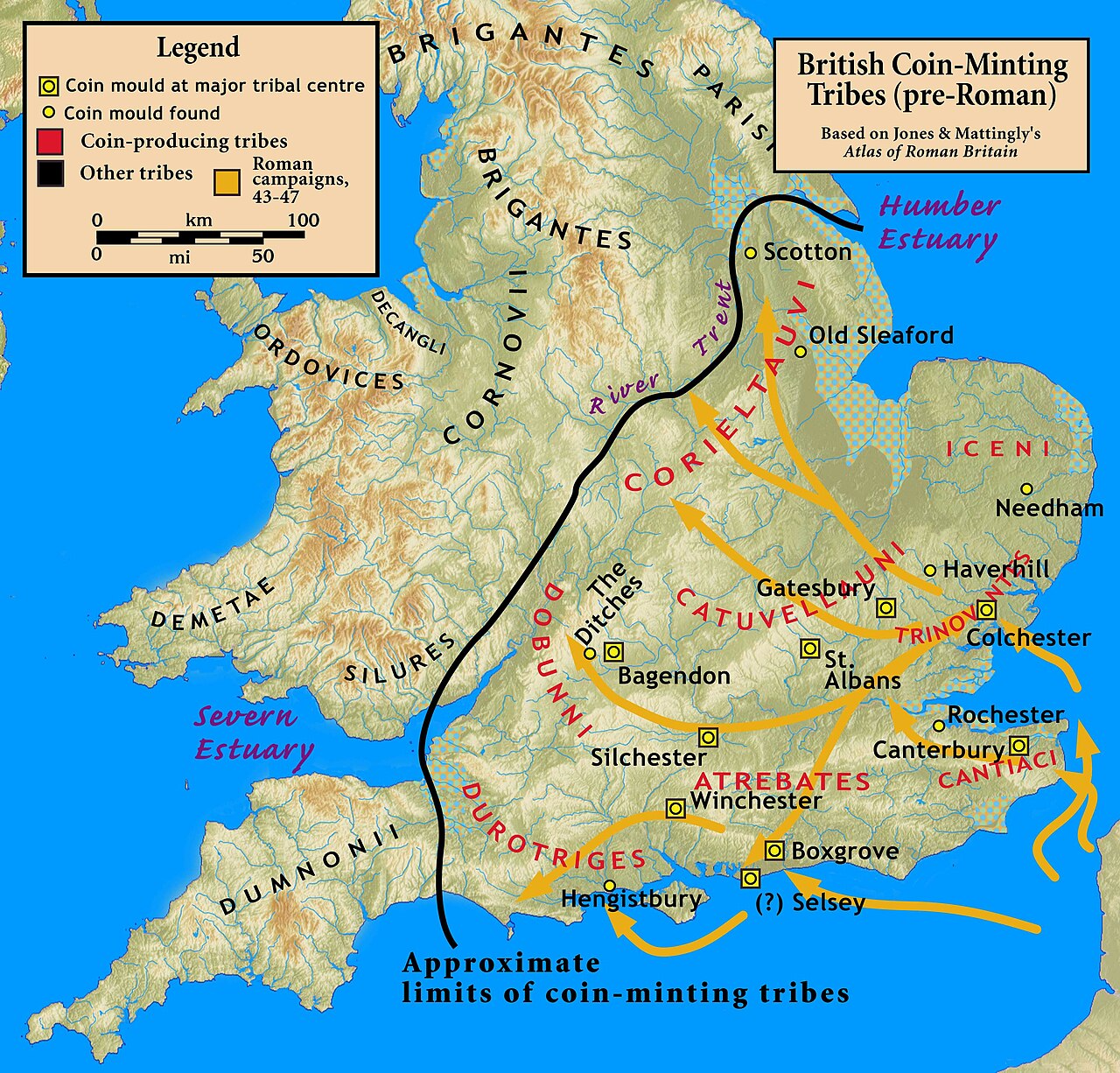
The Roman conquest of Britain began in AD 43 when the emperor Claudius ordered a military expedition that established direct imperial rule in parts of the island. The first governor was Aulus Plautius, who led Roman forces ashore and began the process of transforming local polities into the province of Britannia. This campaign followed a long period of intermittent contact, diplomacy and trade between the island and the Mediterranean world.
Image gallery
10 Images




Background and early contacts
Britain had featured in Roman plans and encounters long before AD 43. During the late Republic the island was visited by expeditions under the Roman general Julius Caesar in 55 and 54 BC; these were reconnaissance and punitive raids rather than full-scale conquests. Over subsequent decades political leaders in Rome debated and occasionally prepared invasions: the era of Augustus saw planned expeditions that were never executed in full, while earlier Roman institutions under the Republic and later the Empire maintained maritime and commercial links with British communities. Classical geographers such as Strabo noted the island's economic interactions, writing of customs and duties (taxes) and the potential wealth to be gained by closer control.
Opponents, preparations and the AD 43 invasion
In the decades immediately before the Claudian invasion Britain experienced internal strife among tribal elites, which Rome judged to be an opportunity. The emperor Caligula had once proposed or staged plans against the Britons and executed infrastructure projects on the Channel coast — including works at Bononia — that later aided Roman logistics and inspired developments at ports such as Dover. When Claudius sent Plautius across the Channel, Roman legions landed, fought a series of battles, and secured major settlements that would become administrative centers for the new province.
Conquest, resistance and consolidation
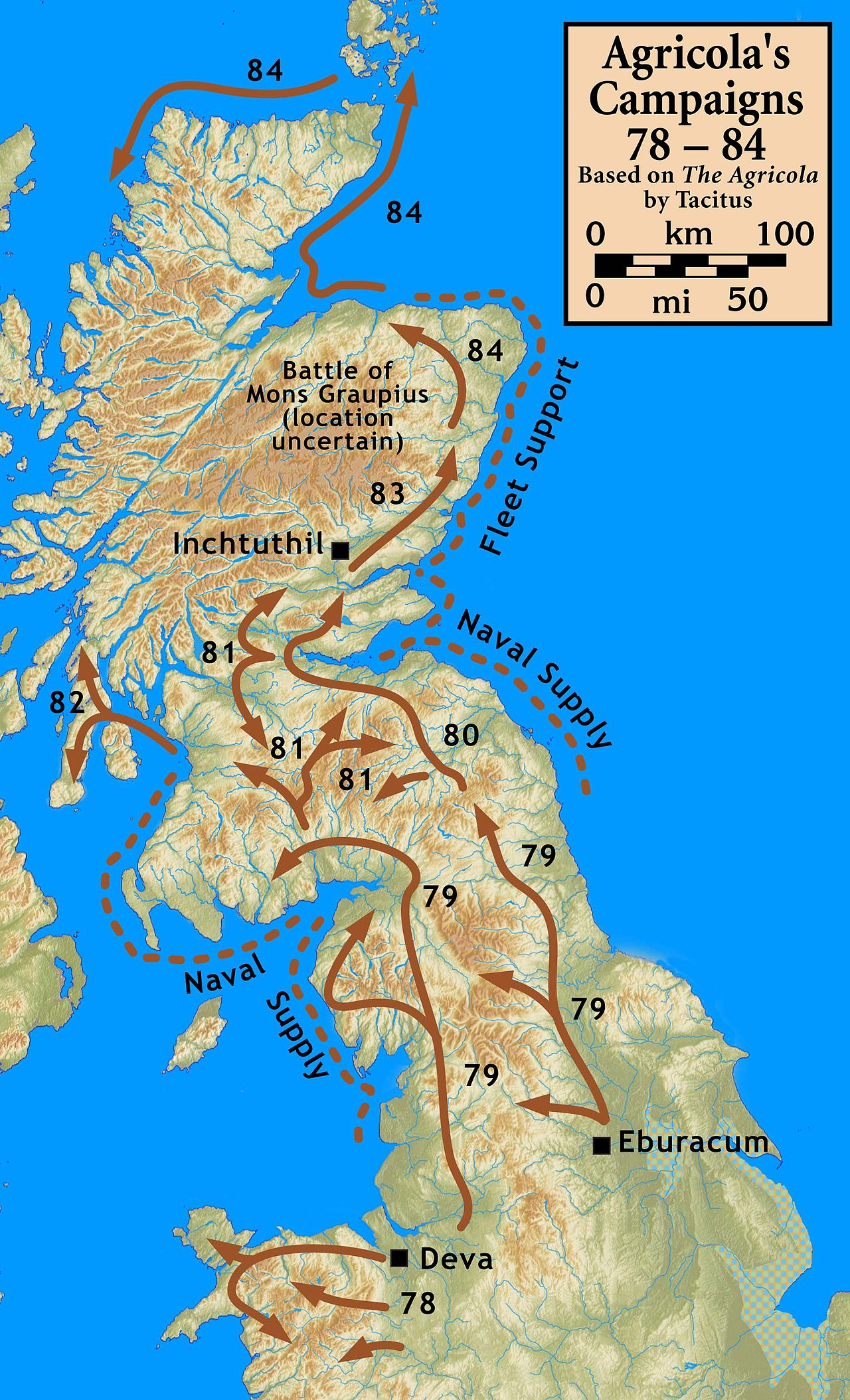
After initial successes Rome controlled much of southern and eastern Britain, building towns, forts and roads. Not all regions accepted Roman rule: notable resistance included the large-scale uprising led by the Iceni queen Boudica around AD 60–61, which temporarily threatened Roman towns before being suppressed. In the north the Romans advanced into what is now Scotland in campaigns over the 1st and 2nd centuries but never fully subdued the whole island; frontier systems such as Hadrian's Wall were later constructed to define and defend the limits of direct Roman control.
Administration, economy and cultural impact
Roman rule reorganized local governance, introduced a provincial administration, and stationed permanent garrisons. Infrastructure projects — roads, bridges, forts and public buildings — linked settlements and supported commerce. Towns such as Londinium grew into commercial and administrative hubs. The agricultural economy was integrated into imperial markets, while Roman law, language (Latin) and material culture—tiles, pottery, baths—left visible marks. At the same time many native traditions persisted, producing a blended cultural landscape often described as Romanized but still distinctively British.
Long-term outcomes and notable facts
- Roman Britain remained a part of the empire for about three and a half centuries; formal imperial control waned in the early 5th century when legions were withdrawn to contend with pressure elsewhere, leaving local leaders to assume defence and administration.
- Although Rome shaped urban life and infrastructure in much of the south, large areas—particularly in the north and west—retained autonomy or only partial Roman influence.
- The archaeological legacy includes forts, roads, mosaics and artefacts that document both military and civilian life under Roman rule.
For introductory overviews and primary-source summaries consult general histories and selected classical authors; for archaeological syntheses see specialist publications and museum catalogues that study sites across Britain. Further context on diplomatic and economic ties, and on Roman political motives for expansion, can be explored via resources on Roman imperial policy and provincial administration. Useful starting points include discussions of Claudius's reign, Aulus Plautius's campaigns, and the long-term transformation often called the Romanization of Britain. Diplomatic accounts, trade studies and regional surveys of the pre-Roman Iron Age set the conquest in a wider context for readers wishing to deepen their understanding.
The invasion and occupation of Britain represent a complex chapter in both Roman and British history: a deliberate imperial project that produced enduring economic, administrative and cultural changes while also encountering persistent local resistance and regional variation across the island.
Further reading and resources: Claudius biography and reign; the campaigns under Aulus Plautius; provincial history of Britannia; classical accounts from the Republic and Empire. For primary-source context see commentary on Caesar's expeditions and geographic descriptions by Strabo. Archaeological summaries examine tax and trade evidence (customs), coastal logistics linked to ports like Bononia and Dover, and the role of imperial planning from the time of Augustus and Caligula.
Questions and answers
Q: What year did the Roman conquest of Britain begin?
A: The Roman conquest of Britain began in AD 43 under Emperor Claudius.
Q: Who was the first Governor of Roman Britain?
A: The first Governor of Roman Britain was Aulus Plautius.
Q: When did Julius Caesar's expeditions to Britain take place?
A: Julius Caesar's expeditions to Britain took place in 55 and 54 BC.
Q: How did Augustus prepare for invasions of Britain?
A: Augustus prepared for invasions of Britain by planning three separate campaigns in 34 BC, 27 BC and 25 BC.
Q: What did Strabo's Geography say about taxation if the island were conquered?
A: Strabo's Geography said that if the island were conquered, it would pay more in customs and duties than could be raised by taxation.
Q: What caused Caligula's planned campaign against the Britons to never happen?
A: Caligula's planned campaign against the Britons never happened due to revolts elsewhere in the empire.
Q: How did Caligula contribute to Claudius' invasion being possible three years later?
A: Caligula contributed to Claudius' invasion being possible three years later by building a lighthouse at Bononia (modern Boulogne-sur-Mer) which provided a model for one built soon after at Dover.
Related articles
Author
AlegsaOnline.com Roman conquest of Britain (AD 43–c.410): invasion, occupation and legacy Leandro Alegsa
URL: https://en.alegsaonline.com/art/83856