
Roller derby: overview, rules, history and modern revival
Roller derby is a full-contact team sport on roller skates. This article explains how it is played, its equipment and positions, its 20th‑century origins and the women-led revival that created today’s international leagues.
Overview
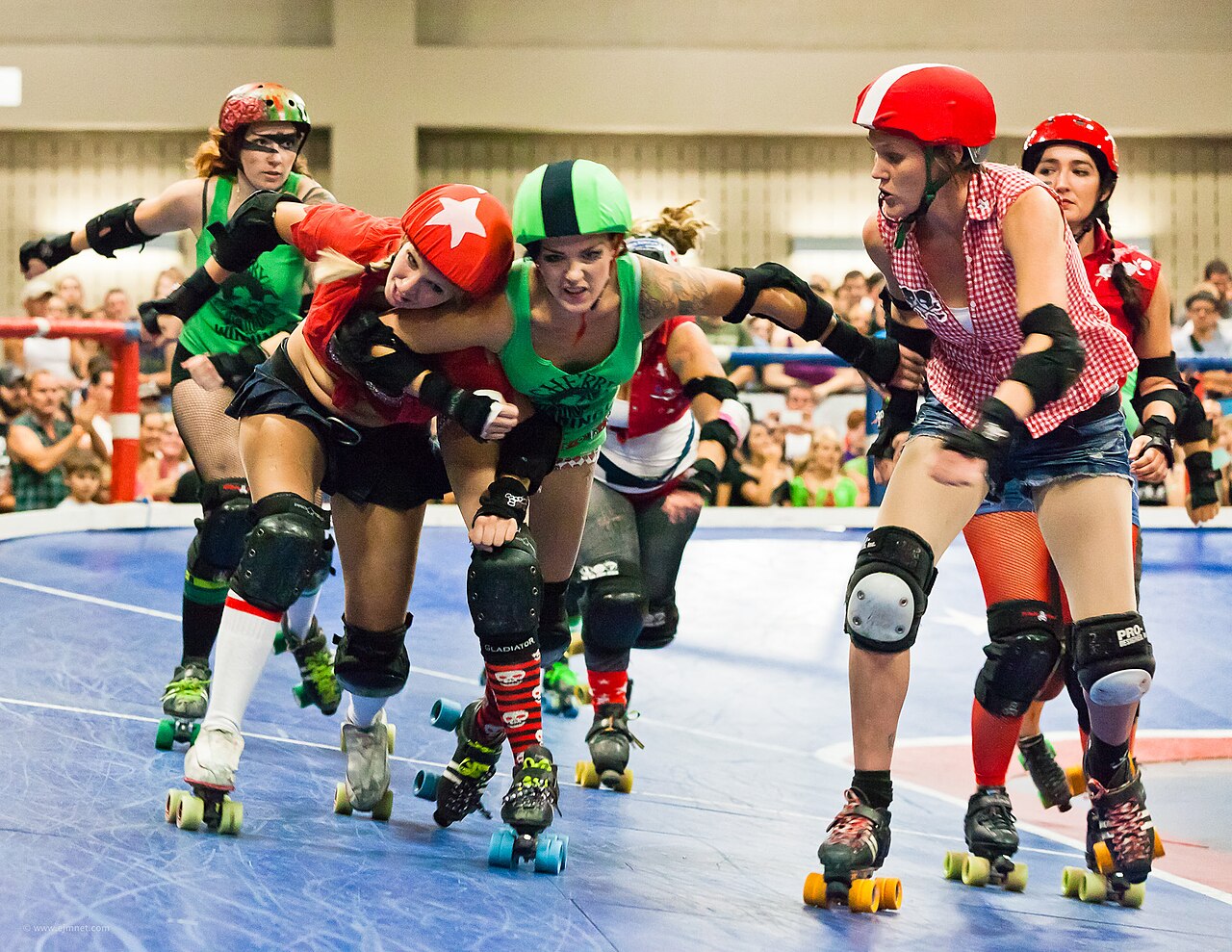
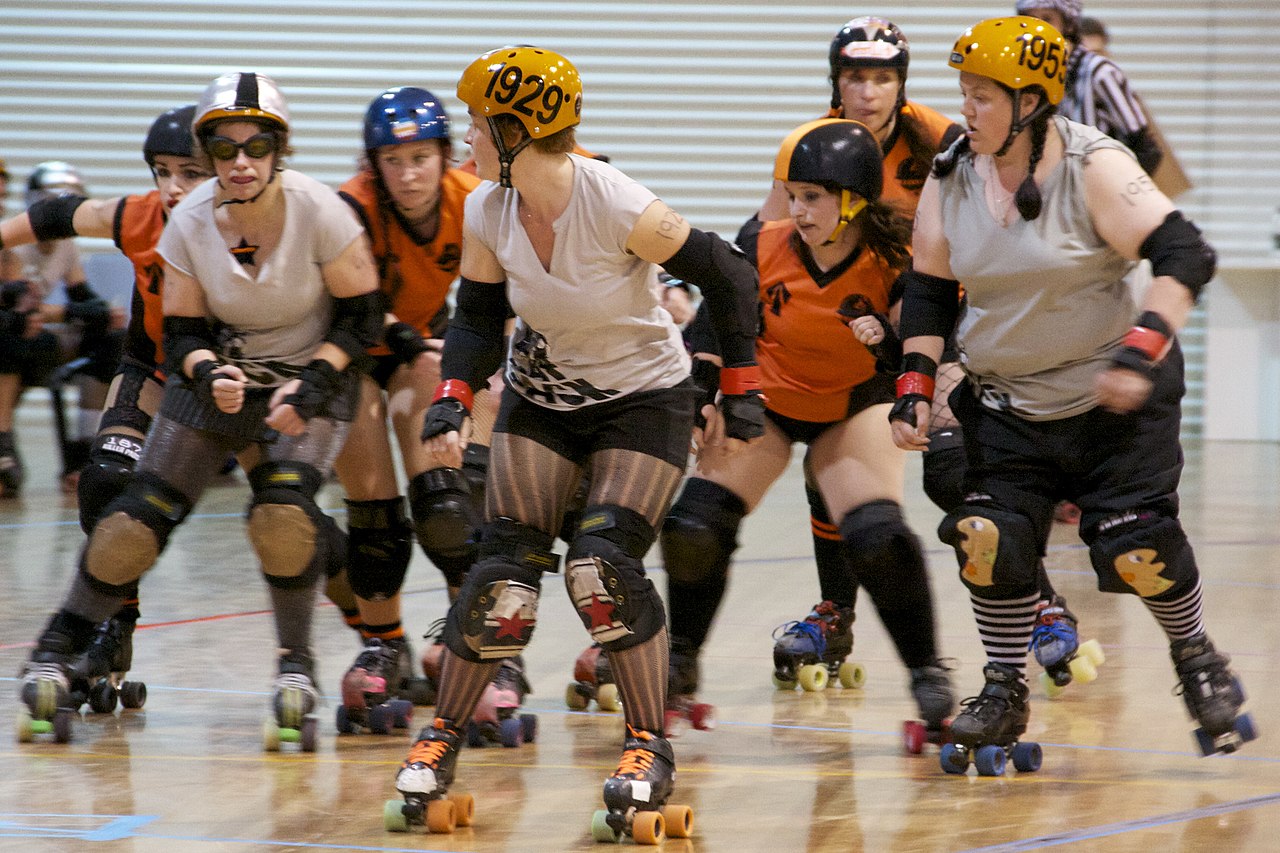
Roller derby is a fast, full-contact team sport contested on roller skates. Two teams compete to score points by having designated scoring players pass members of the opposing team while skating around a circuit called a track. Players combine speed, tactical blocking, and contact allowed by the rules to gain advantage. The sport is played indoors on either a flat or slightly banked oval surface, and it relies on teamwork, timing, and physical endurance.
Image gallery
10 Images






Basic elements and roles
A roller derby bout divides play into short scoring periods. Commonly used positions include:
- Jammer: the scoring player who earns points by lapping opponents.
- Blockers: teammates who play offense and defense by impeding the opposing jammer and helping their own.
- Pivot: a blocker who can assume special responsibilities and may become the jammer in certain situations.
Equipment is straightforward but protective: quad or inline roller skates, helmets, knee and elbow pads, wrist guards, and mouthguards. Official play is supervised by referees and non‑skating officials who manage timing and penalty enforcement.
Rules and track types
Rules vary by governing body, but most modern leagues emphasize safety and competitive fairness. Contact is permitted within specified bounds; dangerous moves are penalized. Play typically alternates short scoring jams with resets, creating a stop‑start rhythm that rewards strategic substitutions and set plays. Matches use either a flat track, which can be set up in multipurpose venues, or a banked track, which is a tilted oval that changes the speed and dynamics of play.
History and revival
Organized roller derby has roots in spectator endurance events and touring entertainment from the 20th century. For decades some presentations mixed athletic competition with staged elements for mass audiences, which led to public confusion about the sport’s legitimacy and competitive nature and comparisons to professional wrestling. In the early 2000s a grassroots revival led by predominantly women’s teams in North America — notably in Austin, Texas and other cities — re-centered roller derby as a genuine competitive sport. That revival emphasized codified rules, athlete training, and independent leagues.
Organization, spread and significance
Since the revival, roller derby has grown internationally. Many regions formed local leagues, national organizations, and interleague play. The sport is noted for its DIY ethic, strong local communities, and emphasis on inclusivity; while women’s leagues played a central role in the modern movement, men’s and mixed teams have also increased in number. Roller derby provides athletic opportunities across diverse age groups and skill levels and has been valued for empowering participants, promoting fitness, and creating vibrant fan communities.
Notable distinctions
Key things to remember: roller derby is distinct from staged entertainment despite historical overlap; modern play follows standardized rules and organized competition; and there are two main track styles (flat and banked) that affect tactics. For those interested in learning more about rules, league structures, or how to join a team, many local clubs and governing bodies publish beginner resources and schedules online.
Questions and answers
Q: What is roller derby?
A: Roller derby is a sport played on roller skates.
Q: Who used to play roller derby?
A: Roller derby used to be played by both men and women.
Q: Who restarted roller derby?
A: Women restarted roller derby.
Q: Are there men's and mixed (or co-ed) teams playing roller derby around the world?
A: Yes, there are now a growing number of men's and mixed (or co-ed) teams around the world who are playing roller derby.
Q: Did people believe roller derby was a real sport?
A: For a long time, many people did not believe roller derby was a real sport. They thought it was like professional wrestling because it had fake fighting and other things for TV.
Q: When did women in Austin, Texas start playing roller derby as a real game?
A: In 2002, a group of women in Austin, Texas started playing roller derby as a real game, with nothing fake.
Q: Was there a TV show made about some of the women who played roller derby in Austin, Texas?
A: Yes, a TV show called Rollergirls was made about some of these women.
Related articles
Author
AlegsaOnline.com Roller derby: overview, rules, history and modern revival Leandro Alegsa
URL: https://en.alegsaonline.com/art/83809